Coming Back for a Forgotten Item
忘れ物を取りに戻る
After leaving the hotel, Emma realizes she forgot something and comes back to ask Jack for help. He finds it and returns it to her before she heads to the airport.
ホテルを出た後、忘れ物に気づいたエマは、ジャックに助けを求めるために戻ってきます。ジャックが忘れ物を見つけて返してくれたので、エマは空港へ向かいます。
会話9
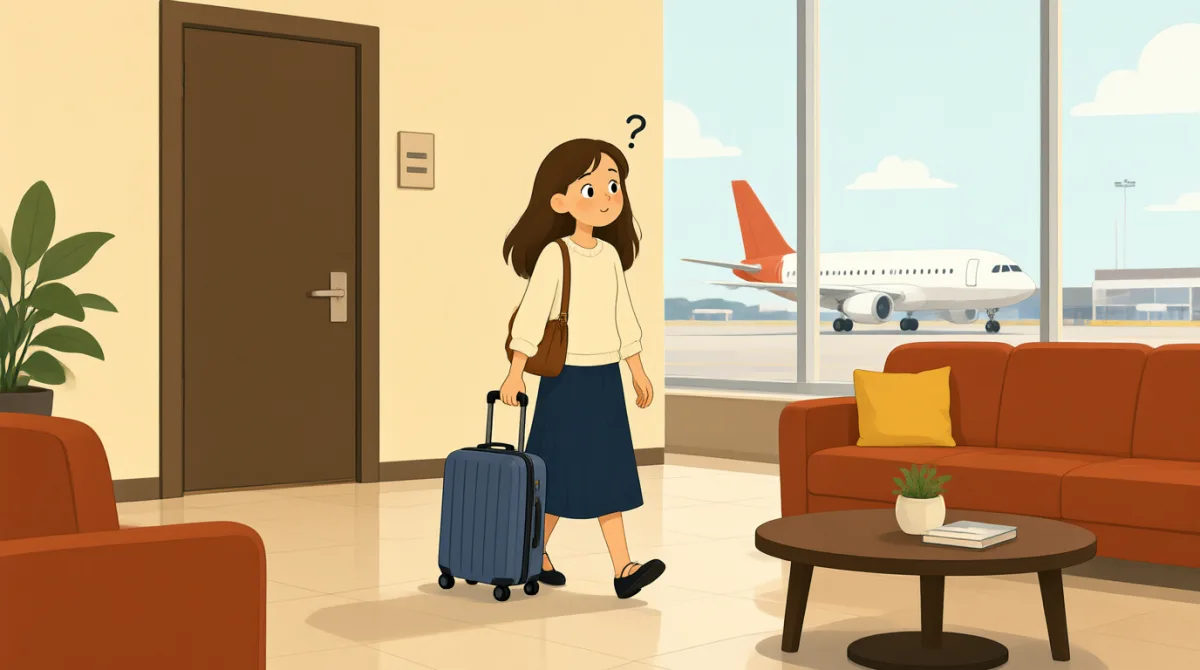

Hi, Jack. I just checked out, but I think I left my phone in my room.
こんにちは、ジャック。チェックアウトしたばかりなんだけど、部屋に携帯を置き忘れたみたい。

I can help. What room were you in?
お手伝いします。何号室でしたか?
Room 408. I noticed it was missing when I got outside.
408号室です。外に出てから、携帯がないことに気づきました。
Let me call housekeeping and ask them to check the room.
ハウスキーピングに電話して、部屋を確認してもらいますね。
Thank you. I need it to show my taxi driver the airport address.
ありがとうございます。タクシーの運転手さんに空港の住所を見せるのに必要なんです。
They found a phone on the desk. Is yours in a blue case?
机の上に携帯があったそうです。青いケースに入っていますか?
Yes, that's mine! I'm so glad you found it.
はい、それです!見つかって本当によかったです。
Here you are. Please check that everything is still there.
はい、どうぞ。中身が全部そろっているか確認してください。
It is. Thanks for your help. Now I can head to the airport.
大丈夫です。助けてくださってありがとうございます。これで空港に向かえます。
語彙8
- checked outチェックアウトした
This means Emma finished her stay and left the hotel. You can say, “I checked out this morning.”
エマがホテルでの滞在を終えて、ホテルを出たという意味です。「I checked out this morning.(今朝チェックアウトしました)」のように言えます。
- left my phone携帯を置き忘れた
This means Emma forgot her phone somewhere. Use “I left my [item] in…” to say where you forgot something.
エマがどこかに携帯を忘れたという意味です。忘れ物をした場所を伝えるには、「I left my [item] in…」の形が使えます。
- noticed it was missingなくなっていることに気づいた
Emma realized that her phone was not with her. You can use “I noticed [something] was missing” when you realize an item is gone.
エマが携帯を持っていないことに気づいた、という意味です。物がなくなったことに気づいたときは、「I noticed [something] was missing」と言えます。
- call housekeepingハウスキーピングに電話する
This means contacting the hotel staff who clean and look after the rooms. You can ask, “Could you call housekeeping, please?”
客室の清掃や管理を担当するホテルスタッフに連絡する、という意味です。「Could you call housekeeping, please?(ハウスキーピングに電話していただけますか?)」と頼めます。
- check the room部屋を確認する
This means look in the room to find or confirm something. You can ask someone to “check the room” for a forgotten item.
何かを探したり、あるかどうか確かめたりするために部屋を見ることです。忘れ物を探してもらうときに、「check the room」と頼めます。
- blue case青いケース
A case is a cover that protects a phone. You can describe a lost phone by saying, “It has a [color] case.”
「case」は携帯を保護するカバーのことです。なくした携帯の特徴を伝えるには、「It has a [color] case.([色]のケースに入っています)」と言えます。
- Here you are.はい、どうぞ。
Jack says this as he gives Emma her phone. Use it when handing something to another person.
ジャックがエマに携帯を渡すときの言葉です。人に何かを手渡すときに使えます。
- head to the airport空港へ向かう
This means go to the airport. You can say, “I need to head to the airport now.”
空港へ行く、という意味です。「I need to head to the airport now.(今、空港へ向かわないといけません)」と言えます。
重要な文8
- 1
I just checked out, but I think I left my phone in my room.
チェックアウトしたばかりなんですが、部屋に携帯を置き忘れたみたいです。
Use this to explain that you have left a place but may have forgotten something there. Replace “phone” and “my room” with the item and place.
その場所を出たものの、そこに何かを忘れたかもしれないと伝える表現です。「phone」と「my room」を、忘れた物や場所に置き換えて使えます。
- 2
What room were you in?
何号室にお泊まりでしたか?
This is a simple way to ask which hotel room someone stayed in. You can use the same question at a hotel when helping a guest.
ホテルで、相手がどの部屋に泊まっていたかを尋ねる簡単な表現です。ホテルのスタッフが宿泊客を手伝うときにも使えます。
- 3
I noticed it was missing when I got outside.
外に出てから、ないことに気づきました。
Use this to say when you realized something was gone. Replace “it” with the missing item if the meaning is not clear.
何かがなくなっていると、いつ気づいたかを伝える表現です。何を指すのかはっきりしない場合は、「it」をなくした物の名前に置き換えましょう。
- 4
Let me call housekeeping and ask them to check the room.
ハウスキーピングに電話して、部屋を確認してもらいますね。
This is a helpful way to offer to contact hotel staff and ask them to look for something. Replace “housekeeping” with another person or department as needed.
ホテルのスタッフに連絡して、何かを探してもらうと申し出るときに使える表現です。必要に応じて、「housekeeping」を別の人や部署に置き換えられます。
- 5
I need it to show my taxi driver the airport address.
タクシーの運転手さんに空港の住所を見せるのに必要なんです。
Use “I need it to…” to explain why something is important. You can replace the action with another purpose, such as “I need it to make a call.”
「I need it to…」は、なぜそれが必要なのかを説明するときに使います。「I need it to make a call.(電話をかけるのに必要です)」のように、後ろを別の目的に変えられます。
- 6
Is yours in a blue case?
青いケースに入っていますか?
This is a useful question for checking whether a found item belongs to someone. Replace “blue case” with another detail, such as its color or size.
見つかった物が誰のものか確認するときに便利な質問です。「blue case」を色や大きさなど、別の特徴に置き換えて使えます。
- 7
Please check that everything is still there.
中身が全部そろっているか確認してください。
Use this when returning a bag or another item and asking someone to make sure nothing is missing. You can also say, “Please check that your keys are there.”
バッグなどを返すときに、なくなった物がないか確認してもらう表現です。「Please check that your keys are there.(鍵があるか確認してください)」とも言えます。
- 8
Now I can head to the airport.
これで空港に向かえます。
This means Emma can go to the airport now that she has her phone. Replace “the airport” with another destination, such as “the station.”
携帯が手元に戻ったので、エマはこれで空港へ行ける、という意味です。「the airport」を「the station(駅)」など、別の行き先に置き換えられます。