The Air Conditioner Is Broken
エアコンが故障しています
Emma explains that the air conditioner did not work last night. Grace checks the room details and looks for a solution.
エマは、昨夜エアコンが動かなかったと説明します。グレースは部屋の情報を確認し、解決策を探します。
会話8
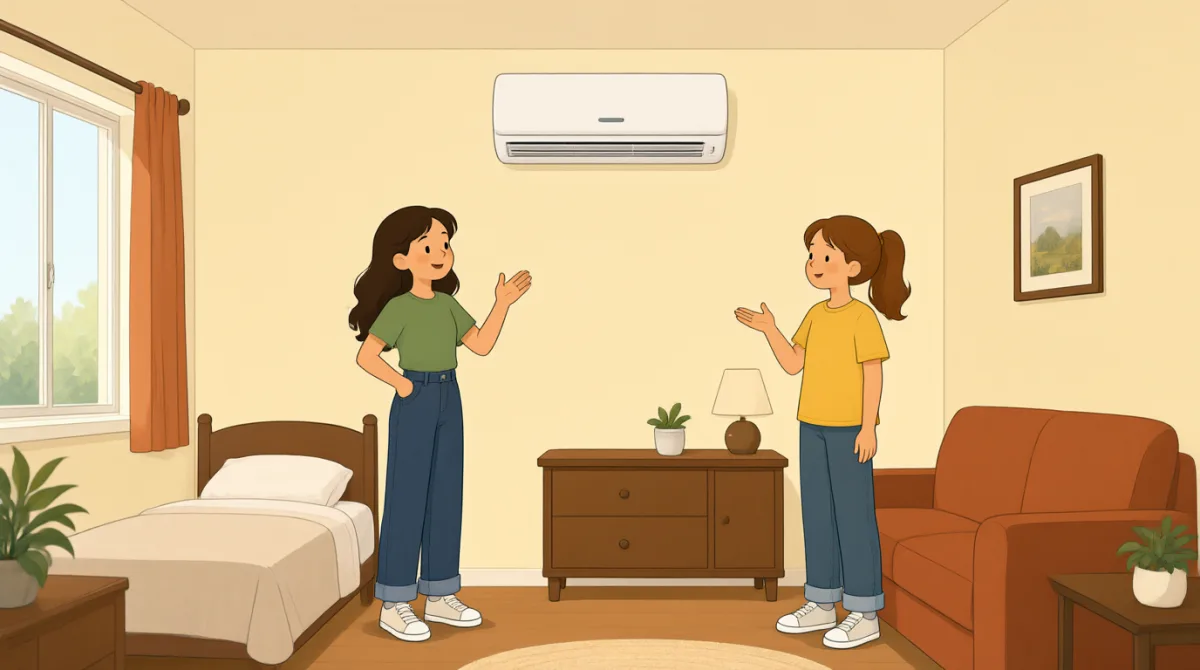

Good morning. The air conditioner in my room didn’t work last night.
おはようございます。昨夜、部屋のエアコンが動かなかったんです。

I’m sorry about that. What room are you staying in?
それは申し訳ございません。何号室にお泊まりですか?
I’m in room 214. I tried to turn it on, but nothing happened.
214号室です。電源を入れてみたんですが、何も起きませんでした。
Thanks for telling me. Did you try the controls on the wall?
お知らせいただきありがとうございます。壁の操作パネルは試されましたか?
Yes, I did. The screen was on, but no cool air came out.
はい、試しました。画面は点いていたんですが、冷たい風が出てきませんでした。
I understand. Was the room too warm for you last night?
そうでしたか。昨夜はお部屋が暑すぎましたか?
Yes, it was hard to sleep. Could someone come and check it?
はい、なかなか眠れませんでした。誰か来て、確認してもらえますか?
Of course. I’ll ask our maintenance worker to come up and take a look.
もちろんです。設備担当の者に部屋まで行って、確認するよう頼みます。
語彙8
- air conditionerエアコン
A machine that cools the air in a room. You can use this phrase when asking about cooling in a hotel room.
部屋の空気を冷やす機械です。ホテルの部屋の冷房について尋ねるときに使える表現です。
- didn’t work動かなかった
Means that something did not operate correctly. Use it to explain a problem with a machine or device.
何かが正しく作動しなかったという意味です。機械や機器の不具合を説明するときに使います。
- turn it on電源を入れる
Means to start a machine or device. You can use it when talking about lights, air conditioners, or other equipment.
機械や機器を作動させるという意味です。照明やエアコンなどの電源を入れるときに使います。
- nothing happened何も起きなかった
Means there was no result after you tried to do something. Use it to describe a device that does not respond.
何かをしようとしたのに、何の反応もなかったという意味です。機器が反応しないことを説明するときに使います。
- cool air冷たい風
Air that feels cold or comfortably cool. You can use this phrase to describe what you expect an air conditioner to produce.
冷たく感じる、または心地よく涼しい空気のことです。エアコンから出てくるはずの風について説明するときに使えます。
- hard to sleep眠るのが大変
Means difficult to sleep. Use it to explain how a problem, such as a warm room, affected your night.
眠るのが難しいという意味です。部屋が暑かったなど、問題が夜にどう影響したかを説明するときに使います。
- come up上がってくる
Means to go to a higher floor or to someone’s room. In a hotel, staff may come up to help a guest.
上の階や誰かの部屋へ行くという意味です。ホテルでは、スタッフが宿泊客を手伝うために部屋まで来ることがあります。
- take a look確認する
Means to examine or check something. You can ask someone to take a look at a problem.
何かを調べたり、状態を確かめたりするという意味です。問題を確認してもらいたいときに使えます。
重要な文8
- 1
The air conditioner in my room didn’t work last night.
昨夜、部屋のエアコンが動かなかったんです。
This is a clear way to report a problem and say when it happened. You can replace “the air conditioner” with another item that did not work.
問題の内容と、それがいつ起きたかをはっきり伝える表現です。「the air conditioner」の代わりに、動かなかった別の物を入れることもできます。
- 2
I tried to turn it on, but nothing happened.
電源を入れてみたんですが、何も起きませんでした。
Use this sentence to explain what you did and what happened next. Replace “it” with the device you tried to use.
何を試して、その後どうなったかを説明する文です。使おうとした機器に合わせて、「it」を別の言葉に置き換えられます。
- 3
Did you try the controls on the wall?
壁の操作パネルは試されましたか?
This is a polite question to check what someone has already tried. You can use it when helping someone solve a problem.
相手がすでに何を試したか確認する丁寧な質問です。問題の解決を手伝うときに使えます。
- 4
The screen was on, but no cool air came out.
画面は点いていたんですが、冷たい風が出てきませんでした。
This sentence describes what seemed to work and what was still wrong. You can use “but” to contrast two details about a problem.
一見うまくいっていたことと、まだ解決していない問題を説明する文です。問題について二つのことを対比するときに、「but」を使えます。
- 5
Was the room too warm for you last night?
昨夜はお部屋が暑すぎましたか?
This question asks whether the temperature caused discomfort. You can change “the room” or “last night” to ask about other situations.
気温のせいで不快に感じたかどうかを尋ねる質問です。「the room」や「last night」を変えれば、別の状況について尋ねられます。
- 6
Yes, it was hard to sleep.
はい、なかなか眠れませんでした。
This is a simple way to explain how a problem affected you. You can use “It was hard to…” before an activity to describe a difficulty.
問題が自分にどんな影響を与えたかを簡潔に説明する表現です。「It was hard to…」の後に活動を表す言葉を続けると、何をするのが大変だったかを伝えられます。
- 7
Could someone come and check it?
誰か来て、確認してもらえますか?
This is a polite way to ask staff for help. Replace “it” with the item or problem you want someone to check.
スタッフに助けをお願いする丁寧な表現です。確認してほしい物や問題に合わせて、「it」を置き換えられます。
- 8
I’ll ask our maintenance worker to come up and take a look.
設備担当の者に部屋まで行って、確認するよう頼みます。
This sentence explains what someone will do to help. You can reuse “I’ll ask [person] to…” when offering to arrange assistance.
相手を助けるために何をするか説明する文です。手配を申し出るときには、「I’ll ask [person] to…」を応用できます。