Coming Home
帰宅
Emma returns home and gets her mail and package from Mia. She thanks Mia for helping while she was away.
エマが帰宅し、ミアから郵便物と荷物を受け取ります。留守中に手伝ってくれたミアにお礼を言います。
会話8
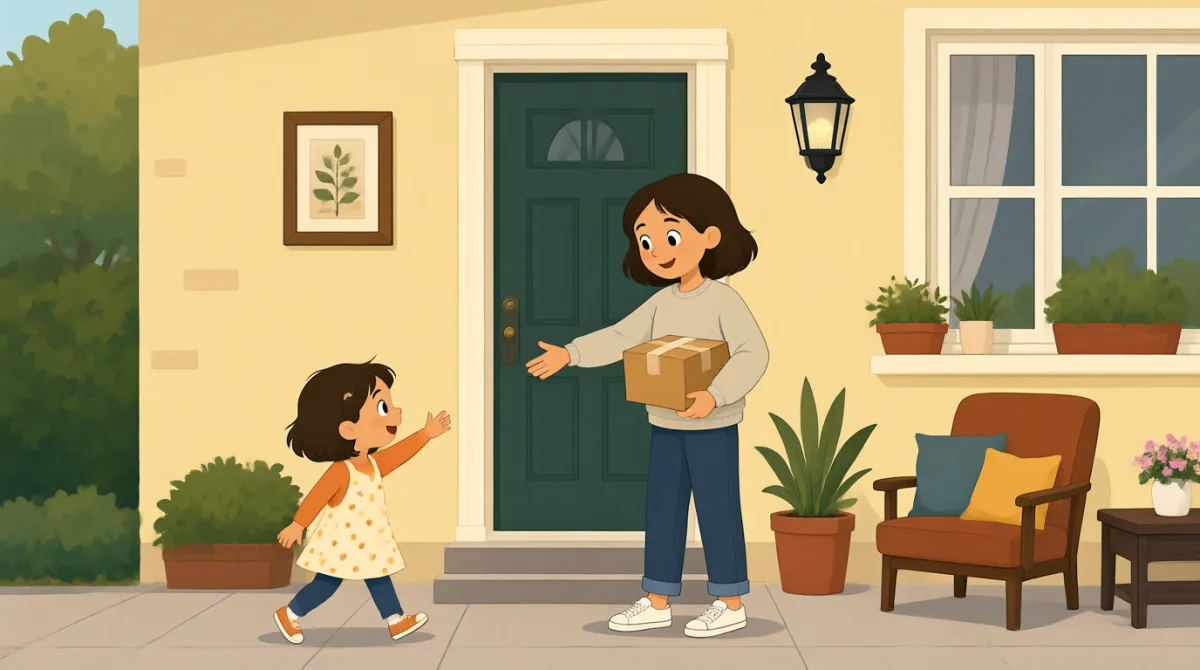

Hi, Mia! I’m back. Thanks for collecting my mail.
やあ、ミア!帰ってきたよ。郵便物を受け取ってくれてありがとう。

You’re welcome! I put it all on your table.
どういたしまして!全部テーブルの上に置いておいたよ。
Thanks. Did you get the package, too?
ありがとう。荷物も受け取ってくれた?
Yes, it came yesterday. I brought it inside.
うん、昨日届いたよ。中に入れておいたよ。
That’s great. I saw your message while I was away.
よかった。留守中にメッセージを見たよ。
I’m glad. I didn’t want it to sit outside.
よかった。外に置きっぱなしにしたくなかったんだ。
I really appreciate your help. It made my trip easier.
本当に助かったよ。おかげで旅行が楽になった。
Happy to help! I hope you had a nice trip.
どういたしまして!楽しい旅行だったといいな。
語彙8
- I’m back帰ってきた
This means you have returned. Use it to tell someone you are home or back at a place.
「I'm back」は、戻ってきたという意味です。家に帰ったときや、ある場所に戻ったことを伝えるのに使います。
- collecting my mail郵便物を受け取る
This means picking up and keeping someone’s letters while they are away. You can say, “Thanks for collecting my mail.”
留守中に誰かの手紙などを受け取って、預かっておくことです。「Thanks for collecting my mail.(郵便物を受け取ってくれてありがとう)」のように言えます。
- put it all on your table全部テーブルの上に置いておく
This means placing everything on a table. You can change “it all” to name other things someone put somewhere.
物を全部テーブルの上に置くという意味です。「it all」を、誰かがどこかに置いた別の物に置き換えることもできます。
- package荷物、宅配便
A package is a box or parcel that is delivered to someone. Use it when asking about something that was sent to you.
「package」は、誰かに届けられる箱や小包のことです。自分宛てに送られた物について尋ねるときに使います。
- brought it inside中に運び入れた
This means carried something into a house or building. You can use “brought” to talk about carrying something to a place in the past.
物を家や建物の中に運んだという意味です。過去に物をある場所へ運んだことを話すとき、「brought」を使えます。
- while I was away留守にしていた間
This means during the time when I was not at home or in a place. Use it to explain when something happened.
家やある場所にいなかった間という意味です。何かがいつ起きたのかを説明するときに使います。
- sit outside外に置きっぱなしになる
Here, this means to be left outdoors for some time. You can use it when talking about a delivery or another item left outside.
ここでは、物がしばらく屋外に置かれたままになるという意味です。配達された物などが外に置かれていることについて話すときに使えます。
- Happy to help!手伝えてよかった!
This is a friendly way to say you were glad to help someone. You can use it when replying to thanks.
誰かを手伝えてよかったと伝える、親しみのある言い方です。お礼を言われたときの返事に使えます。
重要な文8
- 1
Thanks for collecting my mail.
郵便物を受け取ってくれてありがとう。
Use this sentence to thank someone for picking up your mail. You can replace “collecting my mail” with another helpful action.
郵便物を受け取ってくれた人にお礼を言う表現です。「collecting my mail」を、ほかにしてもらった親切な行動に置き換えられます。
- 2
I put it all on your table.
全部テーブルの上に置いておいたよ。
This tells someone where you left their things. Change “your table” to another place, such as “your desk” or “the kitchen counter.”
相手の物をどこに置いたか伝える表現です。「your table」を「your desk」や「the kitchen counter」など、別の場所に変えられます。
- 3
Did you get the package, too?
荷物も受け取ってくれた?
Use this question to check whether someone received or picked up a delivery. You can replace “the package” with another item.
誰かが荷物を受け取ったか、引き取ったかを確認する質問です。「the package」を別の物に置き換えることもできます。
- 4
Yes, it came yesterday.
うん、昨日届いたよ。
This is a simple way to say that something arrived the day before today. Replace “it” with the item you are talking about.
何かが昨日届いたと簡潔に伝える言い方です。話題にしている物に合わせて、「it」をその物の名前に置き換えられます。
- 5
I brought it inside.
中に運び入れたよ。
Use this sentence to say you carried something indoors. You can replace “it” with a specific item, such as “the box.”
物を屋内に運び入れたことを伝える表現です。「it」を「the box(その箱)」のように、具体的な物に置き換えられます。
- 6
I saw your message while I was away.
留守にしていた間にメッセージを見たよ。
This explains when you read someone’s message. Replace “your message” with another thing you saw or did while you were away.
相手のメッセージをいつ見たのかを説明する表現です。「your message」を、留守中に見たり、したりした別のことに置き換えられます。
- 7
I really appreciate your help.
本当に助かったよ。
This is a warm way to show that you are very thankful. You can use it after someone has done something kind for you.
とても感謝している気持ちを温かく伝える言い方です。誰かが親切なことをしてくれたときに使えます。
- 8
I hope you had a nice trip.
楽しい旅行だったといいな。
Use this friendly sentence to show interest in someone’s past trip. You can replace “trip” with another event, such as “weekend.”
相手の過去の旅行について気遣いを示す、親しみのある表現です。「trip」を「weekend(週末)」など、別の出来事に置き換えられます。