Coming Home
घर वापसी
Emma returns home and gets her mail and package from Mia. She thanks Mia for helping while she was away.
एमा घर लौटती है और मिया से अपना डाक और पैकेज लेती है। दूर रहने के दौरान मदद करने के लिए वह मिया को धन्यवाद देती है।
संवाद8
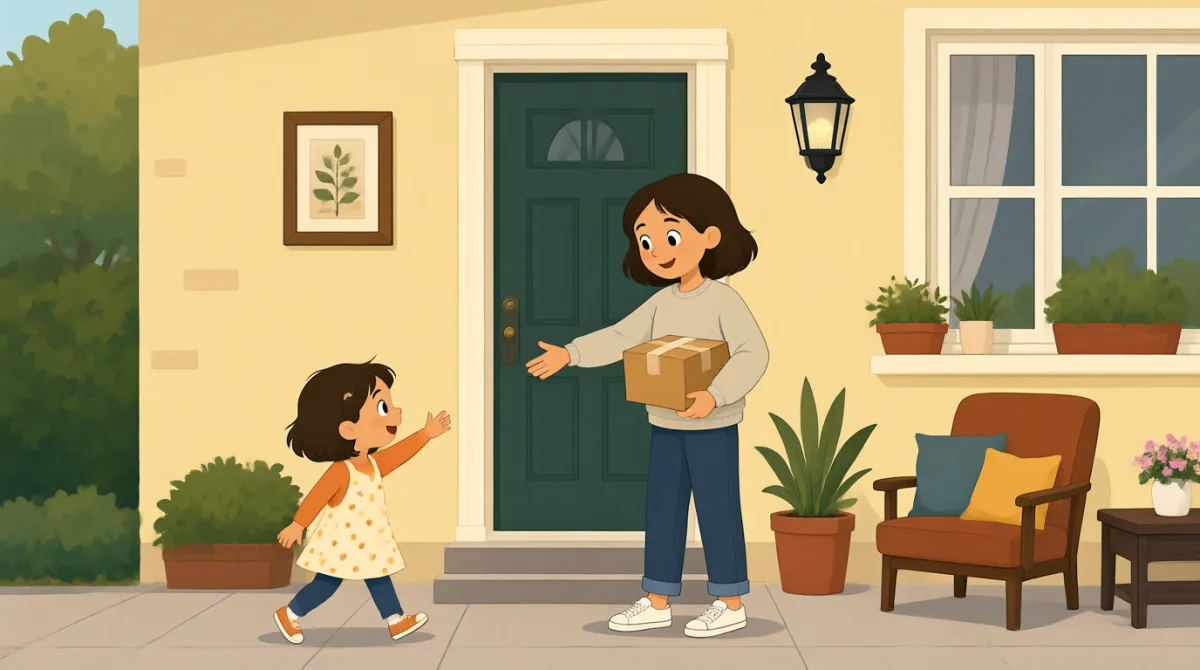

Hi, Mia! I’m back. Thanks for collecting my mail.
हाय, मिया! मैं लौट आई। मेरा डाक लेने के लिए शुक्रिया।

You’re welcome! I put it all on your table.
कोई बात नहीं! मैंने सब कुछ तुम्हारी मेज़ पर रख दिया है।
Thanks. Did you get the package, too?
शुक्रिया। क्या तुमने पैकेज भी ले लिया था?
Yes, it came yesterday. I brought it inside.
हाँ, वह कल आया था। मैं उसे अंदर ले आई।
That’s great. I saw your message while I was away.
बहुत अच्छा। जब मैं बाहर थी, तब मैंने तुम्हारा संदेश देखा था।
I’m glad. I didn’t want it to sit outside.
अच्छा लगा। मैं नहीं चाहती थी कि वह बाहर पड़ा रहे।
I really appreciate your help. It made my trip easier.
तुम्हारी मदद के लिए मैं सचमुच बहुत आभारी हूँ। इससे मेरी यात्रा आसान हो गई।
Happy to help! I hope you had a nice trip.
मदद करके खुशी हुई! उम्मीद है तुम्हारी यात्रा अच्छी रही।
शब्दावली8
- I’m backमैं लौट आई हूँ
This means you have returned. Use it to tell someone you are home or back at a place.
इसका मतलब है कि तुम वापस आ गई हो। किसी को बताने के लिए इसका इस्तेमाल करो कि तुम घर या किसी जगह पर वापस आ गई हो।
- collecting my mailमेरा डाक लेना
This means picking up and keeping someone’s letters while they are away. You can say, “Thanks for collecting my mail.”
इसका मतलब है किसी के दूर रहने के दौरान उसके पत्र लेना और संभालकर रखना। तुम कह सकती हो, “Thanks for collecting my mail.” (मेरा डाक लेने के लिए शुक्रिया।)
- put it all on your tableसब कुछ तुम्हारी मेज़ पर रख दिया
This means placing everything on a table. You can change “it all” to name other things someone put somewhere.
इसका मतलब है सारी चीज़ें मेज़ पर रखना। “it all” की जगह उन दूसरी चीज़ों का नाम ले सकती हो जिन्हें किसी ने कहीं रखा हो।
- packageपैकेज
A package is a box or parcel that is delivered to someone. Use it when asking about something that was sent to you.
पैकेज वह डिब्बा या पार्सल होता है जो किसी के पास पहुँचाया जाता है। तुम्हें भेजी गई किसी चीज़ के बारे में पूछते समय इसका इस्तेमाल करो।
- brought it insideउसे अंदर ले आई
This means carried something into a house or building. You can use “brought” to talk about carrying something to a place in the past.
इसका मतलब है किसी चीज़ को उठाकर घर या इमारत के अंदर ले जाना। बीते समय में किसी चीज़ को किसी जगह ले जाने की बात करने के लिए “brought” इस्तेमाल कर सकती हो।
- while I was awayजब मैं बाहर थी
This means during the time when I was not at home or in a place. Use it to explain when something happened.
इसका मतलब है उस समय के दौरान जब मैं घर पर या किसी जगह पर नहीं थी। किसी घटना का समय बताने के लिए इसका इस्तेमाल करो।
- sit outsideबाहर पड़ा रहना
Here, this means to be left outdoors for some time. You can use it when talking about a delivery or another item left outside.
यहाँ इसका मतलब है कुछ समय तक बाहर छोड़ दिया जाना। बाहर छोड़ी गई डिलीवरी या किसी दूसरी चीज़ के बारे में बात करते समय इसका इस्तेमाल कर सकती हो।
- Happy to help!मदद करके खुशी हुई!
This is a friendly way to say you were glad to help someone. You can use it when replying to thanks.
किसी की मदद करके खुशी हुई, यह कहने का यह एक दोस्ताना तरीका है। धन्यवाद के जवाब में इसका इस्तेमाल कर सकती हो।
मुख्य वाक्य8
- 1
Thanks for collecting my mail.
मेरा डाक लेने के लिए शुक्रिया।
Use this sentence to thank someone for picking up your mail. You can replace “collecting my mail” with another helpful action.
अपना डाक लेने के लिए किसी को धन्यवाद देने के लिए यह वाक्य इस्तेमाल करो। “collecting my mail” की जगह मदद के किसी दूसरे काम का ज़िक्र कर सकती हो।
- 2
I put it all on your table.
मैंने सब कुछ तुम्हारी मेज़ पर रख दिया है।
This tells someone where you left their things. Change “your table” to another place, such as “your desk” or “the kitchen counter.”
इससे किसी को पता चलता है कि तुमने उसकी चीज़ें कहाँ रखी हैं। “your table” की जगह कोई दूसरी जगह कहो, जैसे “your desk” या “the kitchen counter.”
- 3
Did you get the package, too?
क्या तुमने पैकेज भी ले लिया था?
Use this question to check whether someone received or picked up a delivery. You can replace “the package” with another item.
किसी से यह पूछने के लिए कि उसे डिलीवरी मिली या उसने उसे ले लिया, इस सवाल का इस्तेमाल करो। “the package” की जगह किसी दूसरी चीज़ का नाम ले सकती हो।
- 4
Yes, it came yesterday.
हाँ, वह कल आया था।
This is a simple way to say that something arrived the day before today. Replace “it” with the item you are talking about.
आज से एक दिन पहले कोई चीज़ पहुँची थी, यह बताने का यह एक आसान तरीका है। जिस चीज़ की बात हो रही है, उसके नाम से “it” की जगह ले सकती हो।
- 5
I brought it inside.
मैं उसे अंदर ले आई।
Use this sentence to say you carried something indoors. You can replace “it” with a specific item, such as “the box.”
कोई चीज़ घर के अंदर ले जाने की बात कहने के लिए यह वाक्य इस्तेमाल करो। “it” की जगह किसी खास चीज़ का नाम ले सकती हो, जैसे “the box.”
- 6
I saw your message while I was away.
जब मैं बाहर थी, तब मैंने तुम्हारा संदेश देखा था।
This explains when you read someone’s message. Replace “your message” with another thing you saw or did while you were away.
इससे पता चलता है कि तुमने किसी का संदेश कब पढ़ा। “your message” की जगह उस दूसरी चीज़ का ज़िक्र करो जिसे तुमने बाहर रहते हुए देखा या किया था।
- 7
I really appreciate your help.
मैं तुम्हारी मदद के लिए सचमुच बहुत आभारी हूँ।
This is a warm way to show that you are very thankful. You can use it after someone has done something kind for you.
अपनी गहरी कृतज्ञता जताने का यह एक आत्मीय तरीका है। जब किसी ने तुम्हारे लिए कोई अच्छा काम किया हो, तब इसका इस्तेमाल कर सकती हो।
- 8
I hope you had a nice trip.
उम्मीद है तुम्हारी यात्रा अच्छी रही।
Use this friendly sentence to show interest in someone’s past trip. You can replace “trip” with another event, such as “weekend.”
किसी की पिछली यात्रा में दिलचस्पी दिखाने के लिए इस दोस्ताना वाक्य का इस्तेमाल करो। “trip” की जगह किसी दूसरी घटना का नाम ले सकती हो, जैसे “weekend.”