Coming Home
กลับถึงบ้าน
Emma returns home and gets her mail and package from Mia. She thanks Mia for helping while she was away.
เอ็มมากลับถึงบ้านและรับจดหมายกับพัสดุจากมีอา เธอขอบคุณมีอาที่ช่วยดูแลให้ตอนที่เธอไม่อยู่
บทสนทนา8
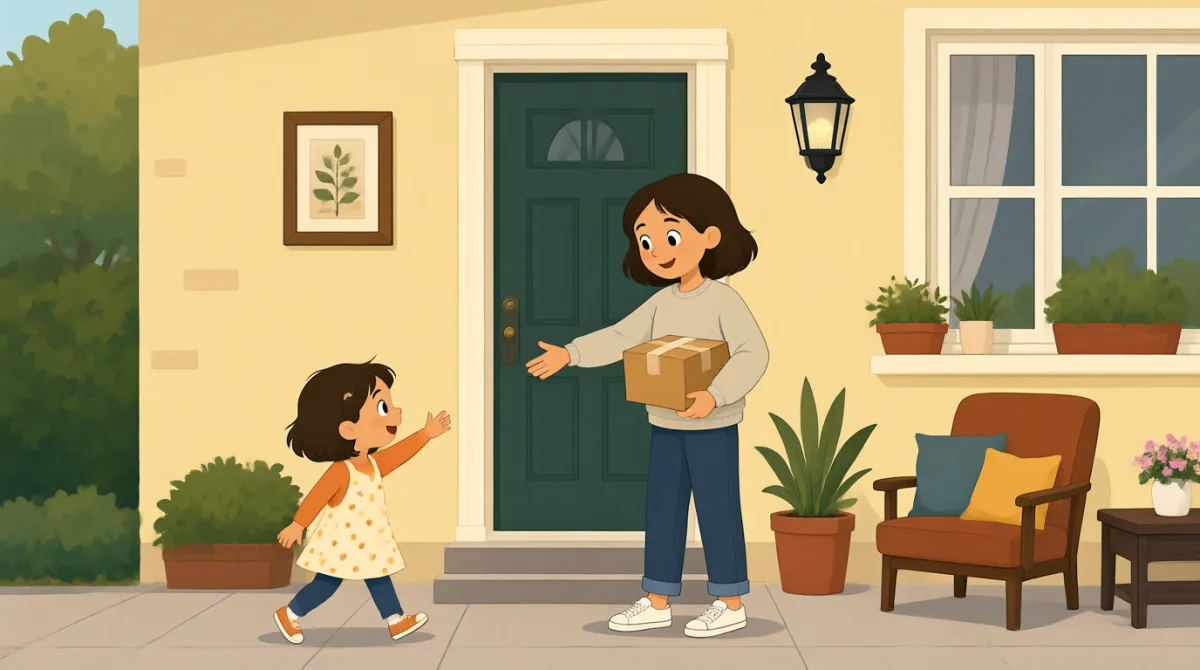

Hi, Mia! I’m back. Thanks for collecting my mail.
หวัดดี มีอา! ฉันกลับมาแล้ว ขอบใจที่ช่วยเก็บจดหมายให้

You’re welcome! I put it all on your table.
ไม่เป็นไรเลย! ฉันวางทุกอย่างไว้บนโต๊ะแล้วนะ
Thanks. Did you get the package, too?
ขอบใจนะ แล้วพัสดุก็ได้รับมาด้วยหรือเปล่า?
Yes, it came yesterday. I brought it inside.
ได้สิ มาส่งเมื่อวาน ฉันเอาเข้ามาไว้ข้างในแล้ว
That’s great. I saw your message while I was away.
ดีเลย ฉันเห็นข้อความของเธอตอนที่ไม่อยู่
I’m glad. I didn’t want it to sit outside.
ดีใจที่เห็นนะ ฉันไม่อยากปล่อยให้มันวางอยู่ข้างนอก
I really appreciate your help. It made my trip easier.
ฉันซาบซึ้งที่เธอช่วยมากเลย ทำให้ทริปของฉันสะดวกขึ้นเยอะ
Happy to help! I hope you had a nice trip.
ยินดีช่วยเสมอ! หวังว่าเธอจะเที่ยวสนุกนะ
คำศัพท์8
- I’m backฉันกลับมาแล้ว
This means you have returned. Use it to tell someone you are home or back at a place.
วลี “I’m back” หมายถึงกลับมาแล้ว ใช้บอกใครสักคนว่าคุณกลับถึงบ้านหรือกลับมาที่เดิมแล้ว
- collecting my mailช่วยเก็บจดหมายให้
This means picking up and keeping someone’s letters while they are away. You can say, “Thanks for collecting my mail.”
“collecting my mail” หมายถึงการไปรับและเก็บจดหมายของใครสักคนไว้ให้ตอนที่เขาไม่อยู่ เช่น “Thanks for collecting my mail.” (ขอบใจที่ช่วยเก็บจดหมายให้)
- put it all on your tableวางทุกอย่างไว้บนโต๊ะของเธอ
This means placing everything on a table. You can change “it all” to name other things someone put somewhere.
“put it all on your table” หมายถึงวางของทุกอย่างไว้บนโต๊ะ คุณเปลี่ยน “it all” เป็นชื่อสิ่งของอื่นที่มีคนนำไปวางไว้ที่ไหนสักแห่งได้
- packageพัสดุ
A package is a box or parcel that is delivered to someone. Use it when asking about something that was sent to you.
“package” คือกล่องหรือห่อพัสดุที่ส่งถึงใครสักคน ใช้คำนี้เวลาถามถึงของที่ส่งมาให้คุณ
- brought it insideเอาเข้ามาไว้ข้างใน
This means carried something into a house or building. You can use “brought” to talk about carrying something to a place in the past.
“brought it inside” หมายถึงถือหรือยกของเข้าไปในบ้านหรืออาคาร ใช้ “brought” พูดถึงการนำของไปยังที่หนึ่งในอดีต
- while I was awayตอนที่ฉันไม่อยู่
This means during the time when I was not at home or in a place. Use it to explain when something happened.
“while I was away” หมายถึงช่วงที่ฉันไม่อยู่บ้านหรือไม่อยู่ในสถานที่นั้น ใช้บอกว่าเหตุการณ์หนึ่งเกิดขึ้นเมื่อไร
- sit outsideวางอยู่ข้างนอก
Here, this means to be left outdoors for some time. You can use it when talking about a delivery or another item left outside.
ในที่นี้ “sit outside” หมายถึงถูกวางทิ้งไว้ข้างนอกสักพัก ใช้พูดถึงของที่มาส่งหรือสิ่งของอื่นที่ถูกวางไว้กลางแจ้ง
- Happy to help!ยินดีช่วยเสมอ!
This is a friendly way to say you were glad to help someone. You can use it when replying to thanks.
“Happy to help!” เป็นคำพูดเป็นกันเองที่ใช้บอกว่าดีใจที่ได้ช่วยใครสักคน ใช้ตอบเมื่อมีคนขอบคุณได้
ประโยคสำคัญ8
- 1
Thanks for collecting my mail.
ขอบใจที่ช่วยเก็บจดหมายให้
Use this sentence to thank someone for picking up your mail. You can replace “collecting my mail” with another helpful action.
ใช้ประโยค “Thanks for collecting my mail.” เพื่อขอบคุณใครสักคนที่ช่วยไปรับจดหมายให้ คุณเปลี่ยน “collecting my mail” เป็นการช่วยเหลืออย่างอื่นได้
- 2
I put it all on your table.
ฉันวางทุกอย่างไว้บนโต๊ะของเธอแล้ว
This tells someone where you left their things. Change “your table” to another place, such as “your desk” or “the kitchen counter.”
ประโยค “I put it all on your table.” ใช้บอกว่าเราวางของของอีกฝ่ายไว้ที่ไหน เปลี่ยน “your table” เป็นสถานที่อื่นได้ เช่น “your desk” หรือ “the kitchen counter”
- 3
Did you get the package, too?
แล้วพัสดุก็ได้รับมาด้วยหรือเปล่า?
Use this question to check whether someone received or picked up a delivery. You can replace “the package” with another item.
ใช้คำถาม “Did you get the package, too?” เพื่อตรวจสอบว่าอีกฝ่ายได้รับหรือไปรับของที่มาส่งหรือไม่ คุณเปลี่ยน “the package” เป็นสิ่งของอย่างอื่นได้
- 4
Yes, it came yesterday.
ใช่ มาส่งเมื่อวาน
This is a simple way to say that something arrived the day before today. Replace “it” with the item you are talking about.
“Yes, it came yesterday.” เป็นวิธีง่าย ๆ ในการบอกว่าของมาถึงเมื่อวาน เปลี่ยน “it” เป็นสิ่งของที่กำลังพูดถึงได้
- 5
I brought it inside.
ฉันเอามันเข้ามาไว้ข้างในแล้ว
Use this sentence to say you carried something indoors. You can replace “it” with a specific item, such as “the box.”
ใช้ประโยค “I brought it inside.” เพื่อบอกว่าคุณถือของเข้าไปในอาคาร คุณเปลี่ยน “it” เป็นชื่อสิ่งของได้ เช่น “the box”
- 6
I saw your message while I was away.
ฉันเห็นข้อความของเธอตอนที่ไม่อยู่
This explains when you read someone’s message. Replace “your message” with another thing you saw or did while you were away.
ประโยค “I saw your message while I was away.” ใช้อธิบายว่าคุณอ่านข้อความของใครตอนช่วงไหน เปลี่ยน “your message” เป็นสิ่งอื่นที่คุณเห็นหรือทำตอนที่ไม่อยู่ได้
- 7
I really appreciate your help.
ฉันซาบซึ้งที่เธอช่วยมากเลย
This is a warm way to show that you are very thankful. You can use it after someone has done something kind for you.
“I really appreciate your help.” เป็นวิธีอบอุ่นในการบอกว่าคุณขอบคุณมาก ใช้ได้หลังจากมีคนทำสิ่งดี ๆ ให้คุณ
- 8
I hope you had a nice trip.
หวังว่าเธอจะเที่ยวสนุกนะ
Use this friendly sentence to show interest in someone’s past trip. You can replace “trip” with another event, such as “weekend.”
ใช้ประโยคเป็นกันเอง “I hope you had a nice trip.” เพื่อแสดงความสนใจทริปที่ผ่านมาของใครสักคน คุณเปลี่ยน “trip” เป็นกิจกรรมอื่น เช่น “weekend” ได้