Being Stopped for Speeding
तेज़ गति से गाड़ी चलाने पर रोका जाना
Emma is pulled over by Officer David after driving above the speed limit. She stays calm and listens as he explains why he stopped her.
गति सीमा से तेज़ गाड़ी चलाने के बाद अधिकारी डेविड एमा को रोकते हैं। वह शांत रहती है और उनकी बात सुनती है कि उन्होंने उसे क्यों रोका।
संवाद8
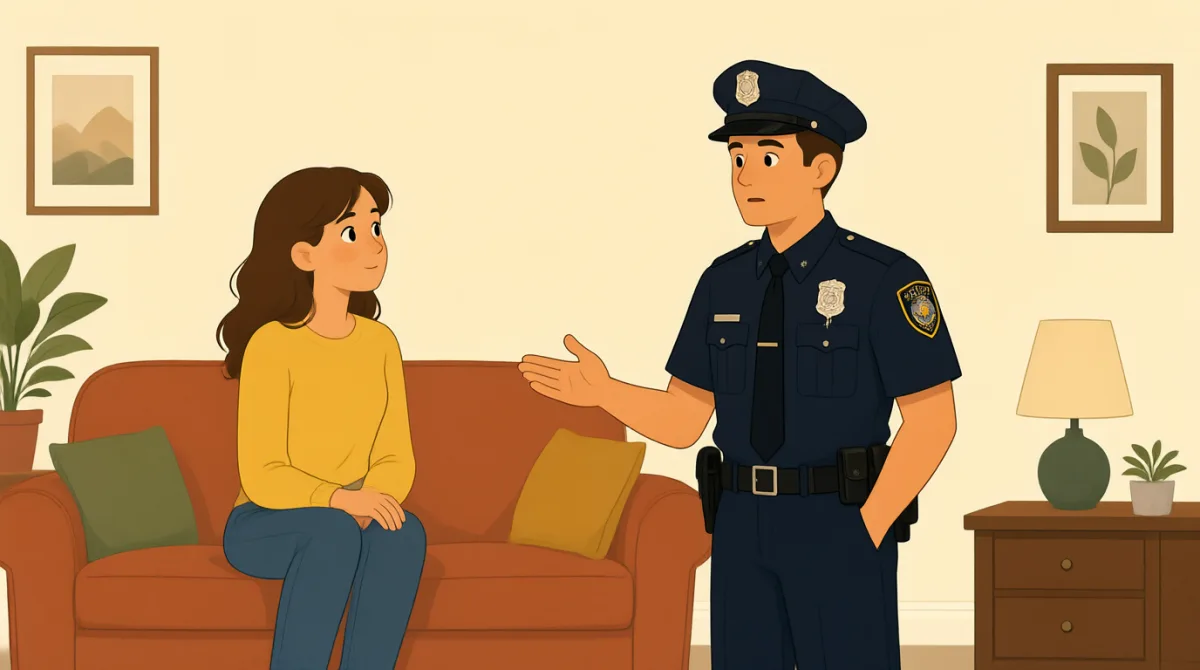

Good afternoon, officer. Is something wrong? I saw your lights and pulled over as soon as I found a safe place.
नमस्कार, अधिकारी। क्या कुछ गड़बड़ है? मैंने आपकी गाड़ी की बत्तियाँ देखीं और जैसे ही मुझे सुरक्षित जगह मिली, मैंने गाड़ी सड़क किनारे रोक दी।

Good afternoon. I stopped you because you were driving about ten miles over the speed limit. The limit here is 35 miles per hour.
नमस्कार। मैंने आपको इसलिए रोका क्योंकि आप गति सीमा से लगभग दस मील प्रति घंटा तेज़ गाड़ी चला रही थीं। यहाँ गति सीमा 35 मील प्रति घंटा है।
I’m sorry. I didn’t realize I was going that fast. I was trying to keep up with traffic, but I should have checked my speed.
माफ़ कीजिए। मुझे एहसास नहीं हुआ कि मैं इतनी तेज़ जा रही थी। मैं बाकी गाड़ियों की रफ़्तार के साथ चलने की कोशिश कर रही थी, लेकिन मुझे अपनी गति देखनी चाहिए थी।
I understand, but please remember that the posted limit still applies, even when other drivers are moving faster.
मैं समझता हूँ, लेकिन कृपया याद रखिए कि सड़क पर लगे संकेत की गति सीमा लागू रहती है, भले ही दूसरे चालक तेज़ चल रहे हों।
You’re right. I’ll pay closer attention from now on. Should I keep the car in park while we talk?
आप सही कह रहे हैं। अब से मैं ज़्यादा ध्यान दूँगी। क्या बात करते समय मुझे गाड़ी पार्क में रखनी चाहिए?
Yes, please leave it in park and keep your hands where I can see them. I’ll explain what happens next.
जी, कृपया गाड़ी पार्क में ही रहने दीजिए और अपने हाथ ऐसी जगह रखिए जहाँ मैं उन्हें देख सकूँ। मैं बताऊँगा कि आगे क्या होगा।
Okay, my hands are on the steering wheel. I’m a little nervous, but I’m listening. Was my speed recorded by your radar?
ठीक है, मेरे हाथ स्टीयरिंग व्हील पर हैं। मैं थोड़ी घबराई हुई हूँ, लेकिन आपकी बात सुन रही हूँ। क्या आपके रडार ने मेरी गति दर्ज की थी?
Yes, the radar showed 45 miles per hour. I’ll check your documents and then tell you whether I’m issuing a warning or a ticket.
हाँ, रडार ने 45 मील प्रति घंटा दिखाया। मैं आपके दस्तावेज़ देखूँगा और फिर बताऊँगा कि मैं आपको चेतावनी दे रहा हूँ या चालान काट रहा हूँ।
शब्दावली8
- pulled overसड़क किनारे रोकना
Stopped a vehicle by the side of the road, usually because a police officer signaled the driver to stop.
किसी वाहन को सड़क के किनारे रोकना, आम तौर पर इसलिए कि पुलिस अधिकारी ने चालक को रुकने का संकेत दिया हो।
- speed limitगति सीमा
The maximum legal speed for vehicles on a particular road.
किसी खास सड़क पर वाहनों के लिए कानूनी रूप से तय अधिकतम रफ़्तार।
- keep up with trafficबाकी गाड़ियों की रफ़्तार के साथ चलना
Drive at a speed similar to the other vehicles around you.
अपने आस-पास की दूसरी गाड़ियों जैसी रफ़्तार से गाड़ी चलाना।
- posted limitसड़क पर लगे संकेत की गति सीमा
The speed limit shown on a road sign. It still applies even if other drivers are going faster.
सड़क के संकेत पर दिखाई गई गति सीमा। दूसरे चालक तेज़ चल रहे हों, तब भी यह लागू रहती है।
- pay closer attentionज़्यादा ध्यान देना
Be more careful and notice something more carefully. You can use this phrase when promising to take greater care.
ज़्यादा सावधान रहना और किसी बात पर गौर करना। ज़्यादा ध्यान रखने का वादा करते समय आप इस अभिव्यक्ति का इस्तेमाल कर सकते हैं।
- keep your hands where I can see themअपने हाथ ऐसी जगह रखना जहाँ मैं उन्हें देख सकूँ
A direct instruction asking someone to keep their hands visible. It is useful to recognize this phrase in a police interaction.
यह एक सीधा निर्देश है जिसमें किसी से अपने हाथ दिखाई देते रहने देने को कहा जाता है। पुलिस से बातचीत के दौरान इस वाक्यांश को समझना उपयोगी है।
- a little nervousथोड़ा घबराया हुआ
Slightly worried or uneasy. Use “a little” to describe a feeling in a gentle, understated way.
थोड़ी चिंता या बेचैनी महसूस करना। किसी भावना को हल्के और संयत ढंग से बताने के लिए “a little” का इस्तेमाल करें।
- issuing a warning or a ticketचेतावनी देना या चालान काटना
Giving a driver either an official warning or a fine for breaking a traffic rule.
यातायात का नियम तोड़ने पर चालक को आधिकारिक चेतावनी देना या जुर्माना लगाना।
मुख्य वाक्य8
- 1
I saw your lights and pulled over as soon as I found a safe place.
मैंने आपकी गाड़ी की बत्तियाँ देखीं और जैसे ही मुझे सुरक्षित जगह मिली, मैंने गाड़ी रोक दी।
This explains that you noticed a police vehicle and stopped when it was safe. You can reuse “as soon as I found a safe place” to explain why you waited before stopping.
इस वाक्य से आप बताते हैं कि आपने पुलिस की गाड़ी देखी और सुरक्षित होने पर ही रुके। रुकने से पहले इंतज़ार क्यों किया, यह समझाने के लिए आप “as soon as I found a safe place” का फिर से इस्तेमाल कर सकते हैं।
- 2
I didn’t realize I was going that fast.
मुझे एहसास नहीं हुआ कि मैं इतनी तेज़ जा रही थी।
This is a polite way to say you were unaware of your speed. You can adapt it to explain that you did not notice something in another situation.
अपनी रफ़्तार का पता न होने की बात कहने का यह एक विनम्र तरीका है। किसी दूसरी परिस्थिति में कोई बात ध्यान न देने की बात बताने के लिए भी आप इसे ढाल सकते हैं।
- 3
I was trying to keep up with traffic, but I should have checked my speed.
मैं बाकी गाड़ियों की रफ़्तार के साथ चलने की कोशिश कर रही थी, लेकिन मुझे अपनी गति देखनी चाहिए थी।
This gives a reason and then accepts responsibility. The pattern “I was trying to…, but I should have…” is useful for explaining a mistake.
इस वाक्य में पहले आप अपनी वजह बताते हैं और फिर अपनी ज़िम्मेदारी स्वीकार करते हैं। गलती समझाने के लिए “I was trying to…, but I should have…” का ढाँचा उपयोगी है।
- 4
The posted limit still applies, even when other drivers are moving faster.
सड़क पर लगे संकेत की गति सीमा लागू रहती है, भले ही दूसरे चालक तेज़ चल रहे हों।
This sentence explains that a rule remains in effect despite what other people do. You can reuse “still applies, even when…” to talk about rules in other situations.
यह वाक्य बताता है कि दूसरों के कुछ भी करने पर भी नियम लागू रहता है। दूसरी परिस्थितियों के नियमों की बात करने के लिए “still applies, even when…” का फिर से इस्तेमाल कर सकते हैं।
- 5
I’ll pay closer attention from now on.
अब से मैं ज़्यादा ध्यान दूँगी।
This is a concise way to promise to be more careful in the future. Replace “pay closer attention” with another action to make a similar promise.
भविष्य में ज़्यादा सावधान रहने का वादा करने का यह एक संक्षिप्त तरीका है। ऐसा ही वादा करने के लिए “pay closer attention” की जगह कोई दूसरी कार्रवाई रख सकते हैं।
- 6
Should I keep the car in park while we talk?
क्या बात करते समय मुझे गाड़ी पार्क में रखनी चाहिए?
This is a polite question asking what to do while speaking with someone. You can reuse “Should I… while we talk?” in other situations where you need instructions.
यह किसी से बात करते समय क्या करना है, यह पूछने का एक विनम्र तरीका है। जब आपको निर्देश चाहिए हों, तो दूसरी परिस्थितियों में भी “Should I… while we talk?” का इस्तेमाल कर सकते हैं।
- 7
I’m a little nervous, but I’m listening.
मैं थोड़ी घबराई हुई हूँ, लेकिन आपकी बात सुन रही हूँ।
This honestly describes a feeling while showing that you are paying attention. The pattern “I’m a little…, but I’m…” can help express a feeling and a reassuring response together.
इस वाक्य में आप ईमानदारी से अपनी भावना बताते हैं और साथ ही दिखाते हैं कि आप ध्यान दे रहे हैं। एक भावना बताने और सामने वाले को आश्वस्त करने के लिए “I’m a little…, but I’m…” का ढाँचा काम आ सकता है।
- 8
I’ll check your documents and then tell you whether I’m issuing a warning or a ticket.
मैं आपके दस्तावेज़ देखूँगा और फिर बताऊँगा कि मैं आपको चेतावनी दे रहा हूँ या चालान काट रहा हूँ।
This explains the next steps in a clear sequence. You can reuse “I’ll [action] and then tell you whether…” when describing a process.
इसमें अगले कदम साफ़ क्रम में बताए गए हैं। किसी प्रक्रिया का वर्णन करते समय “I’ll [action] and then tell you whether…” का फिर से इस्तेमाल कर सकते हैं।