Understanding the Ticket and How to Pay
टिकट को समझना और भुगतान कैसे करना है
Officer David gives Emma a ticket and explains the payment deadline and her options. Emma asks a few clear questions to make sure she understands what to do next.
अधिकारी David Emma को टिकट देते हैं और भुगतान की अंतिम तिथि तथा उसके विकल्प समझाते हैं। Emma यह सुनिश्चित करने के लिए कुछ स्पष्ट सवाल पूछती है कि उसे आगे क्या करना है, यह समझ में आ गया है।
संवाद10
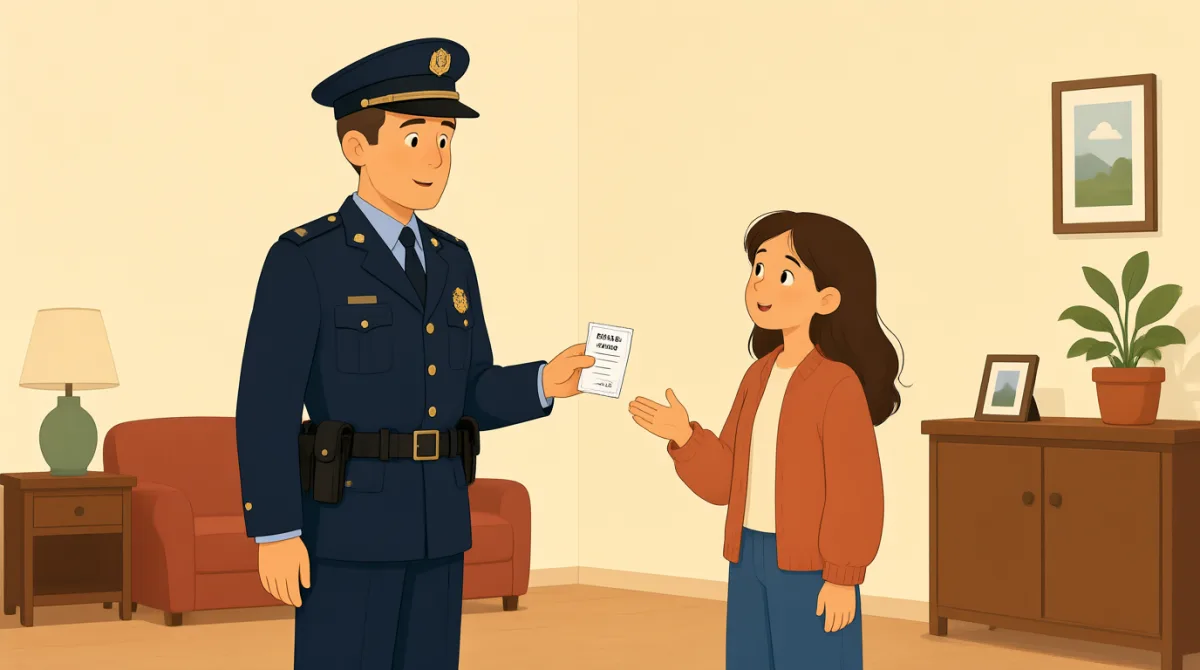

Here’s your ticket. It says you were going 42 in a 30-mile-per-hour zone.
यह रहा आपका टिकट। इसमें लिखा है कि 30 मील प्रति घंटे की सीमा वाले क्षेत्र में आप 42 मील प्रति घंटे की रफ्तार से जा रही थीं।

I understand. When do I need to pay the fine?
मैं समझती हूँ। मुझे जुर्माना कब तक भरना होगा?
You have 30 days from today. You can pay online, by mail, or in person at the courthouse.
आज से आपके पास 30 दिन हैं। आप ऑनलाइन, डाक से या अदालत में व्यक्तिगत रूप से भुगतान कर सकती हैं।
If I pay online, do I need the ticket number?
अगर मैं ऑनलाइन भुगतान करूँ, तो क्या मुझे टिकट नंबर चाहिए?
Yes. The ticket number is at the top. The website is printed on the back, along with payment instructions.
हाँ। टिकट नंबर सबसे ऊपर है। भुगतान संबंधी निर्देशों के साथ वेबसाइट का पता पीछे छपा हुआ है।
Thanks. Does paying the fine mean I’m admitting I was speeding?
धन्यवाद। क्या जुर्माना भरने का मतलब यह है कि मैं मान रही हूँ कि मैं तेज़ रफ्तार से गाड़ी चला रही थी?
Yes, paying it is an admission. If you want to contest the ticket, follow the instructions to request a court hearing.
हाँ, इसे भरना दोष स्वीकार करना है। अगर आप टिकट को चुनौती देना चाहती हैं, तो अदालत में सुनवाई का अनुरोध करने के निर्देशों का पालन करें।
I see. If I request a hearing, should I still pay within those 30 days?
समझ गई। अगर मैं सुनवाई का अनुरोध करूँ, तो क्या मुझे फिर भी उन 30 दिनों के भीतर भुगतान करना चाहिए?
No. Follow the hearing instructions instead, and keep a copy of your ticket. That way, you’ll have the details handy.
नहीं। इसके बजाय सुनवाई संबंधी निर्देशों का पालन करें और अपने टिकट की एक प्रति संभालकर रखें। इससे आपके पास सारी जानकारी आसानी से उपलब्ध रहेगी।
All right. I’ll read everything carefully and take care of it before the deadline.
ठीक है। मैं सब कुछ ध्यान से पढ़ूँगी और अंतिम तिथि से पहले यह काम पूरा कर लूँगी।
शब्दावली8
- fineजुर्माना
A fine is money you must pay as a penalty. Here, it is the penalty for speeding.
A fine वह धनराशि है जो आपको दंड के रूप में चुकानी पड़ती है। यहाँ यह तेज़ रफ्तार से गाड़ी चलाने का दंड है।
- 30 days from todayआज से 30 दिन
This means the deadline is 30 days after the current date. You can use this phrase to explain when something is due.
This means का अर्थ है कि अंतिम तिथि वर्तमान तारीख के 30 दिन बाद है। आप इस वाक्यांश का इस्तेमाल यह बताने के लिए कर सकते हैं कि किसी काम की समय-सीमा कब है।
- in personव्यक्तिगत रूप से
This means going somewhere yourself rather than paying online or by mail. Here, Emma can pay at the courthouse.
This means का अर्थ है कि ऑनलाइन या डाक से भुगतान करने के बजाय आप स्वयं किसी स्थान पर जाएँ। यहाँ Emma अदालत में भुगतान कर सकती हैं।
- payment instructionsभुगतान संबंधी निर्देश
These are directions explaining how to pay. You can use this phrase when asking how to complete a payment.
ये वे निर्देश हैं जो बताते हैं कि भुगतान कैसे करना है। भुगतान पूरा करने का तरीका पूछते समय आप इस वाक्यांश का इस्तेमाल कर सकते हैं।
- admissionदोष स्वीकार करना
An admission is a statement that you accept something is true. Here, paying the ticket means accepting that you were speeding.
An admission ऐसा कथन है जिसमें आप स्वीकार करते हैं कि कोई बात सच है। यहाँ टिकट का भुगतान करने का मतलब यह स्वीकार करना है कि आप तेज़ रफ्तार से गाड़ी चला रही थीं।
- contest the ticketटिकट को चुनौती देना
To contest a ticket is to challenge it because you disagree with it. You can use this phrase when asking how to dispute a fine or decision.
To contest a ticket का अर्थ है टिकट को चुनौती देना, क्योंकि आप उससे सहमत नहीं हैं। जुर्माने या किसी निर्णय पर आपत्ति जताने का तरीका पूछते समय आप इस वाक्यांश का इस्तेमाल कर सकते हैं।
- court hearingअदालत में सुनवाई
A court hearing is a meeting in court where a judge considers a case. Here, Emma can request one if she wants to challenge the ticket.
A court hearing अदालत में होने वाली वह बैठक है जिसमें कोई न्यायाधीश किसी मामले पर विचार करता है। यहाँ, अगर Emma टिकट को चुनौती देना चाहती हैं, तो वे ऐसी सुनवाई का अनुरोध कर सकती हैं।
- keep a copyएक प्रति संभालकर रखना
To keep a copy means to save another version of a document for your records. This is useful when you may need to check the details later.
To keep a copy का अर्थ है अपने रिकॉर्ड के लिए किसी दस्तावेज़ की एक और प्रति सुरक्षित रखना। यह तब उपयोगी होता है जब आपको बाद में उसकी जानकारी जाँचने की ज़रूरत पड़ सकती है।
मुख्य वाक्य8
- 1
When do I need to pay the fine?
मुझे जुर्माना कब तक भरना होगा?
This is a clear way to ask about a payment deadline. You can reuse the pattern, “When do I need to [do something]?”
यह भुगतान की अंतिम तिथि पूछने का एक स्पष्ट तरीका है। आप “When do I need to [do something]?” पैटर्न का दोबारा इस्तेमाल कर सकते हैं।
- 2
You can pay online, by mail, or in person at the courthouse.
आप ऑनलाइन, डाक से या अदालत में व्यक्तिगत रूप से भुगतान कर सकती हैं।
This sentence explains different ways to complete a payment. Use “You can [option], [option], or [option]” to list choices.
यह वाक्य भुगतान पूरा करने के अलग-अलग तरीकों को समझाता है। विकल्पों की सूची देने के लिए “You can [option], [option], or [option]” का इस्तेमाल करें।
- 3
If I pay online, do I need the ticket number?
अगर मैं ऑनलाइन भुगतान करूँ, तो क्या मुझे टिकट नंबर चाहिए?
This is a useful question for checking what information is required. Use “If I [choose an option], do I need [something]?” to ask about a condition.
यह जानने के लिए पूछा जाने वाला उपयोगी सवाल है कि कौन-सी जानकारी आवश्यक है। किसी शर्त के बारे में पूछने के लिए “If I [choose an option], do I need [something]?” का इस्तेमाल करें।
- 4
Does paying the fine mean I’m admitting I was speeding?
क्या जुर्माना भरने का मतलब यह है कि मैं मान रही हूँ कि मैं तेज़ रफ्तार से गाड़ी चला रही थी?
This asks whether an action has a particular meaning or consequence. You can reuse “Does [action] mean I’m [doing something]?” to check what an action implies.
इसमें पूछा जाता है कि क्या किसी काम का कोई खास अर्थ या परिणाम है। यह जानने के लिए कि किसी काम से क्या संकेत मिलता है, “Does [action] mean I’m [doing something]?” का दोबारा इस्तेमाल कर सकते हैं।
- 5
If you want to contest the ticket, follow the instructions to request a court hearing.
अगर आप टिकट को चुनौती देना चाहती हैं, तो अदालत में सुनवाई का अनुरोध करने के निर्देशों का पालन करें।
This gives a condition and the steps to take if you disagree with a ticket. Use “If you want to [goal], follow the instructions to [next step].”
यह शर्त बताता है और यह भी समझाता है कि अगर आप टिकट से असहमत हों तो क्या कदम उठाने हैं। “If you want to [goal], follow the instructions to [next step].” का इस्तेमाल करें।
- 6
If I request a hearing, should I still pay within those 30 days?
अगर मैं सुनवाई का अनुरोध करूँ, तो क्या मुझे फिर भी उन 30 दिनों के भीतर भुगतान करना चाहिए?
This is a useful way to ask whether a usual deadline still applies in a different situation. “Should I still…?” checks what to do when circumstances change.
यह पूछने का उपयोगी तरीका है कि अलग परिस्थिति में भी सामान्य समय-सीमा लागू होती है या नहीं। “Should I still…?” बदलती परिस्थितियों में क्या करना है, यह जानने के लिए इस्तेमाल होता है।
- 7
That way, you’ll have the details handy.
इससे आपके पास सारी जानकारी आसानी से उपलब्ध रहेगी।
“That way” introduces the result of doing something, and “handy” means easy to find or use. You can use this phrase to explain why a practical step is helpful.
“That way” किसी काम के परिणाम का परिचय देता है और “handy” का अर्थ है आसानी से मिल जाने वाला या इस्तेमाल किया जा सकने वाला। किसी व्यावहारिक कदम के लाभदायक होने का कारण समझाने के लिए आप इस वाक्यांश का इस्तेमाल कर सकते हैं।
- 8
I’ll read everything carefully and take care of it before the deadline.
मैं सब कुछ ध्यान से पढ़ूँगी और अंतिम तिथि से पहले यह काम पूरा कर लूँगी।
This sentence confirms a plan and shows that the speaker will act on time. Use “I’ll [action] and take care of it before [time or event]” to describe a responsible next step.
यह वाक्य किसी योजना की पुष्टि करता है और दिखाता है कि बोलने वाला समय पर काम करेगा। जिम्मेदारी से उठाए जाने वाले अगले कदम का वर्णन करने के लिए “I’ll [action] and take care of it before [time or event]” का इस्तेमाल करें।