The Doctor Checks Your Child
डॉक्टर आपके बच्चे की जाँच करते हैं
Dr. David checks the child and explains what he thinks is causing the fever. He gives Mia clear advice about rest, fluids, and when to call back.
डॉ. डेविड बच्चे की जाँच करते हैं और बताते हैं कि उन्हें बुखार का कारण क्या लगता है। वह मिया को आराम करने, खूब तरल पदार्थ पीने और दोबारा कब फ़ोन करना चाहिए, इस बारे में साफ़ सलाह देते हैं।
संवाद9
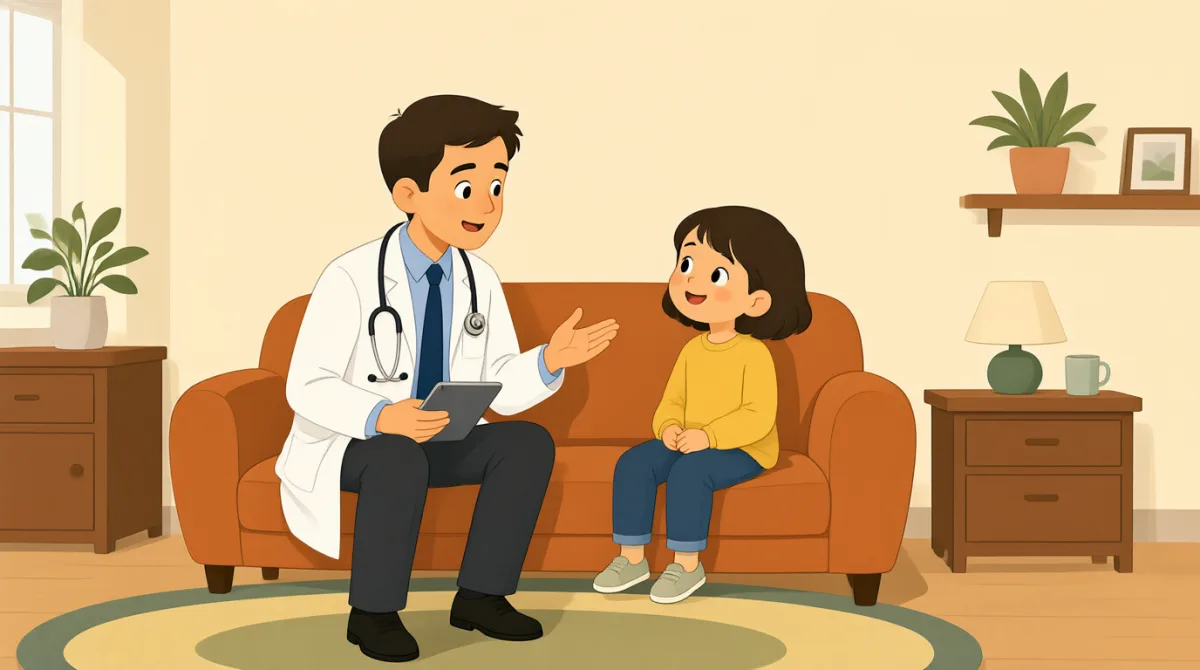

I’m going to listen to your child’s chest and check their ears.
मैं आपके बच्चे की छाती सुनूँगा और उसके कानों की जाँच करूँगा।

Okay. They’ve been coughing, and the fever started yesterday.
ठीक है। उसे खाँसी हो रही है और बुखार कल शुरू हुआ था।
Take a deep breath, please. Good. I don’t hear anything unusual.
कृपया गहरी साँस लीजिए। अच्छा। मुझे कुछ असामान्य सुनाई नहीं दे रहा।
What do you think is causing the fever?
आपको क्या लगता है, बुखार किस वजह से है?
It looks like a common virus. Your child should rest and drink plenty of fluids.
लगता है कि यह एक आम वायरस है। आपके बच्चे को आराम करना चाहिए और खूब तरल पदार्थ पीने चाहिए।
Should I give medicine if the fever comes back?
अगर बुखार वापस आ जाए, तो क्या मैं दवा दूँ?
You can give children’s medicine as the label says. Don’t give more than the recommended amount.
आप बच्चों की दवा लेबल पर दिए निर्देशों के अनुसार दे सकती हैं। सुझाई गई मात्रा से ज़्यादा न दें।
When should I call you again?
मुझे आपको दोबारा कब फ़ोन करना चाहिए?
Call if the fever lasts more than three days or your child has trouble breathing.
अगर बुखार तीन दिन से ज़्यादा रहे या आपके बच्चे को साँस लेने में दिक्कत हो, तो फ़ोन कीजिए।
शब्दावली8
- take a deep breathगहरी साँस लेना
Breathe in deeply. A doctor may say this to help check your breathing.
गहरी साँस अंदर लेना। डॉक्टर आपकी साँस की जाँच करने के लिए ऐसा कह सकते हैं।
- coughingखाँसी होना
Making a sound when air comes out of your throat suddenly. People often cough when they are sick.
जब गले से हवा अचानक बाहर निकलती है, तो आवाज़ होती है। बीमार होने पर लोगों को अक्सर खाँसी होती है।
- feverबुखार
A higher-than-normal body temperature, often caused by an illness.
शरीर का तापमान सामान्य से ज़्यादा होना, जो अक्सर किसी बीमारी की वजह से होता है।
- common virusआम वायरस
A virus that many people get. It can cause symptoms like a cough or fever.
ऐसा वायरस जो बहुत से लोगों को होता है। इससे खाँसी या बुखार जैसे लक्षण हो सकते हैं।
- plenty of fluidsखूब तरल पदार्थ
A lot of drinks, such as water. This phrase is often used as advice when someone is sick.
पानी जैसे पेय पदार्थों की अधिक मात्रा। किसी के बीमार होने पर अक्सर यह सलाह दी जाती है।
- comes backवापस आना
Returns after going away. Here, it means the fever returns.
चले जाने के बाद फिर से होना। यहाँ इसका मतलब है कि बुखार दोबारा हो रहा है।
- recommended amountसुझाई गई मात्रा
The amount that is advised as safe or suitable, such as the dose written on a medicine label.
वह मात्रा जिसे सुरक्षित या उचित माना जाता है, जैसे दवा के लेबल पर लिखी खुराक।
- trouble breathingसाँस लेने में दिक्कत
Difficulty breathing. This can be a serious reason to contact a doctor.
साँस लेने में परेशानी। डॉक्टर से संपर्क करने का यह एक गंभीर कारण हो सकता है।
मुख्य वाक्य7
- 1
I’m going to listen to your child’s chest and check their ears.
मैं आपके बच्चे की छाती सुनूँगा और उसके कानों की जाँच करूँगा।
This explains what a doctor is about to do. Use “I’m going to” to tell someone about a planned action.
इस वाक्य में बताया गया है कि डॉक्टर अभी क्या करने वाले हैं। किसी तय काम के बारे में बताने के लिए “I’m going to” का इस्तेमाल करें।
- 2
They’ve been coughing, and the fever started yesterday.
उसे खाँसी हो रही है और बुखार कल शुरू हुआ था।
This describes symptoms and when they began. You can use this pattern to give a doctor clear information about an illness.
इसमें लक्षणों और उनके शुरू होने का समय बताया गया है। बीमारी के बारे में डॉक्टर को साफ़ जानकारी देने के लिए आप इस तरह का वाक्य इस्तेमाल कर सकते हैं।
- 3
Take a deep breath, please.
कृपया गहरी साँस लीजिए।
This is a polite instruction. Use “Take a…” to ask someone to do a simple action.
यह विनम्रता से दिया गया निर्देश है। किसी से कोई आसान काम करने के लिए कहने हेतु “Take a…” का इस्तेमाल करें।
- 4
It looks like a common virus.
लगता है कि यह एक आम वायरस है।
This is a simple way to explain what may be causing an illness. “It looks like…” shows that something seems likely.
बीमारी किस वजह से हो सकती है, यह बताने का यह एक आसान तरीका है। “It looks like…” से पता चलता है कि कोई बात संभावित लगती है।
- 5
Your child should rest and drink plenty of fluids.
आपके बच्चे को आराम करना चाहिए और खूब तरल पदार्थ पीने चाहिए।
This gives advice about what to do when sick. Use “should” to make a helpful recommendation.
इसमें बीमार होने पर क्या करना चाहिए, इसकी सलाह दी गई है। मददगार सुझाव देने के लिए “should” का इस्तेमाल करें।
- 6
You can give children’s medicine as the label says.
आप बच्चों की दवा लेबल पर दिए निर्देशों के अनुसार दे सकती हैं।
This explains how to use medicine by following its instructions. You can use “as the label says” when talking about directions on a product.
इसमें दवा के निर्देशों का पालन करके उसे इस्तेमाल करने का तरीका बताया गया है। किसी उत्पाद पर दिए निर्देशों की बात करते समय “as the label says” का इस्तेमाल कर सकते हैं।
- 7
Call if the fever lasts more than three days or your child has trouble breathing.
अगर बुखार तीन दिन से ज़्यादा रहे या आपके बच्चे को साँस लेने में दिक्कत हो, तो फ़ोन कीजिए।
This tells someone when to contact the doctor again. Use “Call if…” to give a clear condition for calling.
इसमें बताया गया है कि डॉक्टर से दोबारा कब संपर्क करना चाहिए। फ़ोन करने की स्पष्ट शर्त बताने के लिए “Call if…” का इस्तेमाल करें।