Setting Up the Tent
तंबू लगाना
Emma and Jack unpack their tent and try to put it up. They work together and follow the instructions.
एमा और जैक अपना तंबू खोलते हैं और उसे लगाने की कोशिश करते हैं। वे मिलकर काम करते हैं और निर्देशों का पालन करते हैं।
संवाद9
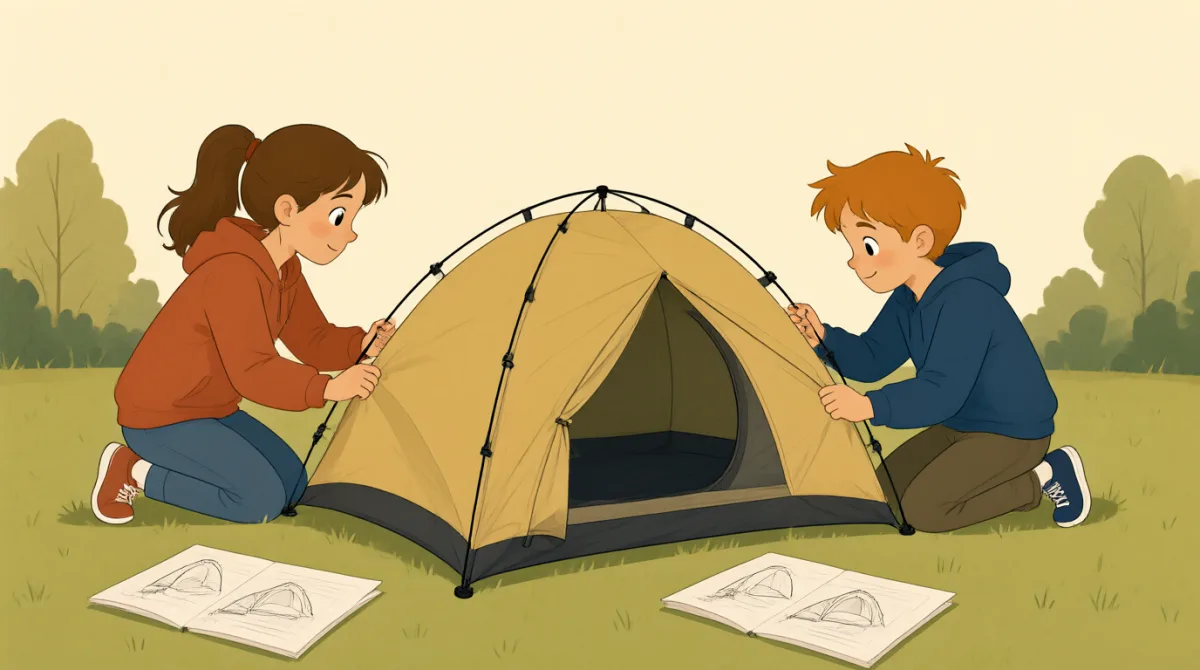

The tent is out of the bag. Which pieces should we use first?
तंबू बैग से बाहर है। हमें पहले कौन-से हिस्से इस्तेमाल करने चाहिए?

Let's check the instructions. First, we need to lay the tent flat.
निर्देश देख लेते हैं। सबसे पहले, हमें तंबू को ज़मीन पर बिछाना होगा।
Okay, I’ll spread it out here. Is this the front door?
ठीक है, मैं इसे यहाँ फैला देती हूँ। क्या यह सामने वाला दरवाज़ा है?
Yes. Now connect these poles and push them through the loops.
हाँ। अब इन डंडों को जोड़ो और उन्हें छल्लों में से निकालो।
This pole is a little stuck. Can you help me with it?
यह डंडा थोड़ा अटक गया है। क्या तुम इसमें मेरी मदद कर सकते हो?
Sure. Hold this end while I push the pole through.
ज़रूर। जब तक मैं डंडे को अंदर धकेलूँ, तुम इसका यह सिरा पकड़े रहना।
Great, it’s standing up! Where do these small pegs go?
बढ़िया, तंबू खड़ा हो गया! ये छोटी खूंटियाँ कहाँ लगेंगी?
Put them through the loops at each corner, then push them into the ground.
उन्हें हर कोने के छल्लों में से निकालो, फिर ज़मीन में गाड़ दो।
All done! The tent feels strong. Let’s put our bags inside.
हो गया! तंबू मज़बूत लग रहा है। चलो, अपने बैग अंदर रख दें।
शब्दावली8
- lay the tent flatतंबू को ज़मीन पर बिछाना
Put the tent on the ground so it is flat. You can use this phrase when you prepare something before setting it up.
तंबू को ज़मीन पर इस तरह रखना कि वह सपाट हो जाए। किसी चीज़ को लगाने से पहले तैयार करते समय इस वाक्यांश का इस्तेमाल कर सकते हो।
- spread it outफैलाना
Open the tent and make it cover a larger area. You can also spread out a blanket or a map.
तंबू को खोलकर इस तरह फैलाना कि वह ज़्यादा जगह घेरे। तुम कंबल या नक्शा फैलाने के लिए भी यह कह सकते हो।
- connect these polesइन डंडों को जोड़ना
Join these tent poles together. Use “connect” when you attach two or more things.
तंबू के इन डंडों को आपस में जोड़ना। दो या उससे ज़्यादा चीज़ों को जोड़ने के लिए “connect” का इस्तेमाल करो।
- push them through the loopsउन्हें छल्लों में से निकालना
Move the poles through the small fabric loops. “Push something through” describes moving it from one side to the other.
डंडों को कपड़े के छोटे छल्लों में से आगे बढ़ाना। “Push something through” का मतलब है किसी चीज़ को एक तरफ़ से दूसरी तरफ़ धकेलना।
- a little stuckथोड़ा अटका हुआ
Not moving easily, but only slightly. You can say this when something is difficult to pull or move.
आसानी से न हिलना, लेकिन बस थोड़ा-सा। जब किसी चीज़ को खींचना या हिलाना मुश्किल हो, तब तुम यह कह सकते हो।
- pegsखूँटियाँ
Small pointed pieces that hold the tent in place in the ground. They help keep the tent steady.
नुकीली छोटी चीज़ें, जिन्हें तंबू को ज़मीन पर अपनी जगह टिकाए रखने के लिए लगाया जाता है। ये तंबू को स्थिर रखने में मदद करती हैं।
- at each cornerहर कोने पर
At every corner of the tent. Use “each” to talk about every one in a group.
तंबू के सभी कोनों पर। किसी समूह की हर चीज़ की बात करने के लिए “each” का इस्तेमाल करो।
- push them into the groundउन्हें ज़मीन में गाड़ना
Press the pegs down into the soil. You can use this phrase when putting something firmly into the ground.
खूँटियों को दबाकर मिट्टी में गाड़ना। किसी चीज़ को मज़बूती से ज़मीन में लगाने के लिए तुम इस वाक्यांश का इस्तेमाल कर सकते हो।
मुख्य वाक्य8
- 1
Let's check the instructions.
निर्देश देख लेते हैं।
This is a useful way to suggest looking at directions before starting a task. You can also say, “Let’s check the instructions for the game.”
कोई काम शुरू करने से पहले उसके निर्देश देखने का सुझाव देने का यह एक अच्छा तरीका है। तुम यह भी कह सकते हो, “Let’s check the instructions for the game.”
- 2
First, we need to lay the tent flat.
सबसे पहले, हमें तंबू को ज़मीन पर बिछाना होगा।
This sentence explains the first step in a task. Reuse “First, we need to…” to describe what to do at the beginning.
इस वाक्य में किसी काम का पहला कदम बताया गया है। शुरुआत में क्या करना है, यह बताने के लिए “First, we need to…” का फिर से इस्तेमाल करो।
- 3
Okay, I’ll spread it out here.
ठीक है, मैं इसे यहाँ फैला देती हूँ।
This sentence offers to do a simple task and says where you will do it. Use “I’ll spread it out” for things like a blanket or a map.
इस वाक्य में तुम कोई आसान काम करने की पेशकश करते हो और बताते हो कि उसे कहाँ करोगे। कंबल या नक्शे जैसी चीज़ों के लिए “I’ll spread it out” का इस्तेमाल करो।
- 4
Can you help me with it?
क्या तुम इसमें मेरी मदद कर सकते हो?
This is a polite way to ask someone for help. You can use it when a task or object is difficult to manage.
किसी से मदद माँगने का यह एक विनम्र तरीका है। जब कोई काम या चीज़ सँभालना मुश्किल हो, तब तुम इसका इस्तेमाल कर सकते हो।
- 5
Hold this end while I push the pole through.
जब तक मैं डंडे को अंदर धकेलूँ, तुम इसका यह सिरा पकड़े रहना।
This gives someone a clear task to do at the same time as yours. Use “while” to connect two actions happening together.
इसमें किसी को ऐसा साफ़ काम बताया जाता है जिसे वह तुम्हारे काम के साथ-साथ कर सकता है। एक ही समय पर हो रही दो क्रियाओं को जोड़ने के लिए “while” का इस्तेमाल करो।
- 6
Put them through the loops at each corner, then push them into the ground.
उन्हें हर कोने के छल्लों में से निकालो, फिर ज़मीन में गाड़ दो।
This sentence gives simple instructions in the correct order. Use “then” to introduce the next step.
इस वाक्य में आसान निर्देश सही क्रम में दिए गए हैं। अगला कदम बताने के लिए “then” का इस्तेमाल करो।
- 7
The tent feels strong.
तंबू मज़बूत लग रहा है।
This describes how something seems when you touch or use it. You can also say, “The table feels strong.”
इससे पता चलता है कि किसी चीज़ को छूने या इस्तेमाल करने पर वह कैसी महसूस होती है। तुम यह भी कह सकते हो, “The table feels strong.”
- 8
Let’s put our bags inside.
चलो, अपने बैग अंदर रख दें।
This is a friendly suggestion to move things into a place. Reuse “Let’s put our…” when suggesting a shared action.
किसी चीज़ को किसी जगह के अंदर ले जाने का यह एक दोस्ताना सुझाव है। साथ मिलकर कोई काम करने का सुझाव देते समय “Let’s put our…” का फिर से इस्तेमाल करो।