Cooking Over a Fire
आग पर खाना पकाना
Emma and Jack cook dinner over the campsite fire. They prepare a simple meal and talk about what they want to do the next day.
एमा और जैक कैंप की आग पर रात का खाना पकाते हैं। वे सादा खाना बनाते हैं और अगले दिन क्या करना चाहते हैं, इस बारे में बात करते हैं।
संवाद8
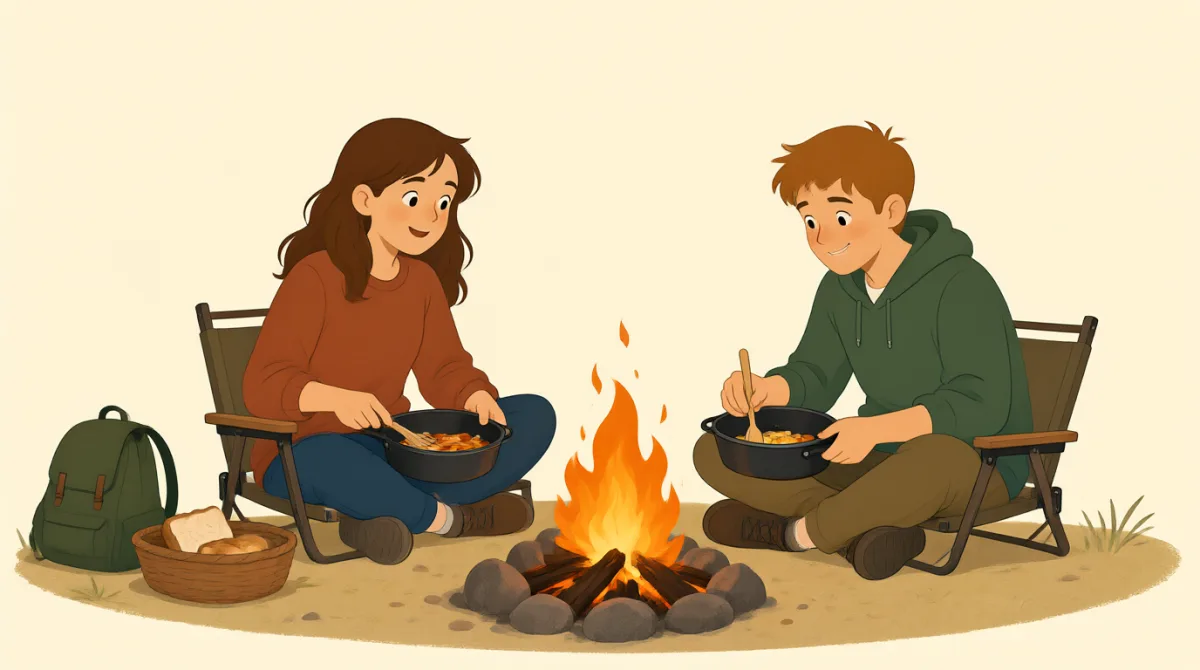

The fire is ready. What should we cook for dinner?
आग तैयार है। रात के खाने में क्या पकाएँ?

Let’s cook sausages and potatoes. I brought some bread, too.
चलो सॉसेज और आलू पकाते हैं। मैं कुछ ब्रेड भी लाई हूँ।
Great! Can you put the potatoes in the pan?
बढ़िया! क्या तुम आलू पैन में डाल दोगे?
Sure. We should cook them slowly so they don’t burn.
ज़रूर। हमें इन्हें धीरे-धीरे पकाना चाहिए, ताकि ये जल न जाएँ।
I’ll turn the sausages. They smell really good.
मैं सॉसेज पलट देती हूँ। इनकी खुशबू बहुत अच्छी है।
Dinner will be ready soon. What do you want to do tomorrow?
रात का खाना जल्द तैयार हो जाएगा। तुम कल क्या करना चाहते हो?
I’d like to hike by the lake and take some pictures.
मैं झील के किनारे पैदल घूमना और कुछ तस्वीरें लेना चाहती हूँ।
Sounds good. Let’s eat, then plan our morning.
अच्छा है। चलो खाना खाते हैं, फिर सुबह की योजना बनाते हैं।
शब्दावली8
- cook for dinnerरात के खाने के लिए पकाना
This means to prepare food for the evening meal. You can ask, “What should we cook for dinner?”
इसका मतलब है शाम के भोजन के लिए खाना तैयार करना। तुम पूछ सकते हो, “What should we cook for dinner?” (रात के खाने में क्या पकाएँ?)
- broughtलाया / लाई
“Brought” is the past form of “bring.” Use it to say you carried something with you, such as food on a camping trip.
“Brought” का मतलब है “bring” का भूतकाल। इसका इस्तेमाल यह बताने के लिए करो कि तुम कोई चीज़ अपने साथ लाए थे, जैसे कैंपिंग की यात्रा पर खाना।
- put the potatoes in the panआलू पैन में डालना
This means to place the potatoes inside the pan. You can use “put [something] in [a container]” when giving a simple instruction.
इसका मतलब है आलुओं को पैन के अंदर रखना। कोई आसान निर्देश देते समय “put [something] in [a container]” (किसी चीज़ को किसी बर्तन में रखना) कह सकते हो।
- cook them slowlyउन्हें धीरे-धीरे पकाना
This means to heat the food gently over time. You can use this phrase when food needs to cook without burning.
इसका मतलब है खाने को कुछ समय तक धीमी आँच पर गर्म करना। जब खाने को जलाए बिना पकाना हो, तब यह वाक्यांश काम आता है।
- turn the sausagesसॉसेज पलटना
This means to move or flip the sausages so they cook on the other side. It is useful when cooking food in a pan or over a fire.
इसका मतलब है सॉसेज को घुमाना या पलटना, ताकि वे दूसरी तरफ़ से भी पकें। पैन में या आग पर खाना पकाते समय यह वाक्यांश उपयोगी है।
- burnजलना
Food burns when it gets too hot or cooks for too long. You can say, “Watch the food so it doesn’t burn.”
खाना बहुत ज़्यादा गर्म होने या देर तक पकने पर जल जाता है। तुम कह सकते हो, “Watch the food so it doesn’t burn.” (खाने पर ध्यान रखना, कहीं वह जल न जाए।)
- by the lakeझील के किनारे
This means near or beside the lake. Use “by” to describe a place next to something.
इसका मतलब है झील के पास या उसके किनारे। किसी जगह के किसी चीज़ के बगल में होने की बात बताने के लिए “by” का इस्तेमाल करो।
- take some picturesकुछ तस्वीरें लेना
This means to use a camera or phone to make photographs. You can say, “I’d like to take some pictures” when talking about plans.
इसका मतलब है कैमरे या फ़ोन से तस्वीरें खींचना। अपनी योजनाओं के बारे में बात करते हुए तुम कह सकते हो, “I’d like to take some pictures” (मैं कुछ तस्वीरें लेना चाहती हूँ)।
मुख्य वाक्य8
- 1
What should we cook for dinner?
रात के खाने में क्या पकाएँ?
Use this question to ask for ideas about what to prepare for an evening meal. You can replace “dinner” with another meal or occasion.
शाम के भोजन के लिए क्या बनाया जाए, इस बारे में सुझाव माँगने के लिए यह सवाल पूछो। “dinner” की जगह किसी दूसरे भोजन या अवसर का नाम रख सकते हो।
- 2
I brought some bread, too.
मैं कुछ ब्रेड भी लाई हूँ।
This sentence tells someone that you brought an additional item. Use “I brought [something], too” to mention something you have with you.
इस वाक्य से तुम किसी को बताते हो कि तुम एक और चीज़ साथ लाए हो। अपने पास मौजूद किसी चीज़ का ज़िक्र करने के लिए “I brought [something], too” का इस्तेमाल करो।
- 3
Can you put the potatoes in the pan?
क्या तुम आलू पैन में डाल दोगे?
This is a polite way to ask someone to do a task. Replace “the potatoes” and “the pan” with other things and places.
किसी से कोई काम करने के लिए विनम्रता से कहने का यह तरीका है। “the potatoes” और “the pan” की जगह दूसरी चीज़ों और जगहों के नाम रख सकते हो।
- 4
We should cook them slowly so they don’t burn.
हमें इन्हें धीरे-धीरे पकाना चाहिए, ताकि ये जल न जाएँ।
Use “We should” to make a suggestion, and “so” to explain the reason. You can use this pattern to give practical advice.
सुझाव देने के लिए “We should” और कारण बताने के लिए “so” का इस्तेमाल करो। व्यावहारिक सलाह देने के लिए इस ढाँचे का उपयोग कर सकते हो।
- 5
I’ll turn the sausages.
मैं सॉसेज पलट देती हूँ।
Use “I’ll” to offer to do something now or soon. Replace “turn the sausages” with another helpful task.
अभी या थोड़ी देर में कोई काम करने की पेशकश करने के लिए “I’ll” का इस्तेमाल करो। “turn the sausages” की जगह कोई दूसरा मददगार काम रख सकते हो।
- 6
What do you want to do tomorrow?
तुम कल क्या करना चाहते हो?
Use this question to ask someone about their plans for the next day. You can replace “tomorrow” with another time.
अगले दिन की योजनाओं के बारे में पूछने के लिए यह सवाल इस्तेमाल करो। “tomorrow” की जगह कोई और समय रख सकते हो।
- 7
I’d like to hike by the lake and take some pictures.
मैं झील के किनारे पैदल घूमना और कुछ तस्वीरें लेना चाहती हूँ।
Use “I’d like to” to talk about something you want to do. Add two activities with “and” to describe your plans.
अपनी किसी इच्छा या योजना के बारे में बताने के लिए “I’d like to” का इस्तेमाल करो। अपनी योजनाओं में दो गतिविधियाँ जोड़ने के लिए “and” लगाओ।
- 8
Let’s eat, then plan our morning.
चलो खाना खाते हैं, फिर सुबह की योजना बनाते हैं।
Use “Let’s” to suggest doing something together. “Then” shows the order of the activities: eat first and plan afterward.
साथ मिलकर कुछ करने का सुझाव देने के लिए “Let’s” का इस्तेमाल करो। “Then” गतिविधियों का क्रम बताता है: पहले खाना, फिर योजना बनाना।