Building It at Home
घर पर इसे जोड़ना
After the sofa arrives, Emma and Mia unpack it and follow the instructions to put it together. They finish the job and enjoy their new living room.
सोफ़ा आने के बाद एमा और मिया उसे खोलती हैं और जोड़ने के निर्देशों का पालन करती हैं। काम पूरा करके वे अपने नए बैठक-कक्ष का आनंद लेती हैं।
संवाद8
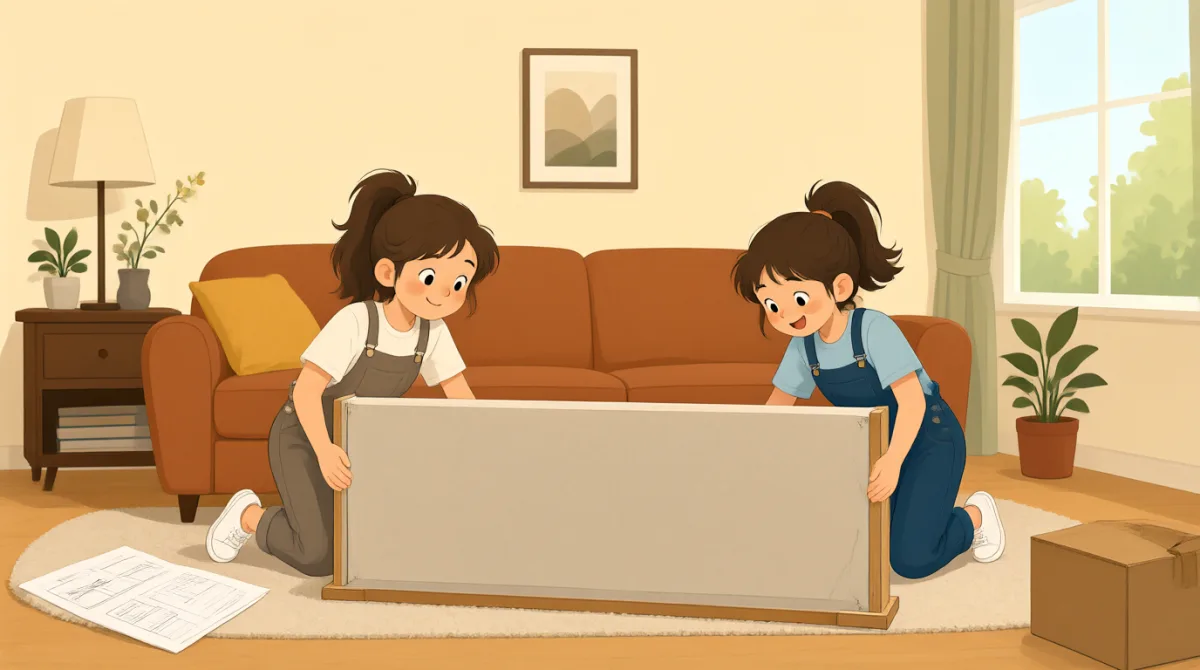

The sofa is here! Let’s open the boxes and check the instructions.
सोफ़ा आ गया! चलो, डिब्बे खोलकर निर्देश देखते हैं।

Sure. I’ll take out the parts while you find the tools.
ठीक है। तुम औज़ार ढूँढ़ो, तब तक मैं पुर्ज़े निकालती हूँ।
I found the screws and the little wrench. What should we do first?
मुझे पेंच और छोटी-सी रिंच मिल गई। हमें पहले क्या करना चाहिए?
The instructions say to attach the legs to the bottom of the sofa.
निर्देशों में लिखा है कि सोफ़े के नीचे पैर लगाने हैं।
Can you hold this side? I’ll put the screws in.
क्या तुम इस तरफ़ को पकड़ोगी? मैं पेंच लगाती हूँ।
Of course. Turn the wrench slowly so the screws go in straight.
ज़रूर। रिंच को धीरे-धीरे घुमाना, ताकि पेंच सीधे अंदर जाएँ।
All four legs are on. Let’s turn the sofa over carefully.
चारों पैर लग गए। चलो, सोफ़े को ध्यान से पलटते हैं।
It looks great! Now we can sit down and enjoy your new living room.
यह बहुत अच्छा लग रहा है! अब हम बैठकर तुम्हारे नए बैठक-कक्ष का आनंद ले सकते हैं।
शब्दावली7
- open the boxesडिब्बे खोलना
To remove the things inside a box. Use this phrase when you unpack something you bought.
डिब्बे के अंदर की चीज़ें बाहर निकालना। खरीदी हुई चीज़ का पैकेट खोलते समय इस वाक्यांश का इस्तेमाल करें।
- take outबाहर निकालना
To remove something from a container or box. You can say, “I’ll take out the parts.”
किसी चीज़ को डिब्बे या पात्र से निकालना। आप कह सकते हैं, “I’ll take out the parts.” (मैं पुर्ज़े निकालती हूँ।)
- toolsऔज़ार
Things you use to do a job, such as a wrench or a screwdriver. Use this word when talking about fixing or building something.
काम करने के लिए इस्तेमाल की जाने वाली चीज़ें, जैसे रिंच या पेचकस। किसी चीज़ की मरम्मत या उसे जोड़ने की बात करते समय इस शब्द का इस्तेमाल करें।
- screwsपेंच
Small metal fasteners that hold pieces together. They are often used to build furniture.
धातु के छोटे कसने वाले पुर्ज़े, जो चीज़ों को जोड़कर रखते हैं। इनका इस्तेमाल अक्सर फ़र्नीचर बनाने में होता है।
- attach the legsपैर लगाना
To connect the legs to another part of the furniture. You can use “attach” when explaining how to put something together.
फ़र्नीचर के पैरों को उसके किसी दूसरे हिस्से से जोड़ना। किसी चीज़ को जोड़ने का तरीका बताते समय “attach” शब्द का इस्तेमाल कर सकते हैं।
- hold this sideइस तरफ़ को पकड़ना
To keep one side in place while someone works on it. Use this phrase when you need help handling a large or heavy object.
किसी के उस पर काम करते समय एक तरफ़ को अपनी जगह पर थामे रखना। बड़ी या भारी चीज़ सँभालने में मदद माँगते समय इस वाक्यांश का इस्तेमाल करें।
- sit downबैठना
To move into a sitting position. Use this common phrase when inviting someone to take a seat.
बैठने की मुद्रा में आना। किसी को बैठने के लिए कहने के लिए इस आम वाक्यांश का इस्तेमाल करें।
मुख्य वाक्य8
- 1
Let’s open the boxes and check the instructions.
चलो, डिब्बे खोलकर निर्देश देखते हैं।
This sentence suggests two tasks using “Let’s.” Use the same pattern to suggest doing something together, such as “Let’s unpack the dishes.”
इस वाक्य में “Let’s” का इस्तेमाल करके दो काम सुझाए गए हैं। साथ मिलकर कुछ करने का सुझाव देने के लिए यही ढाँचा इस्तेमाल करें, जैसे “Let’s unpack the dishes.” (चलो, बर्तन खोलकर निकालते हैं।)
- 2
I’ll take out the parts while you find the tools.
तुम औज़ार ढूँढ़ो, तब तक मैं पुर्ज़े निकालती हूँ।
This sentence divides two jobs using “while.” Use “I’ll … while you …” to explain what two people can do at the same time.
इस वाक्य में “while” का इस्तेमाल करके दो काम बाँटे गए हैं। यह बताने के लिए “I’ll … while you …” का इस्तेमाल करें कि दो लोग एक ही समय पर क्या-क्या कर सकते हैं।
- 3
What should we do first?
हमें पहले क्या करना चाहिए?
This is a useful way to ask about the first step in a task. Use it when you need instructions or are unsure where to begin.
किसी काम का पहला कदम पूछने का यह एक उपयोगी तरीका है। जब आपको निर्देश चाहिए हों या समझ न आए कि शुरुआत कहाँ से करें, तब इसका इस्तेमाल करें।
- 4
The instructions say to attach the legs to the bottom of the sofa.
निर्देशों में लिखा है कि सोफ़े के नीचे पैर लगाने हैं।
This explains what the instructions tell you to do. Use “The instructions say to …” when describing a step in a guide.
इस वाक्य में बताया गया है कि निर्देशों के अनुसार आपको क्या करना है। किसी गाइड में दिए गए कदम का वर्णन करते समय “The instructions say to …” का इस्तेमाल करें।
- 5
Can you hold this side?
क्या तुम इस तरफ़ को पकड़ोगी?
This is a simple, polite way to ask someone for help. You can replace “this side” with another thing they can hold or support.
किसी से मदद माँगने का यह एक आसान और विनम्र तरीका है। “this side” की जगह किसी ऐसी दूसरी चीज़ का नाम रख सकते हैं जिसे वह पकड़ या सहारा दे सके।
- 6
Turn the wrench slowly so the screws go in straight.
रिंच को धीरे-धीरे घुमाना, ताकि पेंच सीधे अंदर जाएँ।
This sentence gives an instruction and explains its purpose with “so.” Use this pattern to say how to do something and what result you want.
इस वाक्य में एक निर्देश दिया गया है और “so” के ज़रिए उसका मकसद बताया गया है। कोई काम कैसे करना है और उससे क्या नतीजा चाहते हैं, यह बताने के लिए इस ढाँचे का इस्तेमाल करें।
- 7
Let’s turn the sofa over carefully.
चलो, सोफ़े को ध्यान से पलटते हैं।
This suggests moving the sofa together and reminds everyone to be careful. Use “Let’s … carefully” for other shared tasks that need care.
इसमें साथ मिलकर सोफ़ा पलटने का सुझाव दिया गया है और सबको सावधान रहने की याद दिलाई गई है। सावधानी से किए जाने वाले दूसरे साझा कामों के लिए “Let’s … carefully” का इस्तेमाल करें।
- 8
Now we can sit down and enjoy your new living room.
अब हम बैठकर तुम्हारे नए बैठक-कक्ष का आनंद ले सकते हैं।
This sentence shows that the job is finished and it is time to relax. Use “Now we can …” to talk about what you are able to do next.
इस वाक्य से पता चलता है कि काम पूरा हो गया है और अब आराम करने का समय है। आगे क्या कर सकते हैं, यह बताने के लिए “Now we can …” का इस्तेमाल करें।