Quick Check at a Bus Stop
बस स्टॉप पर समय पूछना
You're waiting for a bus and realize you don't know the current time, so you ask a fellow passenger.
आप बस का इंतज़ार कर रहे हैं और आपको एहसास होता है कि आपको अभी का समय पता नहीं है, इसलिए आप पास खड़े एक यात्री से पूछते हैं।
संवाद5
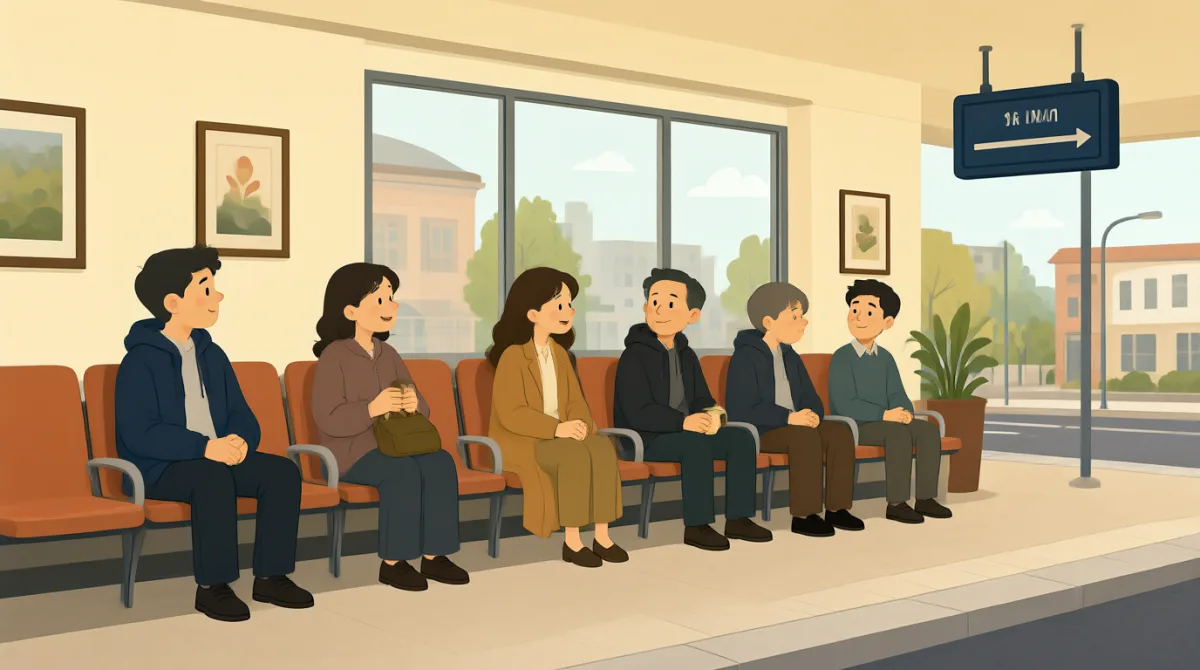

Excuse me, I'm so sorry to bother you, but do you happen to know what time it is?
माफ़ कीजिए, आपको परेशान करने के लिए बहुत माफ़ी चाहता हूँ, लेकिन क्या आपको पता है कि अभी कितने बजे हैं?

No bother at all! Let's see... it's exactly 3:15 PM.
कोई बात नहीं! ज़रा देखती हूँ... ठीक 3:15 PM बजे हैं।
Oh, perfect! Thank you so much. My phone died and I forgot my watch today.
अरे, बढ़िया! आपका बहुत-बहुत शुक्रिया। मेरा फ़ोन बंद हो गया और आज मैं अपनी घड़ी लाना भूल गया।
No problem! Happens to me all the time. Are you waiting for the 22 bus, too?
कोई बात नहीं! मेरे साथ भी ऐसा अक्सर होता है। क्या आप भी 22 नंबर की बस का इंतज़ार कर रहे हैं?
Yes, I am! Hopefully, it'll be here soon. Thanks again for your help with the time.
हाँ, कर रहा हूँ! उम्मीद है, यह जल्द ही आ जाएगी। समय बताने में मदद करने के लिए फिर से शुक्रिया।
शब्दावली6
- botherपरेशान करना
To bother someone means to disturb or annoy them slightly. Use it politely when apologizing for interrupting, like in asking for help.
किसी को परेशान करने का मतलब है उसे थोड़ा-सा तंग करना या खलल डालना। मदद माँगते समय बीच में टोकने के लिए माफ़ी माँगनी हो, तो इस शब्द का विनम्रता से इस्तेमाल करें।
- happen to knowसंयोग से पता होना
This phrase means 'do you know by chance?' It's a polite way to ask if someone has specific information, making your question softer and less direct.
इसका मतलब है 'क्या आपको संयोग से पता है?' किसी से कोई खास जानकारी विनम्रता से पूछने का यह तरीका सवाल को थोड़ा नरम और कम सीधा बनाता है।
- exactlyठीक
Exactly means precisely or right on time. Use it to give accurate details, like when telling the time or measurements.
इसका मतलब है बिल्कुल सही या ठीक उसी समय। समय या माप जैसी सटीक जानकारी देने के लिए इसका इस्तेमाल करें।
- diedबंद हो गया
When a phone or battery 'dies,' it means it runs out of power and stops working. This is common in everyday talk about electronics.
जब किसी फ़ोन या बैटरी के बारे में कहा जाता है कि वह 'द died', तो इसका मतलब है कि उसकी बैटरी खत्म हो गई और उसने काम करना बंद कर दिया। इलेक्ट्रॉनिक चीज़ों के बारे में रोज़मर्रा की बातचीत में यह आम है।
- watchघड़ी
A watch is a small clock you wear on your wrist to check the time easily. It's useful in conversations about being on time or forgetting things.
घड़ी एक छोटी समय बताने वाली चीज़ है, जिसे समय देखने के लिए कलाई पर पहना जाता है। समय पर पहुँचने या कुछ भूल जाने की बातचीत में यह काम आती है।
- hopefullyउम्मीद है
Hopefully means 'I hope so' or 'with hope.' Use it to express a positive wish about a future event, like waiting for something to arrive.
इसका मतलब है 'मुझे ऐसी उम्मीद है' या 'आशा के साथ'। भविष्य में होने वाली किसी बात के लिए अपनी सकारात्मक इच्छा जताने को इसका इस्तेमाल करें, जैसे किसी चीज़ के आने का इंतज़ार करते समय।
मुख्य वाक्य5
- 1
Excuse me, I'm so sorry to bother you, but do you happen to know what time it is?
माफ़ कीजिए, आपको परेशान करने के लिए बहुत माफ़ी चाहता हूँ, लेकिन क्या आपको पता है कि अभी कितने बजे हैं?
This is a polite way to ask for the time. 'Excuse me' gets attention, 'I'm so sorry to bother you' apologizes for interrupting, and 'do you happen to know' softens the question. Use it in public when you need information without being rude. Grammar: Polite question structure with 'but' to connect apology and request.
समय पूछने का यह एक विनम्र तरीका है। 'Excuse me' कहकर आप सामने वाले का ध्यान खींचते हैं, 'I'm so sorry to bother you' कहकर बीच में टोकने के लिए माफ़ी माँगते हैं, और 'do you happen to know' सवाल को नरम बनाता है। सार्वजनिक जगह पर बिना बदतमीज़ लगे जानकारी माँगने के लिए इसका इस्तेमाल करें। व्याकरण: माफ़ी और अनुरोध को जोड़ने के लिए 'but' के साथ विनम्र सवाल की बनावट।
- 2
No bother at all! Let's see... it's exactly 3:15 PM.
कोई बात नहीं! ज़रा देखती हूँ... ठीक 3:15 PM बजे हैं।
This responds kindly to an apology. 'No bother at all' means it's not a problem, and 'Let's see' shows thinking. 'Exactly 3:15 PM' gives precise time. Useful for helpful replies; practice telling time with AM/PM. Grammar: Exclamation for reassurance and simple present for stating facts.
यह माफ़ी का जवाब प्यार से देता है। 'No bother at all' का मतलब है कि कोई परेशानी नहीं हुई, और 'Let's see' से पता चलता है कि आप सोच रहे हैं। 'Exactly 3:15 PM' सटीक समय बताता है। मददगार जवाब देते समय यह काम आता है; AM/PM के साथ समय बताने का अभ्यास करें। व्याकरण: भरोसा दिलाने के लिए विस्मयादिबोधक वाक्य और तथ्य बताने के लिए सामान्य वर्तमान काल।
- 3
Oh, perfect! Thank you so much. My phone died and I forgot my watch today.
अरे, बढ़िया! आपका बहुत-बहुत शुक्रिया। मेरा फ़ोन बंद हो गया और आज मैं अपनी घड़ी लाना भूल गया।
This shows relief and thanks. 'Oh, perfect!' expresses happiness, 'Thank you so much' is strong gratitude. Explain reason with 'and' connecting problems. Use when someone helps you and you share why you needed it. Grammar: Interjection for emotion and past tense for today's events.
इससे राहत और शुक्रिया जताया जाता है। 'Oh, perfect!' खुशी ज़ाहिर करता है और 'Thank you so much' गहरी कृतज्ञता दिखाता है। अपनी ज़रूरत की वजह बताते समय 'and' से दो समस्याएँ जोड़ें। जब कोई आपकी मदद करे और आप बताएँ कि आपको मदद क्यों चाहिए थी, तब इसका इस्तेमाल करें। व्याकरण: भाव जताने के लिए विस्मयादिबोधक शब्द और आज हुई घटनाओं के लिए भूतकाल।
- 4
No problem! Happens to me all the time.
कोई बात नहीं! मेरे साथ भी ऐसा अक्सर होता है।
'No problem' means you're welcome casually. 'Happens to me all the time' shows empathy by sharing a similar experience. Great for building conversation after helping. Use in friendly chats. Grammar: Present simple for general truths and frequency adverb 'all the time.'
'No problem' अनौपचारिक ढंग से 'कोई बात नहीं' कहने का तरीका है। 'Happens to me all the time' अपना ऐसा ही अनुभव साझा करके हमदर्दी जताता है। मदद करने के बाद बातचीत आगे बढ़ाने के लिए यह बढ़िया है। दोस्ताना बातचीत में इसका इस्तेमाल करें। व्याकरण: आम तौर पर होने वाली बातों के लिए सामान्य वर्तमान काल और बारंबारता बताने वाला 'all the time'।
- 5
Yes, I am! Hopefully, it'll be here soon.
हाँ, कर रहा हूँ! उम्मीद है, यह जल्द ही आ जाएगी।
This confirms and adds hope. 'Yes, I am!' agrees emphatically. 'Hopefully' expresses wish, 'it'll be' is future contraction. Useful for waiting situations like buses. Grammar: Emphatic affirmative and future 'will' for predictions.
इससे आप बात की पुष्टि करते हुए अपनी उम्मीद भी जताते हैं। 'Yes, I am!' ज़ोर देकर सहमति जताता है। 'Hopefully' उम्मीद ज़ाहिर करता है और 'it'll be' भविष्य का संक्षिप्त रूप है। बस का इंतज़ार करने जैसी स्थितियों में यह काम आता है। व्याकरण: ज़ोरदार सकारात्मक जवाब और अनुमान के लिए भविष्यसूचक 'will'।