Quick Check at a Bus Stop
公交車站快速詢問
You're waiting for a bus and realize you don't know the current time, so you ask a fellow passenger.
你在等公交車,發現不知道現在幾點了,於是向一位同伴乘客詢問。
對話5
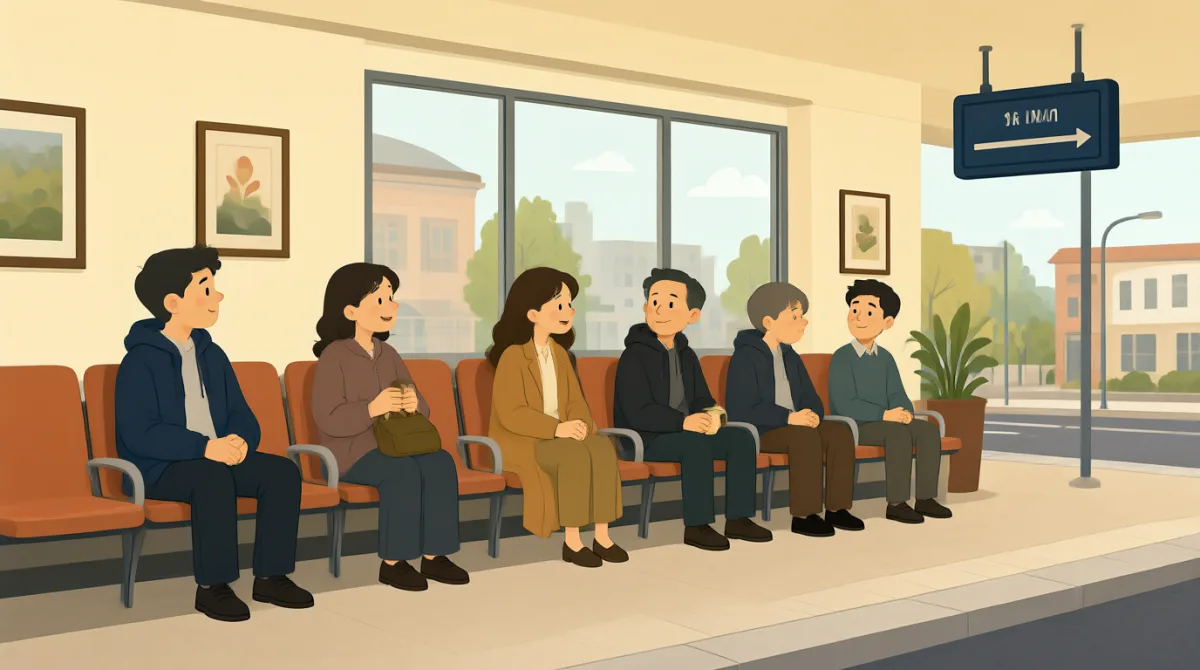

Excuse me, I'm so sorry to bother you, but do you happen to know what time it is?
打擾一下,非常抱歉打擾您,但您知道現在幾點了嗎?

No bother at all! Let's see... it's exactly 3:15 PM.
一點也不麻煩!我看看……現在正好是下午3點15分。
Oh, perfect! Thank you so much. My phone died and I forgot my watch today.
哦,太好了!非常感謝。我的手機沒電了,今天又忘了戴手錶。
No problem! Happens to me all the time. Are you waiting for the 22 bus, too?
沒問題!我經常遇到這種情況。你也在等22路公交車嗎?
Yes, I am! Hopefully, it'll be here soon. Thanks again for your help with the time.
是的,我就是!希望它能很快到。再次感謝您告訴我時間。
詞彙6
- bother打擾
To bother someone means to disturb or annoy them slightly. Use it politely when apologizing for interrupting, like in asking for help.
“bother”指稍微打擾或惹惱某人。在打斷別人並請求幫助時,可以用它禮貌地表達歉意。
- happen to know碰巧知道
This phrase means 'do you know by chance?' It's a polite way to ask if someone has specific information, making your question softer and less direct.
“happen to know”意思是“碰巧知道嗎?”。詢問對方是否掌握某項資訊時,用這個說法會更禮貌,讓問題聽起來不那麼直接。
- exactly正好
Exactly means precisely or right on time. Use it to give accurate details, like when telling the time or measurements.
“exactly”表示精確地或正好。告訴別人準確的細節時可以用它,比如報時間或尺寸。
- died沒電了
When a phone or battery 'dies,' it means it runs out of power and stops working. This is common in everyday talk about electronics.
手機或電池“dies”時,意思是電量耗盡、無法繼續工作。在日常談論電子裝置時,這種說法很常見。
- watch手錶
A watch is a small clock you wear on your wrist to check the time easily. It's useful in conversations about being on time or forgetting things.
“watch”是戴在手腕上的小型鐘錶,方便隨時看時間。談論守時或忘帶東西時常會用到這個詞。
- hopefully希望
Hopefully means 'I hope so' or 'with hope.' Use it to express a positive wish about a future event, like waiting for something to arrive.
“hopefully”表示“我希望如此”或“懷著希望”。想表達對未來某件事的積極期待時可以用它,比如盼著某樣東西快點到。
關鍵句5
- 1
Excuse me, I'm so sorry to bother you, but do you happen to know what time it is?
打擾一下,非常抱歉打擾您,但您知道現在幾點了嗎?
This is a polite way to ask for the time. 'Excuse me' gets attention, 'I'm so sorry to bother you' apologizes for interrupting, and 'do you happen to know' softens the question. Use it in public when you need information without being rude. Grammar: Polite question structure with 'but' to connect apology and request.
這是禮貌詢問時間的說法。“Excuse me”用來引起對方注意,“I'm so sorry to bother you”表示抱歉打擾,“do you happen to know”則讓問題聽起來更委婉。在公共場合需要詢問資訊又不想顯得失禮時,可以這樣說。語法:用“but”連線道歉和請求,構成禮貌的問句。
- 2
No bother at all! Let's see... it's exactly 3:15 PM.
一點也不麻煩!我看看……現在正好是下午3點15分。
This responds kindly to an apology. 'No bother at all' means it's not a problem, and 'Let's see' shows thinking. 'Exactly 3:15 PM' gives precise time. Useful for helpful replies; practice telling time with AM/PM. Grammar: Exclamation for reassurance and simple present for stating facts.
這是對方道歉時友善的回應。“No bother at all”表示完全沒關係,“Let's see”表示正在檢視或思考。“Exactly 3:15 PM”則報出準確時間。可以用這個說法熱心回應別人;也可以練習用 AM/PM 報時。語法:用感嘆句安慰對方,並用一般現在時陳述事實。
- 3
Oh, perfect! Thank you so much. My phone died and I forgot my watch today.
哦,太好了!非常感謝。我的手機沒電了,今天又忘了戴手錶。
This shows relief and thanks. 'Oh, perfect!' expresses happiness, 'Thank you so much' is strong gratitude. Explain reason with 'and' connecting problems. Use when someone helps you and you share why you needed it. Grammar: Interjection for emotion and past tense for today's events.
這句話表達瞭如釋重負和感謝。“Oh, perfect!”表達開心,“Thank you so much”表示非常感謝。用“and”連線兩個問題,說明需要別人幫忙的原因。有人幫助你時,可以這樣感謝對方並解釋自己為什麼需要幫助。語法:用感嘆詞表達情緒,並用過去時描述今天發生的事。
- 4
No problem! Happens to me all the time.
沒問題!我也經常遇到這種情況。
'No problem' means you're welcome casually. 'Happens to me all the time' shows empathy by sharing a similar experience. Great for building conversation after helping. Use in friendly chats. Grammar: Present simple for general truths and frequency adverb 'all the time.'
“No problem”是比較隨意的“不客氣”。“Happens to me all the time”表示自己也有過類似經歷,藉此表達理解和同感。幫過別人後,可以用這句話自然地接著聊。適合輕鬆友好的交談。語法:用一般現在時描述普遍情況,並用頻率短語“all the time”表示經常發生。
- 5
Yes, I am! Hopefully, it'll be here soon.
是的,我就是!希望它能很快到。
This confirms and adds hope. 'Yes, I am!' agrees emphatically. 'Hopefully' expresses wish, 'it'll be' is future contraction. Useful for waiting situations like buses. Grammar: Emphatic affirmative and future 'will' for predictions.
這句話先確認情況,再表達期待。“Yes, I am!”是語氣強烈的肯定回答。“Hopefully”表達希望,“it'll be”是“it will be”的縮寫。等公交車時可以這樣說。語法:用強調式肯定回答,並用“will”表示對未來的預測。