Needing the Time in a Café
कैफ़े में समय पूछना
You're enjoying a coffee and realize your phone battery is dead. You need to know the time to catch your train, so you ask a staff member or another customer.
आप कॉफ़ी का आनंद ले रहे हैं और आपको एहसास होता है कि आपके फ़ोन की बैटरी खत्म हो गई है। आपको ट्रेन पकड़ने के लिए समय जानना है, इसलिए आप किसी कर्मचारी या दूसरे ग्राहक से पूछते हैं।
संवाद6
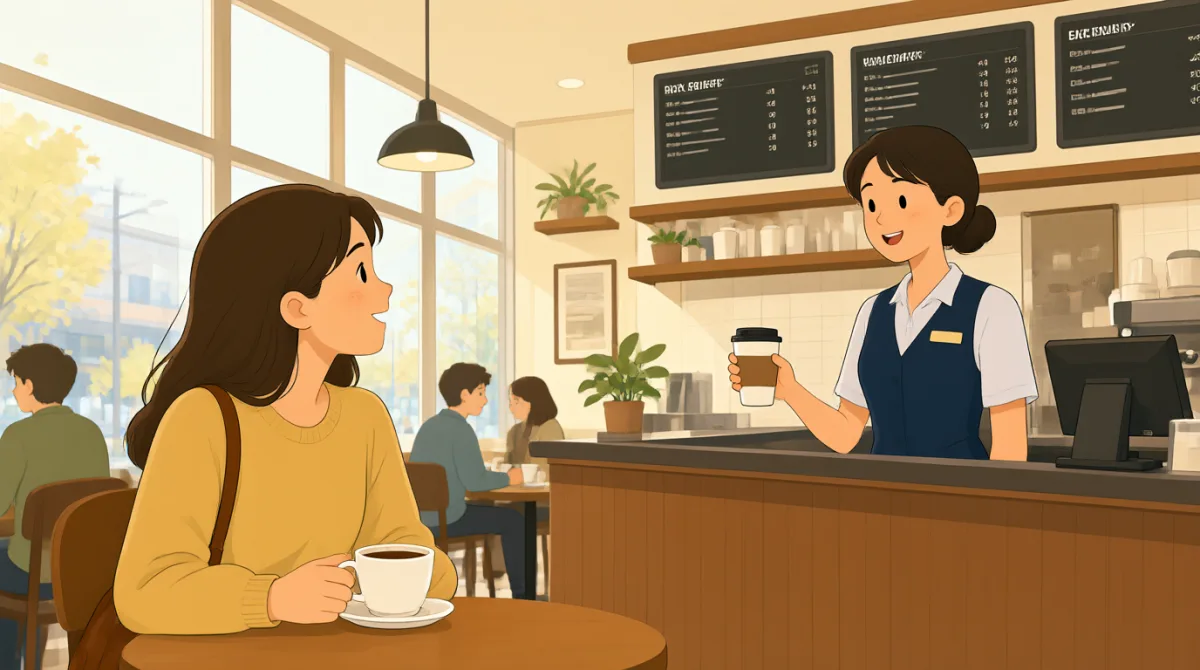

Excuse me, I'm so sorry to bother you, but do you happen to know the time?
माफ़ कीजिए, आपको परेशान करने के लिए बहुत माफ़ी चाहता हूँ, लेकिन क्या आपको संयोग से समय पता है?

No bother at all! Let me check... It's 3:15 PM.
अरे, कोई बात नहीं! मैं देखकर बताती हूँ... अभी दोपहर के 3:15 बजे हैं।
Oh, 3:15. Perfect! My phone died and I need to catch a train. Thank you so much!
ओह, 3:15। बिल्कुल सही! मेरे फ़ोन की बैटरी खत्म हो गई है और मुझे ट्रेन पकड़नी है। आपका बहुत-बहुत धन्यवाद!
You're welcome! Glad I could help. Is your train soon?
आपका स्वागत है! खुशी है कि मैं आपकी मदद कर सकी। क्या आपकी ट्रेन जल्दी है?
Yes, in about half an hour. I should probably get going. Thanks again!
हाँ, लगभग आधे घंटे में। मुझे शायद अब निकलना चाहिए। एक बार फिर धन्यवाद!
No problem! Have a good trip.
कोई बात नहीं! आपकी यात्रा शुभ हो।
शब्दावली7
- botherपरेशान करना
To disturb or annoy someone; used politely to apologize for interrupting, like 'Sorry to bother you' when asking for help.
किसी को बाधित करना या परेशान करना। मदद माँगते समय बीच में टोकने के लिए विनम्रता से माफ़ी माँगने के लिए इसका इस्तेमाल होता है, जैसे 'Sorry to bother you'।
- happen to knowसंयोग से पता होना
A polite way to ask if someone knows something by chance; it's indirect and courteous, common in casual conversations.
यह विनम्रता से पूछने का तरीका है कि क्या किसी को कोई बात शायद पता हो। यह सीधा सवाल करने के बजाय शिष्ट ढंग से पूछा जाता है और आम बातचीत में खूब इस्तेमाल होता है।
- checkदेखना
To look at something quickly to find information, like checking a watch or clock for the time.
जानकारी पाने के लिए किसी चीज़ पर जल्दी से नज़र डालना, जैसे समय देखने के लिए घड़ी देखना।
- diedबंद हो गया
When a battery runs out of power, especially for devices like phones; informal way to say 'it stopped working because of no power.'
जब बैटरी की बिजली खत्म हो जाती है, तो फ़ोन जैसे उपकरणों के लिए यह शब्द इस्तेमाल होता है। यह अनौपचारिक ढंग से कहने का तरीका है कि 'बिजली खत्म होने के कारण यह काम करना बंद कर गया।'
- catchपकड़ना
To get on a vehicle like a train or bus in time; used in phrases like 'catch a train' meaning to board it before it leaves.
समय रहते ट्रेन या बस जैसे वाहन में चढ़ना। 'catch a train' जैसे वाक्यांशों में इसका मतलब है कि ट्रेन के रवाना होने से पहले उसमें चढ़ जाना।
- half an hourआधा घंटा
Thirty minutes; a common way to express time durations, like 'in half an hour' meaning after 30 minutes.
तीस मिनट। समय की अवधि बताने का यह आम तरीका है। जैसे 'in half an hour' का मतलब है 30 मिनट बाद।
- get goingनिकलना शुरू करना
To start leaving or hurry away; informal expression for when you need to depart soon.
जाने के लिए निकलना या जल्दी से रवाना होना। जब आपको जल्द ही वहाँ से जाना हो, तब इस्तेमाल होने वाला अनौपचारिक वाक्यांश।
मुख्य वाक्य6
- 1
Excuse me, I'm so sorry to bother you, but do you happen to know the time?
माफ़ कीजिए, आपको परेशान करने के लिए बहुत माफ़ी चाहता हूँ, लेकिन क्या आपको संयोग से समय पता है?
This is a polite way to ask for the time when interrupting someone; it uses 'excuse me' to get attention, apologizes with 'sorry to bother,' and 'happen to know' makes it indirect and courteous. Useful for starting conversations in public places.
किसी को बीच में रोककर समय पूछने का यह विनम्र तरीका है। ध्यान खींचने के लिए 'excuse me' कहें, 'sorry to bother' से बीच में टोकने के लिए माफ़ी माँगें, और 'happen to know' सवाल को अप्रत्यक्ष और शिष्ट बनाता है। सार्वजनिक जगहों पर बातचीत शुरू करने के लिए यह उपयोगी है।
- 2
No bother at all! Let me check... It's 3:15 PM.
अरे, कोई बात नहीं! मैं देखकर बताती हूँ... अभी दोपहर के 3:15 बजे हैं।
A friendly response to reassure the asker; 'No bother at all' means it's not a problem, and 'let me check' shows willingness to help. 'PM' means after noon. Great for responding positively in service situations.
यह पूछने वाले को आश्वस्त करने वाला दोस्ताना जवाब है। 'No bother at all' का मतलब है कि कोई परेशानी नहीं है, और 'let me check' से मदद करने की तत्परता ज़ाहिर होती है। 'PM' का मतलब है दोपहर के बाद का समय। सेवा-संबंधी बातचीत में सकारात्मक जवाब देने के लिए यह बढ़िया है।
- 3
Oh, 3:15. Perfect! My phone died and I need to catch a train. Thank you so much!
ओह, 3:15। बिल्कुल सही! मेरे फ़ोन की बैटरी खत्म हो गई है और मुझे ट्रेन पकड़नी है। आपका बहुत-बहुत धन्यवाद!
This shows gratitude and explains the reason; repeating the time confirms understanding, 'perfect' expresses relief. Useful for thanking after getting information and giving context briefly.
इस वाक्य में आभार जताया गया है और वजह बताई गई है। समय दोहराने से पता चलता है कि बात समझ में आ गई है, जबकि 'perfect' राहत का भाव दिखाता है। जानकारी मिलने पर धन्यवाद देने और संक्षेप में वजह बताने के लिए यह उपयोगी है।
- 4
You're welcome! Glad I could help. Is your train soon?
आपका स्वागत है! खुशी है कि मैं आपकी मदद कर सकी। क्या आपकी ट्रेन जल्दी है?
Standard polite reply to thanks; 'You're welcome' is common, 'glad I could help' shows positivity. Follow-up question keeps conversation natural. Use this to continue politely after helping.
धन्यवाद के जवाब में कहे जाने वाले आम विनम्र शब्द हैं। 'You're welcome' आम तौर पर इस्तेमाल होता है और 'glad I could help' से खुशी ज़ाहिर होती है। इसके बाद पूछा गया सवाल बातचीत को स्वाभाविक ढंग से आगे बढ़ाता है। मदद करने के बाद विनम्रता से बातचीत जारी रखने के लिए इसका इस्तेमाल करें।
- 5
Yes, in about half an hour. I should probably get going. Thanks again!
हाँ, लगभग आधे घंटे में। मुझे शायद अब निकलना चाहिए। एक बार फिर धन्यवाद!
Answers a question and ends the talk; 'in about half an hour' estimates time, 'should probably get going' suggests leaving. Repeat thanks to be polite. Ideal for wrapping up when in a hurry.
यह सवाल का जवाब देते हुए बातचीत खत्म करता है। 'in about half an hour' समय का अनुमान बताता है, जबकि 'should probably get going' से जाने का इरादा ज़ाहिर होता है। विनम्रता के लिए धन्यवाद फिर से कहें। जल्दी में बातचीत खत्म करने के लिए यह बढ़िया है।
- 6
No problem! Have a good trip.
कोई बात नहीं! आपकी यात्रा शुभ हो।
Casual farewell; 'No problem' means it's fine, 'have a good trip' wishes well for travel. Use this to end positively after offering help, especially in travel contexts.
यह अनौपचारिक विदाई है। 'No problem' का मतलब है कि कोई बात नहीं, और 'have a good trip' यात्रा के लिए शुभकामना देता है। खासकर यात्रा के संदर्भ में, मदद करने के बाद बातचीत को अच्छे ढंग से खत्म करने के लिए इसका इस्तेमाल करें।