Discussing Who Pays
누가 비용을 낼지 의논하기
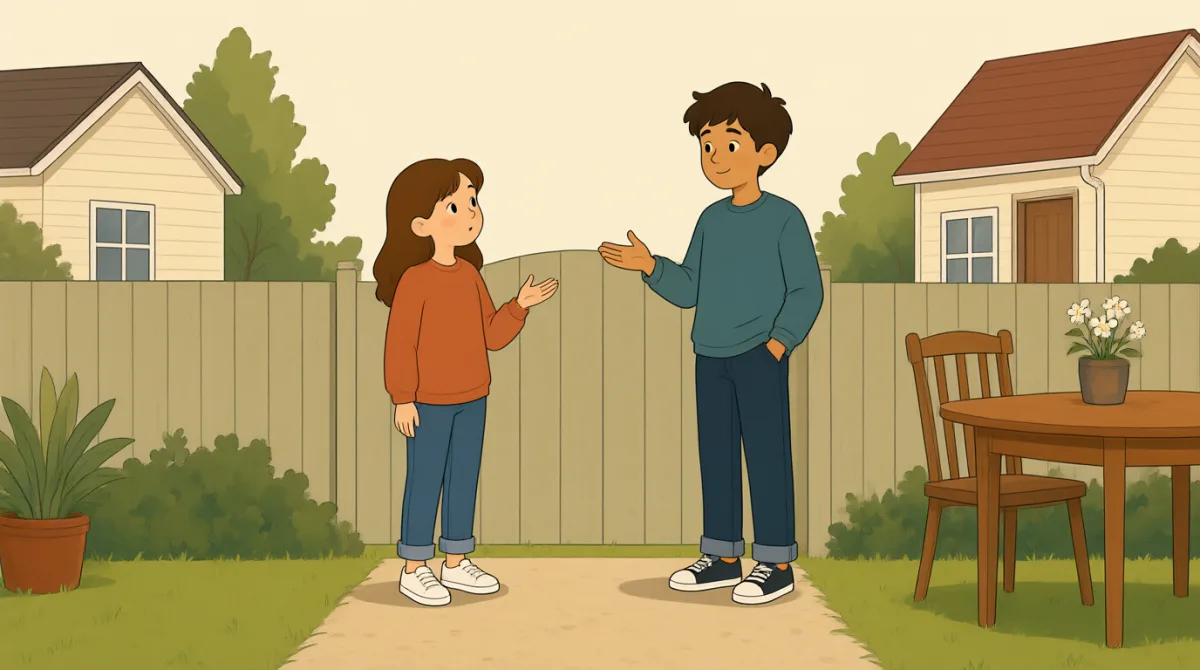
Mia and Jack discuss how to split the repair costs, considering that the fence serves both yards. They agree to share the expense fairly and get a few quotes before deciding.
미아와 잭은 울타리가 두 사람의 마당을 모두 나눈다는 점을 고려해 수리 비용을 어떻게 분담할지 의논해요. 공평하게 비용을 나누기로 하고, 결정하기 전에 몇 군데에서 견적을 더 받아 보기로 해요.
대화9

I got an estimate for the fence repair. It’s more than I expected, so we should talk about how to split the cost.
울타리 수리 견적을 받았어. 생각보다 비싸서 비용을 어떻게 나눌지 얘기해 봐야 할 것 같아.

Definitely. Since the fence sits between our yards and we both use it, splitting the bill seems fair to me.
그럼. 울타리가 우리 마당 사이에 있고 우리 둘 다 쓰니까, 비용을 나누는 게 공평한 것 같아.
I agree, though one section on my side looks worse. Would it make sense for each of us to pay for that side?
나도 동의해. 그런데 내 쪽 울타리 한 부분이 더 안 좋아 보여. 각자 자기 쪽 수리비를 내는 게 괜찮을까?
Maybe, but the whole fence needs support. If we only fix one section, the rest could start leaning before long.
그럴 수도 있지만, 울타리 전체를 지탱해야 해. 한 부분만 고치면 나머지는 머지않아 기울기 시작할 수도 있어.
That’s a good point. I don’t want us to patch it up now and end up paying more for another repair later.
맞는 말이야. 지금 대충 고쳤다가 나중에 또 수리하느라 돈을 더 쓰고 싶진 않아.
How about we share the cost of the main repair fifty-fifty? If any extra work is only for one side, we can discuss that separately.
주요 수리 비용은 반반씩 내는 게 어때? 한쪽에만 필요한 추가 작업이 있으면 그건 따로 의논하면 되고.
That sounds fair. Before we decide, let’s get a couple more quotes so we know we’re not paying over the odds.
그럼 공평하겠다. 결정하기 전에 견적을 두 군데쯤 더 받아 보자. 터무니없이 비싸게 내는 건 아닌지 확인할 수 있게.
Agreed. I’ll contact two local companies, and you can check whether the estimate includes materials and cleanup.
좋아. 내가 근처 업체 두 곳에 연락해 볼게. 넌 받은 견적에 자재비랑 청소 비용이 포함됐는지 확인해 줘.
Great. Once we compare the quotes, we can choose a reasonable option and split the final bill evenly.
좋아. 견적을 비교해 본 다음 합리적인 곳을 골라서 최종 비용을 똑같이 나누면 되겠다.
어휘8
- estimate견적
An estimate is an approximate price for a job. Here, it tells Mia how much the fence repair may cost.
estimate는 어떤 작업에 드는 대략적인 비용을 말해요. 여기서는 울타리 수리에 얼마가 들지 미아에게 알려 주는 금액이에요.
- split the cost비용을 나누다
To split the cost is to divide the expense between people. You can use this phrase when discussing how to share a bill.
split the cost는 여러 사람이 비용을 나눠 부담한다는 뜻이에요. 청구서나 비용을 어떻게 분담할지 이야기할 때 쓸 수 있어요.
- seems fair to me내 생각엔 공평한 것 같아
This means that something feels reasonable or just in your opinion. Use it to express agreement with a suggestion.
seems fair to me는 내 생각에 어떤 일이 합리적이거나 공평하다는 뜻이에요. 제안에 동의한다는 뜻을 전할 때 써 보세요.
- before long머지않아
This means soon or after a short time. Jack uses it to explain that the rest of the fence may start leaning soon.
before long은 곧, 얼마 지나지 않아라는 뜻이에요. 잭은 울타리의 나머지 부분도 곧 기울기 시작할 수 있다고 설명하며 이 표현을 써요.
- patch it up대충 고치다
To patch something up is to make a quick, limited repair. The phrase can also describe fixing a problem temporarily.
patch it up은 무언가를 빠르고 제한적으로 수리한다는 뜻이에요. 문제를 일시적으로 해결한다는 의미로도 쓸 수 있어요.
- fifty-fifty반반
This means divided equally, with each person paying half. It is a casual way to talk about sharing costs.
fifty-fifty는 비용을 똑같이 나눠서 각자 절반씩 낸다는 뜻이에요. 비용 분담에 관해 편하게 이야기할 때 쓰는 표현이에요.
- over the odds시세보다 비싸게
If you pay over the odds, you pay more than something is worth or more than a reasonable price. It is a useful phrase when comparing prices.
over the odds는 물건이나 서비스의 가치 또는 적정 가격보다 더 많이 낸다는 뜻이에요. 가격을 비교할 때 유용하게 쓸 수 있어요.
- evenly똑같이
Evenly means in equal amounts. Here, Mia uses it to describe how they will divide the final bill.
evenly는 똑같은 양으로 나눈다는 뜻이에요. 여기서 미아는 최종 비용을 어떻게 나눌지 설명하며 이 표현을 써요.
핵심 문장8
- 1
Since the fence sits between our yards and we both use it, splitting the bill seems fair to me.
울타리가 우리 마당 사이에 있고 우리 둘 다 쓰니까, 비용을 나누는 게 공평한 것 같아.
This sentence gives a reason for sharing a cost and then states an opinion. Reuse the pattern “Since [reason], [suggestion] seems fair to me” in discussions about shared expenses.
이 문장은 비용을 함께 부담해야 하는 이유를 말한 뒤 의견을 덧붙여요. 공동 비용을 의논할 때 “Since [이유], [제안] seems fair to me”라는 패턴을 활용해 보세요.
- 2
Would it make sense for each of us to pay for that side?
각자 자기 쪽 수리비를 내는 게 괜찮을까?
This is a polite way to ask whether a suggestion is reasonable. You can reuse “Would it make sense for [person] to [action]?” when proposing a plan.
이 문장은 어떤 제안이 합리적인지 정중하게 물어보는 표현이에요. 계획을 제안할 때 “Would it make sense for [사람] to [행동]?”을 활용해 보세요.
- 3
If we only fix one section, the rest could start leaning before long.
한 부분만 고치면 나머지는 머지않아 기울기 시작할 수도 있어.
This sentence explains a possible result of doing only part of a job. Use “If we only [action], [result] could…” to point out a risk.
이 문장은 일을 일부만 했을 때 생길 수 있는 결과를 설명해요. 위험을 짚어 줄 때 “If we only [행동], [결과] could…”라는 패턴을 써 보세요.
- 4
I don’t want us to patch it up now and end up paying more for another repair later.
지금 대충 고쳤다가 나중에 또 수리하느라 돈을 더 쓰고 싶진 않아.
This sentence explains a concern about a quick fix leading to a bigger expense. “End up + -ing” is useful for describing an unexpected final result.
이 문장은 간단한 수리로 넘어가면 나중에 비용이 더 커질 수 있다는 걱정을 나타내요. “End up + -ing”는 예상하지 못한 최종 결과를 설명할 때 유용해요.
- 5
How about we share the cost of the main repair fifty-fifty?
주요 수리 비용은 반반씩 내는 게 어때?
This is a friendly way to suggest an equal split. Use “How about we…?” to offer a plan or solution.
이 문장은 비용을 똑같이 나누자고 친근하게 제안해요. 계획이나 해결책을 제안할 때 “How about we…?”를 써 보세요.
- 6
If any extra work is only for one side, we can discuss that separately.
한쪽에만 필요한 추가 작업이 있으면 그건 따로 의논하면 돼.
This sentence separates a shared expense from a cost that affects only one person. Reuse “If [condition], we can discuss that separately” when agreeing on how to handle exceptions.
이 문장은 함께 부담할 비용과 한 사람에게만 해당하는 비용을 구분해요. 예외를 어떻게 처리할지 정할 때 “If [조건], we can discuss that separately”를 활용해 보세요.
- 7
Before we decide, let’s get a couple more quotes so we know we’re not paying over the odds.
결정하기 전에 견적을 두 군데쯤 더 받아 보자. 터무니없이 비싸게 내는 건 아닌지 확인할 수 있게.
This sentence suggests comparing prices before making a decision. “Let’s get a couple more quotes” is useful when arranging repairs or other services.
이 문장은 결정하기 전에 가격을 비교하자고 제안해요. 수리나 다른 서비스를 알아볼 때 “Let’s get a couple more quotes”라고 하면 유용해요.
- 8
Once we compare the quotes, we can choose a reasonable option and split the final bill evenly.
견적을 비교해 본 다음 합리적인 곳을 골라서 최종 비용을 똑같이 나눌 수 있어.
This sentence lays out the next steps in a clear order. Use “Once we [action], we can [next action]” to explain a plan.
이 문장은 다음에 할 일을 순서대로 분명하게 설명해요. 계획을 말할 때 “Once we [행동], we can [다음 행동]”을 활용해 보세요.