Discussing Who Pays
कौन कितना खर्च करेगा, इस पर चर्चा
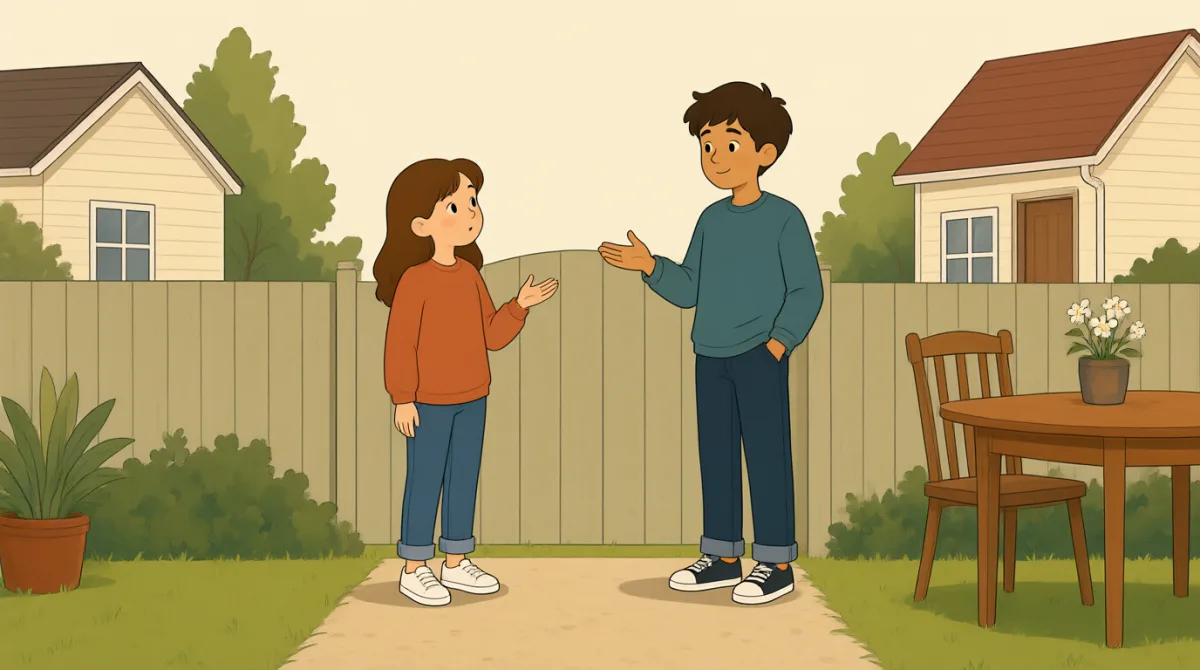
Mia and Jack discuss how to split the repair costs, considering that the fence serves both yards. They agree to share the expense fairly and get a few quotes before deciding.
मिया और जैक मरम्मत का खर्च बाँटने के बारे में बात करते हैं, क्योंकि बाड़ दोनों के आँगनों के काम आती है। वे खर्च बराबर बाँटने और फैसला करने से पहले कुछ और अनुमान लेने पर सहमत होते हैं।
संवाद9

I got an estimate for the fence repair. It’s more than I expected, so we should talk about how to split the cost.
मुझे बाड़ की मरम्मत का एक अनुमान मिला है। यह मेरी उम्मीद से ज़्यादा है, इसलिए हमें बात करनी चाहिए कि खर्च कैसे बाँटें।

Definitely. Since the fence sits between our yards and we both use it, splitting the bill seems fair to me.
बिलकुल। बाड़ हमारे दोनों आँगनों के बीच है और हम दोनों इसका इस्तेमाल करते हैं, इसलिए मेरे हिसाब से खर्च बाँटना ठीक रहेगा।
I agree, though one section on my side looks worse. Would it make sense for each of us to pay for that side?
मैं सहमत हूँ, हालाँकि मेरी तरफ़ का एक हिस्सा ज़्यादा खराब दिखता है। क्या यह ठीक रहेगा कि हममें से हर कोई अपनी तरफ़ का खर्च उठाए?
Maybe, but the whole fence needs support. If we only fix one section, the rest could start leaning before long.
हो सकता है, लेकिन पूरी बाड़ को सहारा चाहिए। अगर हम सिर्फ़ एक हिस्से की मरम्मत करेंगे, तो बाकी हिस्से भी जल्द ही झुकने लग सकते हैं।
That’s a good point. I don’t want us to patch it up now and end up paying more for another repair later.
तुम्हारी बात सही है। मैं नहीं चाहती कि हम अभी इसकी थोड़ी-सी मरम्मत करें और बाद में दूसरी मरम्मत के लिए ज़्यादा पैसे देने पड़ें।
How about we share the cost of the main repair fifty-fifty? If any extra work is only for one side, we can discuss that separately.
क्यों न हम मुख्य मरम्मत का खर्च आधा-आधा बाँट लें? अगर कोई अतिरिक्त काम सिर्फ़ एक तरफ़ के लिए हुआ, तो हम उस पर अलग से बात कर सकते हैं।
That sounds fair. Before we decide, let’s get a couple more quotes so we know we’re not paying over the odds.
यह ठीक लगता है। फैसला करने से पहले, चलो कुछ और अनुमान लेते हैं ताकि हमें पता चले कि हम ज़रूरत से ज़्यादा पैसे तो नहीं दे रहे।
Agreed. I’ll contact two local companies, and you can check whether the estimate includes materials and cleanup.
ठीक है। मैं आसपास की दो कंपनियों से संपर्क करूँगा, और तुम देख लेना कि अनुमान में सामान और सफ़ाई का खर्च शामिल है या नहीं।
Great. Once we compare the quotes, we can choose a reasonable option and split the final bill evenly.
बढ़िया। अनुमानों की तुलना करने के बाद, हम कोई उचित विकल्प चुन सकते हैं और आख़िरी बिल बराबर बाँट सकते हैं।
शब्दावली8
- estimateअनुमानित कीमत
An estimate is an approximate price for a job. Here, it tells Mia how much the fence repair may cost.
अनुमानित कीमत किसी काम की लगभग लागत होती है। यहाँ, इससे मिया को पता चलता है कि बाड़ की मरम्मत में कितना खर्च आ सकता है।
- split the costखर्च बाँटना
To split the cost is to divide the expense between people. You can use this phrase when discussing how to share a bill.
खर्च बाँटने का मतलब है लोगों के बीच उस रकम को बाँटना। बिल का खर्च साझा करने के बारे में बात करते समय आप इस वाक्यांश का इस्तेमाल कर सकते हैं।
- seems fair to meमुझे ठीक लगता है
This means that something feels reasonable or just in your opinion. Use it to express agreement with a suggestion.
इसका मतलब है कि आपकी राय में कोई बात उचित या सही लगती है। किसी सुझाव से सहमति जताने के लिए इसका इस्तेमाल करें।
- before longजल्द ही
This means soon or after a short time. Jack uses it to explain that the rest of the fence may start leaning soon.
इसका मतलब है थोड़े समय बाद या जल्दी। जैक इसका इस्तेमाल यह समझाने के लिए करता है कि बाड़ के बाकी हिस्से भी जल्द ही झुकने लग सकते हैं।
- patch it upथोड़ी-सी मरम्मत करना
To patch something up is to make a quick, limited repair. The phrase can also describe fixing a problem temporarily.
किसी चीज़ की थोड़ी-सी मरम्मत करने का मतलब है उसकी जल्दी और सीमित मरम्मत करना। यह वाक्यांश किसी समस्या के अस्थायी समाधान के लिए भी इस्तेमाल होता है।
- fifty-fiftyआधा-आधा
This means divided equally, with each person paying half. It is a casual way to talk about sharing costs.
इसका मतलब है बराबर बाँटना, जिसमें हर व्यक्ति आधा खर्च देता है। खर्च साझा करने की बात करने का यह अनौपचारिक तरीका है।
- over the oddsउचित कीमत से ज़्यादा
If you pay over the odds, you pay more than something is worth or more than a reasonable price. It is a useful phrase when comparing prices.
अगर आप “over the odds” चुकाते हैं, तो आप किसी चीज़ की कीमत या उचित दाम से ज़्यादा भुगतान करते हैं। कीमतों की तुलना करते समय यह एक उपयोगी वाक्यांश है।
- evenlyबराबर
Evenly means in equal amounts. Here, Mia uses it to describe how they will divide the final bill.
“Evenly” का मतलब है बराबर मात्रा में। यहाँ मिया इसका इस्तेमाल यह बताने के लिए करती है कि वे आख़िरी बिल कैसे बाँटेंगे।
मुख्य वाक्य8
- 1
Since the fence sits between our yards and we both use it, splitting the bill seems fair to me.
बाड़ हमारे दोनों आँगनों के बीच है और हम दोनों इसका इस्तेमाल करते हैं, इसलिए मेरे हिसाब से खर्च बाँटना ठीक रहेगा।
This sentence gives a reason for sharing a cost and then states an opinion. Reuse the pattern “Since [reason], [suggestion] seems fair to me” in discussions about shared expenses.
इस वाक्य में खर्च साझा करने का कारण दिया गया है और फिर एक राय बताई गई है। साझा खर्चों पर बात करते समय “Since [reason], [suggestion] seems fair to me” के ढाँचे का दोबारा इस्तेमाल करें।
- 2
Would it make sense for each of us to pay for that side?
क्या यह ठीक रहेगा कि हममें से हर कोई उस तरफ़ का खर्च उठाए?
This is a polite way to ask whether a suggestion is reasonable. You can reuse “Would it make sense for [person] to [action]?” when proposing a plan.
यह पूछने का एक विनम्र तरीका है कि कोई सुझाव उचित है या नहीं। कोई योजना सुझाते समय “Would it make sense for [person] to [action]?” का दोबारा इस्तेमाल कर सकते हैं।
- 3
If we only fix one section, the rest could start leaning before long.
अगर हम सिर्फ़ एक हिस्से की मरम्मत करेंगे, तो बाकी हिस्से भी जल्द ही झुकने लग सकते हैं।
This sentence explains a possible result of doing only part of a job. Use “If we only [action], [result] could…” to point out a risk.
यह वाक्य बताता है कि किसी काम का सिर्फ़ एक हिस्सा करने से क्या नतीजा हो सकता है। किसी जोखिम की ओर ध्यान दिलाने के लिए “If we only [action], [result] could…” का इस्तेमाल करें।
- 4
I don’t want us to patch it up now and end up paying more for another repair later.
मैं नहीं चाहती कि हम अभी इसकी थोड़ी-सी मरम्मत करें और बाद में दूसरी मरम्मत के लिए ज़्यादा पैसे देने पड़ें।
This sentence explains a concern about a quick fix leading to a bigger expense. “End up + -ing” is useful for describing an unexpected final result.
यह वाक्य बताता है कि जल्दी-जल्दी की गई मरम्मत से आगे चलकर बड़ा खर्च हो सकता है। किसी अनचाहे आख़िरी नतीजे का वर्णन करने के लिए “End up + -ing” उपयोगी है।
- 5
How about we share the cost of the main repair fifty-fifty?
क्यों न हम मुख्य मरम्मत का खर्च आधा-आधा बाँट लें?
This is a friendly way to suggest an equal split. Use “How about we…?” to offer a plan or solution.
बराबर बाँटने का सुझाव देने का यह दोस्ताना तरीका है। कोई योजना या समाधान पेश करने के लिए “How about we…?” का इस्तेमाल करें।
- 6
If any extra work is only for one side, we can discuss that separately.
अगर कोई अतिरिक्त काम सिर्फ़ एक तरफ़ के लिए हुआ, तो हम उस पर अलग से बात कर सकते हैं।
This sentence separates a shared expense from a cost that affects only one person. Reuse “If [condition], we can discuss that separately” when agreeing on how to handle exceptions.
इस वाक्य में साझा खर्च को ऐसे खर्च से अलग किया गया है जिसका असर सिर्फ़ एक व्यक्ति पर पड़ता है। अपवादों को कैसे सँभालना है, इस पर सहमति जताते समय “If [condition], we can discuss that separately” का दोबारा इस्तेमाल करें।
- 7
Before we decide, let’s get a couple more quotes so we know we’re not paying over the odds.
फैसला करने से पहले, चलो कुछ और अनुमान लेते हैं ताकि हमें पता चले कि हम ज़रूरत से ज़्यादा पैसे तो नहीं दे रहे।
This sentence suggests comparing prices before making a decision. “Let’s get a couple more quotes” is useful when arranging repairs or other services.
यह वाक्य फैसला लेने से पहले कीमतों की तुलना करने का सुझाव देता है। मरम्मत या दूसरी सेवाओं का इंतज़ाम करते समय “Let’s get a couple more quotes” उपयोगी है।
- 8
Once we compare the quotes, we can choose a reasonable option and split the final bill evenly.
अनुमानों की तुलना करने के बाद, हम कोई उचित विकल्प चुन सकते हैं और आख़िरी बिल बराबर बाँट सकते हैं।
This sentence lays out the next steps in a clear order. Use “Once we [action], we can [next action]” to explain a plan.
यह वाक्य अगले कदमों को साफ़ क्रम में बताता है। योजना समझाने के लिए “Once we [action], we can [next action]” का इस्तेमाल करें।