Helping Clean Up After Dinner
کمک به جمعوجور کردن بعد از شام
After dinner, Emma helps Grace clean up the table and wash the dishes. They work together and chat casually.
بعد از شام، اِما به گریس کمک میکند میز را جمع کنند و ظرفها را بشویند. با هم کار میکنند و خودمانی گپ میزنند.
گفتوگو8
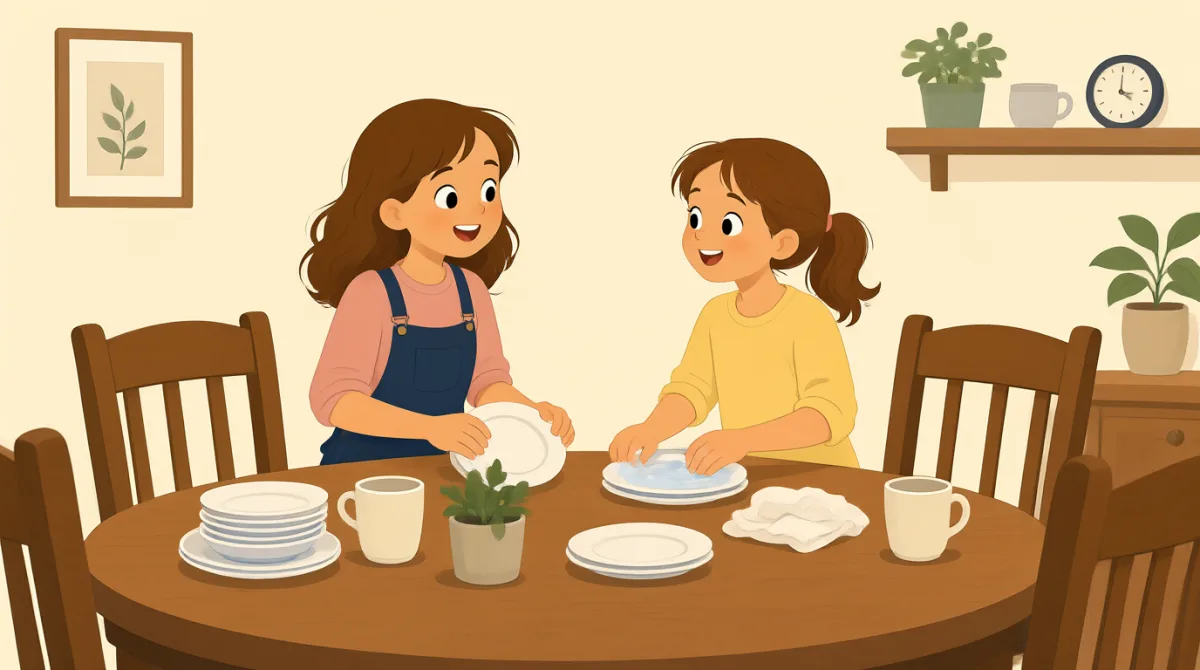

That was a lovely dinner, Grace. Let me help you clear the table.
شام خیلی خوبی بود، گریس. بذار کمکت کنم میز رو جمع کنیم.

Thanks, Emma. Could you take these plates to the kitchen?
ممنون، اِما. میشه این بشقابها رو ببری آشپزخونه؟
Sure. Should I put them by the sink?
حتماً. بذارمشون کنار سینک؟
Yes, please. I’ll bring the glasses and the dishes.
آره، لطفاً. من لیوانها و ظرفها رو میارم.
I can wash the plates while you dry them.
من بشقابها رو میشورم، تو هم خشکشون کن.
That sounds good. We’ll finish in no time.
خوبه. زود تمومش میکنیم.
This is easy. I usually help out at home, too.
این که کاری نداره. من معمولاً توی خونه هم کمک میکنم.
You’re a wonderful guest. Thanks for helping me clean up.
تو مهمون فوقالعادهای هستی. ممنون که کمک میکنی جمعوجور کنیم.
واژگان8
- lovely dinnerشام دلچسب
A warm way to say that a meal was very nice. You can use “lovely” to compliment a meal or an event.
عبارتی گرم و صمیمی برای گفتن اینکه غذا خیلی خوب بوده. میتوانی از “lovely” برای تعریف از یک غذا یا مراسم استفاده کنی.
- clear the tableمیز را جمع کردن
To take plates and other things off the table after a meal. You can offer to help by saying, “Let me help you clear the table.”
یعنی بعد از غذا بشقابها و چیزهای دیگر را از روی میز برداشتن. میتوانی برای پیشنهاد کمک بگویی: “Let me help you clear the table.”
- take these plates to the kitchenاین بشقابها را به آشپزخانه بردن
To carry the plates from where you are to the kitchen. Use “take [something] to [place]” to ask someone to move an item.
یعنی بشقابها را از جایی که هستی به آشپزخانه ببری. از الگوی “take [something] to [place]” برای درخواست جابهجایی یک وسیله استفاده کن.
- by the sinkکنار سینک
This means next to the sink. You can ask where to put dishes by saying, “Should I put them by the sink?”
یعنی در کنار سینک. میتوانی برای پرسیدن اینکه ظرفها را کجا بگذاری بگویی: “Should I put them by the sink?”
- dry themآنها را خشک کردن
To remove water from dishes with a towel after washing them. One person can wash the dishes while another dries them.
یعنی بعد از شستن ظرفها، با حوله آبشان را گرفتن. یک نفر میتواند ظرفها را بشوید و نفر دیگر آنها را خشک کند.
- in no timeخیلی زود
Very quickly, or after only a short time. Use this phrase to say that a task will be finished soon.
یعنی خیلی سریع یا در مدتزمانی کوتاه. از این عبارت برای گفتن اینکه کاری بهزودی تمام میشود استفاده کن.
- help outکمک کردن
To help someone with a task. You can say, “I help out at home,” when you regularly help with chores.
یعنی در انجام کاری به کسی کمک کردن. وقتی مرتب در کارهای خانه کمک میکنی، میتوانی بگویی: “I help out at home.”
- clean upجمعوجور کردن
To make a place tidy by putting things away or washing dishes. After a meal, people often clean up together.
یعنی با مرتبکردن وسایل یا شستن ظرفها، جایی را تمیز و مرتب کردن. بعد از غذا، مردم اغلب با هم جمعوجور میکنند.
جملات کلیدی8
- 1
That was a lovely dinner, Grace.
شام خیلی خوبی بود، گریس.
This is a friendly way to compliment someone’s meal. You can use “That was a lovely…” to praise an event or experience.
این عبارت دوستانهای برای تعریف از غذایی است که کسی آماده کرده. میتوانی از الگوی “That was a lovely…” برای تعریف از یک مراسم یا تجربه استفاده کنی.
- 2
Let me help you clear the table.
بذار کمکت کنم میز رو جمع کنیم.
Use this sentence to offer help with a task. You can replace “clear the table” with another activity, such as “wash the dishes.”
از این جمله برای پیشنهاد کمک در انجام کاری استفاده کن. میتوانی “clear the table” را با فعالیت دیگری، مثل “wash the dishes.”، جایگزین کنی.
- 3
Could you take these plates to the kitchen?
میشه این بشقابها رو به آشپزخونه ببری؟
This is a polite way to ask someone to carry something somewhere. Replace “these plates” and “the kitchen” with other items and places.
این روش مؤدبانهای برای درخواست از کسی است که چیزی را به جایی ببرد. “these plates” و “the kitchen” را با وسایل و مکانهای دیگری جایگزین کن.
- 4
Should I put them by the sink?
بذارمشون کنار سینک؟
Use this question to check where something should go. Replace “them” and “by the sink” with the items and place you mean.
از این پرسش برای مطمئنشدن از جایی که باید چیزی را گذاشت استفاده کن. “them” و “by the sink” را با وسیلهها و مکان موردنظرت جایگزین کن.
- 5
I can wash the plates while you dry them.
من بشقابها رو میشورم، تو هم خشکشون کن.
This sentence offers to share a task and shows what each person can do. Use “while” to describe two actions happening at the same time.
این جمله پیشنهاد تقسیم کار میدهد و مشخص میکند هر کس چه کاری میتواند انجام دهد. از “while” برای توصیف دو کاری استفاده کن که همزمان انجام میشوند.
- 6
We’ll finish in no time.
زود تمومش میکنیم.
This is a reassuring way to say a task will be done quickly. Use “We’ll finish…” when you want to encourage someone working with you.
این عبارت دلگرمکنندهای برای گفتن این است که کاری سریع تمام میشود. وقتی میخواهی کسی را که با تو کار میکند تشویق کنی، از “We’ll finish…” استفاده کن.
- 7
I usually help out at home, too.
من معمولاً توی خونه هم کمک میکنم.
Use this sentence to talk about a regular habit of helping with chores. Replace “help out at home” with another activity you often do.
از این جمله برای صحبتکردن دربارهٔ عادت همیشگیات در کمک به کارهای خانه استفاده کن. میتوانی “help out at home” را با فعالیت دیگری که اغلب انجام میدهی جایگزین کنی.
- 8
You’re a wonderful guest.
تو مهمون فوقالعادهای هستی.
This is a kind way to compliment someone who is visiting. You can replace “wonderful” with another positive adjective, such as “helpful.”
این روش مهربانانهای برای تعریف از کسی است که به دیدنت آمده. میتوانی “wonderful” را با صفت مثبت دیگری، مثل “helpful.”، جایگزین کنی.