Helping Clean Up After Dinner
Помогаем убрать со стола после ужина
After dinner, Emma helps Grace clean up the table and wash the dishes. They work together and chat casually.
После ужина Эмма помогает Грейс убрать со стола и помыть посуду. Они работают вместе и непринуждённо болтают.
Диалог8
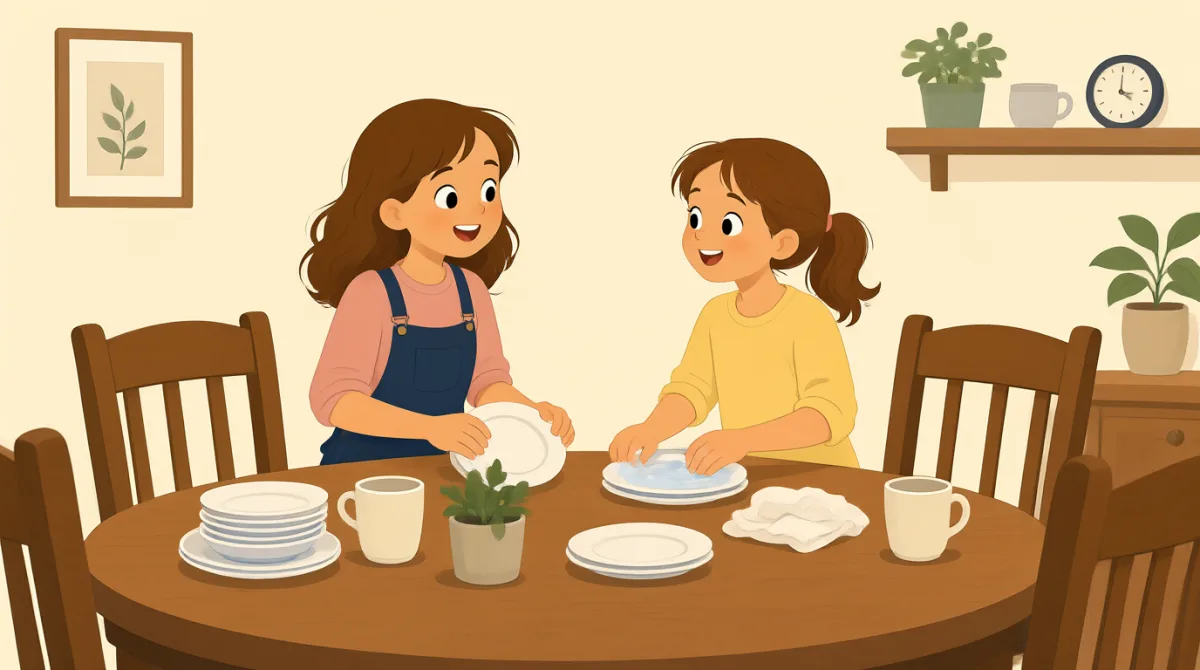

That was a lovely dinner, Grace. Let me help you clear the table.
Ужин был чудесный, Грейс. Давай я помогу тебе убрать со стола.

Thanks, Emma. Could you take these plates to the kitchen?
Спасибо, Эмма. Отнесёшь эти тарелки на кухню?
Sure. Should I put them by the sink?
Конечно. Поставить их у раковины?
Yes, please. I’ll bring the glasses and the dishes.
Да, пожалуйста. Я принесу стаканы и посуду.
I can wash the plates while you dry them.
Я могу помыть тарелки, пока ты их вытираешь.
That sounds good. We’ll finish in no time.
Отлично. Мы управимся в два счёта.
This is easy. I usually help out at home, too.
Это легко. Я и дома обычно помогаю по хозяйству.
You’re a wonderful guest. Thanks for helping me clean up.
Ты замечательная гостья. Спасибо, что помогаешь мне убирать.
Словарный запас8
- lovely dinnerчудесный ужин
A warm way to say that a meal was very nice. You can use “lovely” to compliment a meal or an event.
Тёплый комплимент, который означает, что еда была очень вкусной. Словом “lovely” можно похвалить угощение или какое-нибудь событие.
- clear the tableубирать со стола
To take plates and other things off the table after a meal. You can offer to help by saying, “Let me help you clear the table.”
Убирать со стола тарелки и другие вещи после еды. Предложить помощь можно так: “Let me help you clear the table.”
- take these plates to the kitchenотнести эти тарелки на кухню
To carry the plates from where you are to the kitchen. Use “take [something] to [place]” to ask someone to move an item.
Перенести тарелки туда, где ты находишься, на кухню. Используй “take [something] to [place]”, чтобы попросить кого-то перенести предмет в другое место.
- by the sinkу раковины
This means next to the sink. You can ask where to put dishes by saying, “Should I put them by the sink?”
Это значит «рядом с раковиной». Узнать, куда поставить посуду, можно так: “Should I put them by the sink?”
- dry themвытереть их
To remove water from dishes with a towel after washing them. One person can wash the dishes while another dries them.
Вытереть посуду полотенцем после мытья. Один человек может мыть посуду, а другой — вытирать её.
- in no timeв два счёта
Very quickly, or after only a short time. Use this phrase to say that a task will be finished soon.
Очень быстро, за короткое время. Используй это выражение, чтобы сказать, что дело скоро будет сделано.
- help outпомогать по хозяйству
To help someone with a task. You can say, “I help out at home,” when you regularly help with chores.
Помогать кому-то с каким-либо делом. Если ты регулярно помогаешь с домашними делами, можно сказать: “I help out at home.”
- clean upубирать
To make a place tidy by putting things away or washing dishes. After a meal, people often clean up together.
Наводить порядок: убирать вещи на места или мыть посуду. После еды люди часто убирают вместе.
Ключевые фразы8
- 1
That was a lovely dinner, Grace.
Ужин был чудесный, Грейс.
This is a friendly way to compliment someone’s meal. You can use “That was a lovely…” to praise an event or experience.
Так можно по-дружески похвалить угощение. Используй “That was a lovely…”, чтобы похвалить событие или впечатление.
- 2
Let me help you clear the table.
Давай я помогу тебе убрать со стола.
Use this sentence to offer help with a task. You can replace “clear the table” with another activity, such as “wash the dishes.”
Используй эту фразу, чтобы предложить помощь. Вместо “clear the table” можно подставить другое занятие, например “wash the dishes.”
- 3
Could you take these plates to the kitchen?
Отнесёшь эти тарелки на кухню?
This is a polite way to ask someone to carry something somewhere. Replace “these plates” and “the kitchen” with other items and places.
Это вежливая просьба перенести что-нибудь в другое место. Вместо “these plates” и “the kitchen” подставь другие предметы и места.
- 4
Should I put them by the sink?
Поставить их у раковины?
Use this question to check where something should go. Replace “them” and “by the sink” with the items and place you mean.
Используй этот вопрос, чтобы уточнить, куда что-то поставить. Вместо “them” и “by the sink” подставь нужные предметы и место.
- 5
I can wash the plates while you dry them.
Я могу помыть тарелки, пока ты их вытираешь.
This sentence offers to share a task and shows what each person can do. Use “while” to describe two actions happening at the same time.
Эта фраза предлагает разделить работу и показывает, что может делать каждый. Используй “while”, чтобы описать два действия, которые происходят одновременно.
- 6
We’ll finish in no time.
Мы управимся в два счёта.
This is a reassuring way to say a task will be done quickly. Use “We’ll finish…” when you want to encourage someone working with you.
Так можно ободряюще сказать, что дело быстро будет сделано. Используй “We’ll finish…”, чтобы подбодрить того, кто работает вместе с тобой.
- 7
I usually help out at home, too.
Я и дома обычно помогаю по хозяйству.
Use this sentence to talk about a regular habit of helping with chores. Replace “help out at home” with another activity you often do.
Используй эту фразу, чтобы рассказать о том, что ты регулярно помогаешь с домашними делами. Вместо “help out at home” подставь другое занятие, которым ты часто занимаешься.
- 8
You’re a wonderful guest.
Ты замечательная гостья.
This is a kind way to compliment someone who is visiting. You can replace “wonderful” with another positive adjective, such as “helpful.”
Это добрый комплимент человеку, который пришёл в гости. Вместо “wonderful” можно использовать другое положительное прилагательное, например “helpful.”