Helping Clean Up After Dinner
Pomoc w sprzątaniu po kolacji
After dinner, Emma helps Grace clean up the table and wash the dishes. They work together and chat casually.
Po kolacji Emma pomaga Grace posprzątać ze stołu i pozmywać naczynia. Wspólnie pracują i swobodnie rozmawiają.
Dialog8
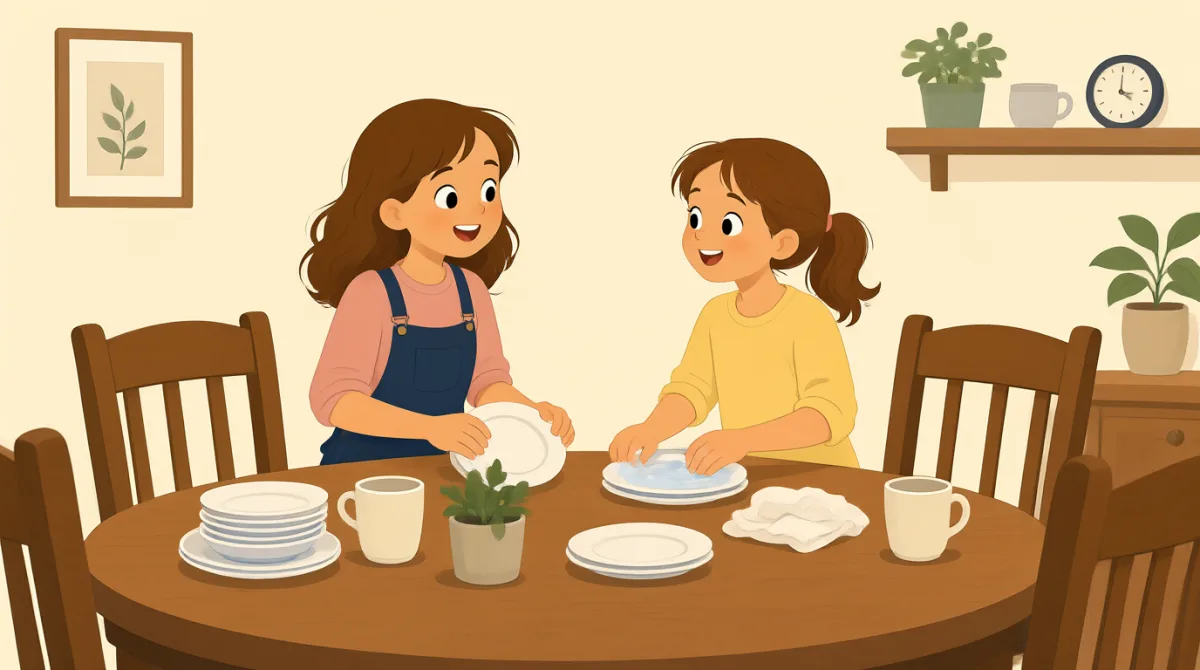

That was a lovely dinner, Grace. Let me help you clear the table.
Kolacja była przepyszna, Grace. Pozwól, że pomogę ci sprzątnąć ze stołu.

Thanks, Emma. Could you take these plates to the kitchen?
Dzięki, Emma. Zaniesiesz te talerze do kuchni?
Sure. Should I put them by the sink?
Jasne. Położyć je przy zlewie?
Yes, please. I’ll bring the glasses and the dishes.
Tak, proszę. Przyniosę szklanki i naczynia.
I can wash the plates while you dry them.
Mogę umyć talerze, a ty je wytrzesz.
That sounds good. We’ll finish in no time.
Dobry pomysł. Skończymy raz-dwa.
This is easy. I usually help out at home, too.
To łatwe. Ja też zwykle pomagam w domu.
You’re a wonderful guest. Thanks for helping me clean up.
Jesteś wspaniałym gościem. Dzięki, że pomagasz mi posprzątać.
Słownictwo8
- lovely dinnerprzepyszna kolacja
A warm way to say that a meal was very nice. You can use “lovely” to compliment a meal or an event.
Ciepły sposób, by powiedzieć, że posiłek był bardzo udany. „lovely” możesz użyć, żeby pochwalić posiłek albo wydarzenie.
- clear the tablesprzątnąć ze stołu
To take plates and other things off the table after a meal. You can offer to help by saying, “Let me help you clear the table.”
Zabrać talerze i inne rzeczy ze stołu po posiłku. Możesz zaproponować pomoc, mówiąc: “Let me help you clear the table.”
- take these plates to the kitchenzanieść te talerze do kuchni
To carry the plates from where you are to the kitchen. Use “take [something] to [place]” to ask someone to move an item.
Przenieść talerze z miejsca, w którym jesteś, do kuchni. Użyj “take [something] to [place]”, gdy prosisz kogoś o przeniesienie czegoś w jakieś miejsce.
- by the sinkprzy zlewie
This means next to the sink. You can ask where to put dishes by saying, “Should I put them by the sink?”
To znaczy obok zlewu. Możesz zapytać, gdzie odłożyć naczynia, mówiąc: “Should I put them by the sink?”
- dry themwytrzeć je do sucha
To remove water from dishes with a towel after washing them. One person can wash the dishes while another dries them.
Usunąć wodę z naczyń ręcznikiem po ich umyciu. Jedna osoba może zmywać naczynia, a druga je wycierać.
- in no timeraz-dwa
Very quickly, or after only a short time. Use this phrase to say that a task will be finished soon.
Bardzo szybko, w krótkim czasie. Tego wyrażenia używa się, by powiedzieć, że coś niedługo będzie gotowe.
- help outpomagać
To help someone with a task. You can say, “I help out at home,” when you regularly help with chores.
Pomagać komuś w jakimś zadaniu. Możesz powiedzieć “I help out at home”, gdy regularnie pomagasz w domowych obowiązkach.
- clean upposprzątać
To make a place tidy by putting things away or washing dishes. After a meal, people often clean up together.
Uporządkować miejsce, odkładając rzeczy na miejsce lub zmywając naczynia. Po posiłku ludzie często wspólnie sprzątają.
Kluczowe zdania8
- 1
That was a lovely dinner, Grace.
Kolacja była przepyszna, Grace.
This is a friendly way to compliment someone’s meal. You can use “That was a lovely…” to praise an event or experience.
To przyjazny sposób, by pochwalić czyjś posiłek. Możesz użyć “That was a lovely…”, żeby pochwalić jakieś wydarzenie lub przeżycie.
- 2
Let me help you clear the table.
Pozwól, że pomogę ci sprzątnąć ze stołu.
Use this sentence to offer help with a task. You can replace “clear the table” with another activity, such as “wash the dishes.”
Użyj tego zdania, żeby zaoferować pomoc w jakimś zadaniu. Zamiast “clear the table” możesz wstawić inną czynność, na przykład “wash the dishes.”
- 3
Could you take these plates to the kitchen?
Zaniesiesz te talerze do kuchni?
This is a polite way to ask someone to carry something somewhere. Replace “these plates” and “the kitchen” with other items and places.
To uprzejmy sposób, by poprosić kogoś o zaniesienie czegoś w jakieś miejsce. Zastąp “these plates” i “the kitchen” innymi przedmiotami i miejscami.
- 4
Should I put them by the sink?
Położyć je przy zlewie?
Use this question to check where something should go. Replace “them” and “by the sink” with the items and place you mean.
Użyj tego pytania, żeby upewnić się, gdzie coś odłożyć. Zastąp “them” i “by the sink” rzeczami i miejscem, o które ci chodzi.
- 5
I can wash the plates while you dry them.
Mogę umyć talerze, a ty je wytrzesz.
This sentence offers to share a task and shows what each person can do. Use “while” to describe two actions happening at the same time.
To zdanie proponuje podział obowiązków i pokazuje, co może zrobić każda osoba. Użyj “while”, by opisać dwie czynności wykonywane jednocześnie.
- 6
We’ll finish in no time.
Skończymy raz-dwa.
This is a reassuring way to say a task will be done quickly. Use “We’ll finish…” when you want to encourage someone working with you.
To uspokajający sposób, by powiedzieć, że zadanie zostanie szybko wykonane. Użyj “We’ll finish…”, gdy chcesz dodać otuchy osobie, która pracuje razem z tobą.
- 7
I usually help out at home, too.
Ja też zwykle pomagam w domu.
Use this sentence to talk about a regular habit of helping with chores. Replace “help out at home” with another activity you often do.
Użyj tego zdania, by opowiedzieć o regularnym pomaganiu w domowych obowiązkach. Zamiast “help out at home” wstaw inną czynność, którą często wykonujesz.
- 8
You’re a wonderful guest.
Jesteś wspaniałym gościem.
This is a kind way to compliment someone who is visiting. You can replace “wonderful” with another positive adjective, such as “helpful.”
To miły sposób, by pochwalić kogoś, kto cię odwiedza. Zamiast “wonderful” możesz użyć innego pozytywnego przymiotnika, na przykład “helpful.”