Helping Clean Up After Dinner
Ayudar a recoger después de la cena
After dinner, Emma helps Grace clean up the table and wash the dishes. They work together and chat casually.
Después de cenar, Emma ayuda a Grace a recoger la mesa y lavar los platos. Trabajan juntas y charlan tranquilamente.
Diálogo8
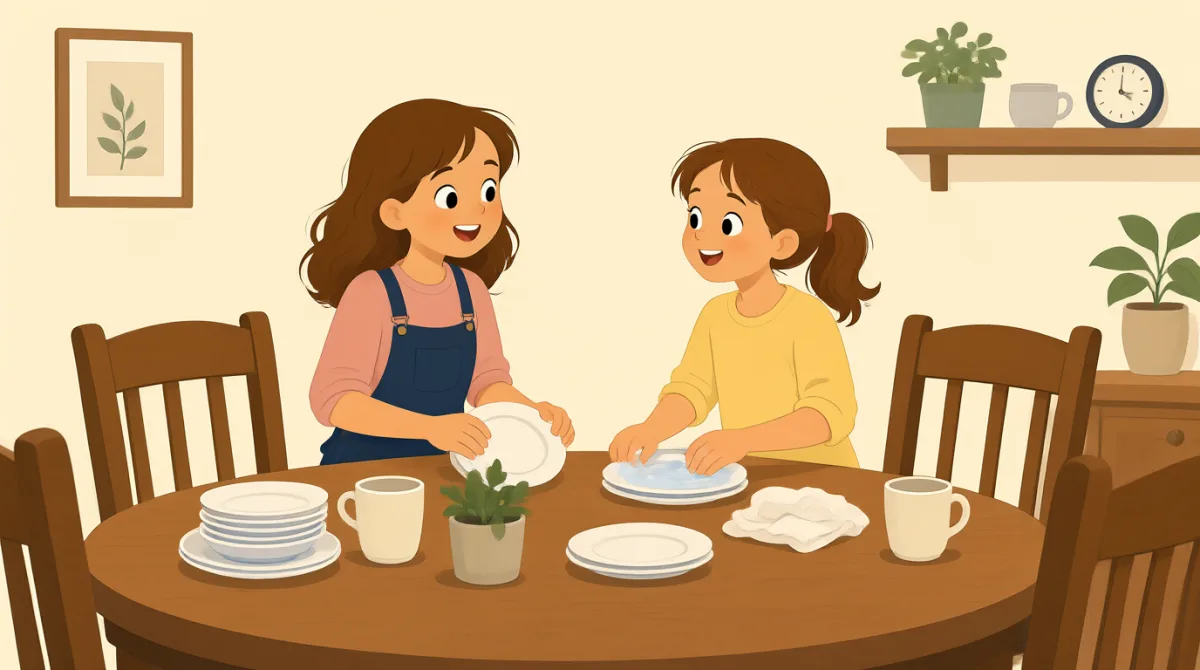

That was a lovely dinner, Grace. Let me help you clear the table.
La cena estuvo buenísima, Grace. Déjame ayudarte a recoger la mesa.

Thanks, Emma. Could you take these plates to the kitchen?
Gracias, Emma. ¿Puedes llevar estos platos a la cocina?
Sure. Should I put them by the sink?
Claro. ¿Los dejo junto al fregadero?
Yes, please. I’ll bring the glasses and the dishes.
Sí, por favor. Yo llevo los vasos y los platos.
I can wash the plates while you dry them.
Puedo lavar los platos mientras tú los secas.
That sounds good. We’ll finish in no time.
Me parece bien. Terminaremos enseguida.
This is easy. I usually help out at home, too.
Esto es fácil. Yo también suelo ayudar en casa.
You’re a wonderful guest. Thanks for helping me clean up.
Eres una invitada estupenda. Gracias por ayudarme a recoger.
Vocabulario8
- lovely dinneruna cena estupenda
A warm way to say that a meal was very nice. You can use “lovely” to compliment a meal or an event.
Una forma cálida de decir que una comida estuvo muy bien. Puedes usar “lovely” para elogiar una comida o un evento.
- clear the tablerecoger la mesa
To take plates and other things off the table after a meal. You can offer to help by saying, “Let me help you clear the table.”
Quitar los platos y otras cosas de la mesa después de comer. Puedes ofrecerte a ayudar diciendo: “Let me help you clear the table.” (Déjame ayudarte a recoger la mesa).
- take these plates to the kitchenllevar estos platos a la cocina
To carry the plates from where you are to the kitchen. Use “take [something] to [place]” to ask someone to move an item.
Llevar los platos desde donde estás hasta la cocina. Usa “take [something] to [place]” para pedirle a alguien que lleve algo a algún sitio.
- by the sinkjunto al fregadero
This means next to the sink. You can ask where to put dishes by saying, “Should I put them by the sink?”
Significa al lado del fregadero. Puedes preguntar dónde dejar los platos diciendo: “Should I put them by the sink?” (¿Los dejo junto al fregadero?).
- dry themsecarlos
To remove water from dishes with a towel after washing them. One person can wash the dishes while another dries them.
Quitarles el agua a los platos con un paño después de lavarlos. Una persona puede lavar los platos mientras otra los seca.
- in no timeenseguida
Very quickly, or after only a short time. Use this phrase to say that a task will be finished soon.
Muy rápido o al cabo de muy poco tiempo. Usa esta expresión para decir que una tarea estará terminada pronto.
- help outechar una mano
To help someone with a task. You can say, “I help out at home,” when you regularly help with chores.
Ayudar a alguien con una tarea. Puedes decir “I help out at home” (Echo una mano en casa) cuando ayudas habitualmente con las tareas del hogar.
- clean uprecoger
To make a place tidy by putting things away or washing dishes. After a meal, people often clean up together.
Dejar un lugar ordenado guardando las cosas o lavando los platos. Después de comer, la gente suele recoger entre todos.
Frases clave8
- 1
That was a lovely dinner, Grace.
La cena estuvo buenísima, Grace.
This is a friendly way to compliment someone’s meal. You can use “That was a lovely…” to praise an event or experience.
Es una forma amable de elogiar la comida de alguien. Puedes usar “That was a lovely…” para elogiar un evento o una experiencia.
- 2
Let me help you clear the table.
Déjame ayudarte a recoger la mesa.
Use this sentence to offer help with a task. You can replace “clear the table” with another activity, such as “wash the dishes.”
Usa esta frase para ofrecerte a ayudar con una tarea. Puedes sustituir “clear the table” por otra actividad, como “wash the dishes.”
- 3
Could you take these plates to the kitchen?
¿Puedes llevar estos platos a la cocina?
This is a polite way to ask someone to carry something somewhere. Replace “these plates” and “the kitchen” with other items and places.
Es una forma amable de pedirle a alguien que lleve algo a algún sitio. Sustituye “these plates” y “the kitchen” por otros objetos y lugares.
- 4
Should I put them by the sink?
¿Los dejo junto al fregadero?
Use this question to check where something should go. Replace “them” and “by the sink” with the items and place you mean.
Usa esta pregunta para confirmar dónde hay que dejar algo. Sustituye “them” y “by the sink” por los objetos y el lugar que tienes en mente.
- 5
I can wash the plates while you dry them.
Puedo lavar los platos mientras tú los secas.
This sentence offers to share a task and shows what each person can do. Use “while” to describe two actions happening at the same time.
Esta frase ofrece repartir una tarea y explica qué puede hacer cada persona. Usa “while” para describir dos acciones que ocurren al mismo tiempo.
- 6
We’ll finish in no time.
Terminaremos enseguida.
This is a reassuring way to say a task will be done quickly. Use “We’ll finish…” when you want to encourage someone working with you.
Es una forma tranquilizadora de decir que una tarea estará lista pronto. Usa “We’ll finish…” para animar a alguien que está trabajando contigo.
- 7
I usually help out at home, too.
Yo también suelo echar una mano en casa.
Use this sentence to talk about a regular habit of helping with chores. Replace “help out at home” with another activity you often do.
Usa esta frase para hablar de la costumbre de ayudar con las tareas del hogar. Sustituye “help out at home” por otra actividad que suelas hacer.
- 8
You’re a wonderful guest.
Eres una invitada estupenda.
This is a kind way to compliment someone who is visiting. You can replace “wonderful” with another positive adjective, such as “helpful.”
Es una forma amable de elogiar a alguien que está de visita. Puedes sustituir “wonderful” por otro adjetivo positivo, como “helpful.”