Helping Clean Up After Dinner
रात के खाने के बाद सफ़ाई में मदद करना
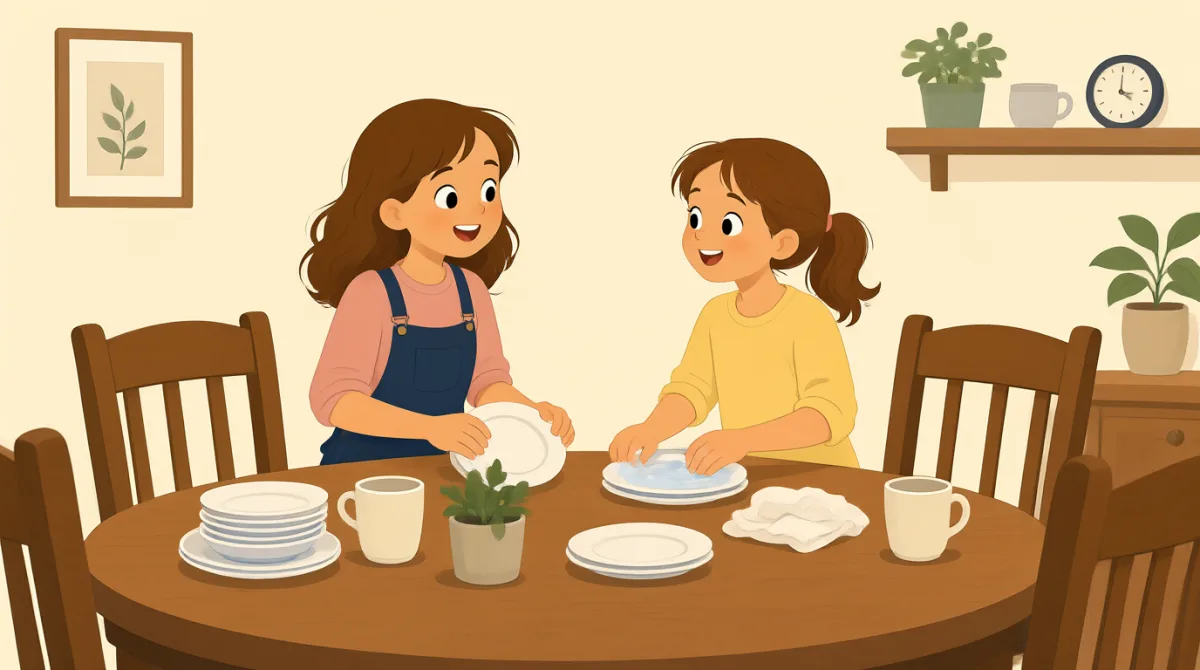
After dinner, Emma helps Grace clean up the table and wash the dishes. They work together and chat casually.
रात के खाने के बाद, एमा ग्रेस को मेज़ साफ़ करने और बर्तन धोने में मदद करती है। दोनों मिलकर काम करती हैं और यूँ ही बातें करती हैं।
संवाद8

That was a lovely dinner, Grace. Let me help you clear the table.
ग्रेस, खाना बहुत अच्छा था। चलो, मैं मेज़ समेटने में तुम्हारी मदद करती हूँ।

Thanks, Emma. Could you take these plates to the kitchen?
शुक्रिया, एमा। क्या तुम ये प्लेटें रसोई में ले जाओगी?
Sure. Should I put them by the sink?
ज़रूर। क्या मैं इन्हें सिंक के पास रख दूँ?
Yes, please. I’ll bring the glasses and the dishes.
हाँ, ज़रूर। मैं गिलास और बाकी बर्तन ले आती हूँ।
I can wash the plates while you dry them.
जब तुम उन्हें पोंछोगी, तब मैं प्लेटें धो सकती हूँ।
That sounds good. We’ll finish in no time.
अच्छा रहेगा। हमारा काम झटपट हो जाएगा।
This is easy. I usually help out at home, too.
यह तो आसान है। मैं भी घर पर अक्सर मदद करती हूँ।
You’re a wonderful guest. Thanks for helping me clean up.
तुम बहुत अच्छी मेहमान हो। सफ़ाई में मेरी मदद करने के लिए शुक्रिया।
शब्दावली8
- lovely dinnerबहुत अच्छा खाना
A warm way to say that a meal was very nice. You can use “lovely” to compliment a meal or an event.
खाने की तारीफ़ करने का यह एक स्नेहभरा तरीका है। किसी खाने या कार्यक्रम की तारीफ़ के लिए “lovely” कह सकते हो।
- clear the tableमेज़ समेटना
To take plates and other things off the table after a meal. You can offer to help by saying, “Let me help you clear the table.”
खाने के बाद मेज़ से प्लेटें और दूसरी चीज़ें हटाना। “Let me help you clear the table.” कहकर तुम मदद की पेशकश कर सकते हो।
- take these plates to the kitchenये प्लेटें रसोई में ले जाना
To carry the plates from where you are to the kitchen. Use “take [something] to [place]” to ask someone to move an item.
प्लेटों को वहाँ से रसोई तक ले जाना जहाँ तुम अभी हो। किसी से चीज़ कहीं ले जाने को कहने के लिए “take [something] to [place]” का इस्तेमाल करो।
- by the sinkसिंक के पास
This means next to the sink. You can ask where to put dishes by saying, “Should I put them by the sink?”
इसका मतलब है सिंक के बगल में। बर्तन कहाँ रखने हैं, यह पूछने के लिए तुम कह सकते हो, “Should I put them by the sink?”
- dry themउन्हें पोंछकर सुखाना
To remove water from dishes with a towel after washing them. One person can wash the dishes while another dries them.
बर्तन धोने के बाद तौलिए से उनका पानी सुखाना। एक व्यक्ति बर्तन धो सकता है, जबकि दूसरा उन्हें पोंछकर सुखा सकता है।
- in no timeझटपट
Very quickly, or after only a short time. Use this phrase to say that a task will be finished soon.
बहुत जल्दी या थोड़े ही समय में। यह बताने के लिए इस वाक्यांश का इस्तेमाल करो कि कोई काम जल्द पूरा हो जाएगा।
- help outमदद करना
To help someone with a task. You can say, “I help out at home,” when you regularly help with chores.
किसी के काम में हाथ बँटाना। घर के कामों में नियमित रूप से मदद करने की बात कहने के लिए तुम कह सकते हो, “I help out at home.”
- clean upसफ़ाई करना
To make a place tidy by putting things away or washing dishes. After a meal, people often clean up together.
चीज़ें उनकी जगह पर रखकर या बर्तन धोकर किसी जगह को साफ़-सुथरा करना। खाने के बाद लोग अक्सर मिलकर सफ़ाई करते हैं।
मुख्य वाक्य8
- 1
That was a lovely dinner, Grace.
ग्रेस, खाना बहुत अच्छा था।
This is a friendly way to compliment someone’s meal. You can use “That was a lovely…” to praise an event or experience.
किसी के बनाए खाने की तारीफ़ करने का यह दोस्ताना तरीका है। किसी कार्यक्रम या अनुभव की तारीफ़ करने के लिए “That was a lovely…” कह सकते हो।
- 2
Let me help you clear the table.
चलो, मैं मेज़ समेटने में तुम्हारी मदद करती हूँ।
Use this sentence to offer help with a task. You can replace “clear the table” with another activity, such as “wash the dishes.”
किसी काम में मदद की पेशकश करने के लिए यह वाक्य कहो। “clear the table” की जगह कोई दूसरा काम रख सकते हो, जैसे “wash the dishes.”
- 3
Could you take these plates to the kitchen?
क्या तुम ये प्लेटें रसोई में ले जाओगी?
This is a polite way to ask someone to carry something somewhere. Replace “these plates” and “the kitchen” with other items and places.
किसी से कोई चीज़ कहीं ले जाने को कहने का यह विनम्र तरीका है। “these plates” और “the kitchen” की जगह दूसरी चीज़ों और जगहों के नाम रखो।
- 4
Should I put them by the sink?
क्या मैं इन्हें सिंक के पास रख दूँ?
Use this question to check where something should go. Replace “them” and “by the sink” with the items and place you mean.
कोई चीज़ कहाँ रखनी है, यह पूछने के लिए इस सवाल का इस्तेमाल करो। “them” और “by the sink” की जगह उन चीज़ों और जगह का नाम रखो जिनकी तुम बात कर रहे हो।
- 5
I can wash the plates while you dry them.
जब तुम उन्हें पोंछोगी, तब मैं प्लेटें धो सकती हूँ।
This sentence offers to share a task and shows what each person can do. Use “while” to describe two actions happening at the same time.
यह वाक्य काम बाँटने की पेशकश करता है और बताता है कि कौन क्या कर सकता है। एक ही समय पर होने वाली दो क्रियाओं के बारे में बताने के लिए “while” का इस्तेमाल करो।
- 6
We’ll finish in no time.
हमारा काम झटपट हो जाएगा।
This is a reassuring way to say a task will be done quickly. Use “We’ll finish…” when you want to encourage someone working with you.
काम जल्दी पूरा होने का भरोसा दिलाने का यह तरीका है। साथ काम कर रहे किसी व्यक्ति का हौसला बढ़ाने के लिए “We’ll finish…” कहो।
- 7
I usually help out at home, too.
मैं भी घर पर अक्सर मदद करती हूँ।
Use this sentence to talk about a regular habit of helping with chores. Replace “help out at home” with another activity you often do.
घर के कामों में नियमित रूप से मदद करने की आदत के बारे में बताने के लिए यह वाक्य इस्तेमाल करो। “help out at home” की जगह कोई दूसरी गतिविधि रखो जो तुम अक्सर करते हो।
- 8
You’re a wonderful guest.
तुम बहुत अच्छी मेहमान हो।
This is a kind way to compliment someone who is visiting. You can replace “wonderful” with another positive adjective, such as “helpful.”
मिलने आए किसी व्यक्ति की तारीफ़ करने का यह एक प्यारा तरीका है। “wonderful” की जगह कोई और सकारात्मक विशेषण रख सकते हो, जैसे “helpful.”