Discussing Chores with a Family Member
تقسیم کارهای خانه با یکی از اعضای خانواده
Two family members are talking about who will do which household chores, like dishes, laundry, or tidying up common areas.
دو نفر از اعضای خانواده دربارهٔ اینکه چه کسی کدام کار خانه را انجام دهد، مثل شستن ظرفها، لباسشویی یا مرتبکردن فضاهای مشترک، صحبت میکنند.
گفتوگو8
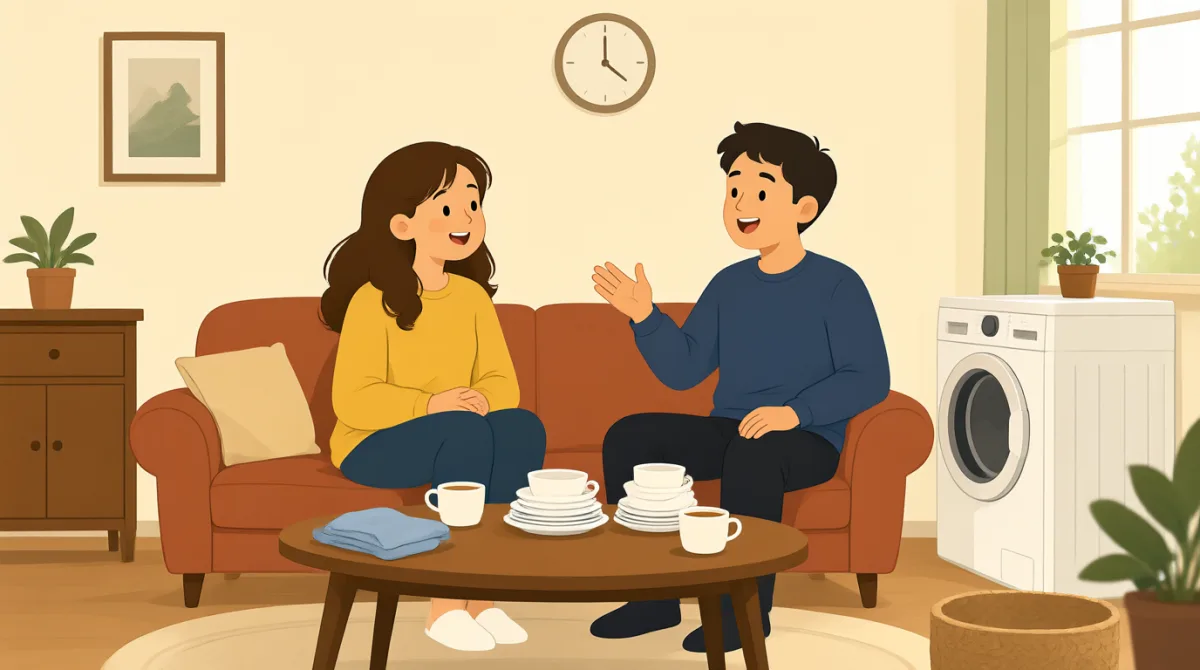

Hey Jack, the kitchen is a bit of a mess. Who's on dishes tonight?
هی جک، آشپزخونه یهکم بههمریختهست. امشب نوبت کیه ظرفها رو بشوره؟

Hmm, I did them last night, so I think it's your turn. I can take out the trash though.
هوم، دیشب من شستمشون، پس فکر کنم نوبت توئه. ولی میتونم زبالهها رو ببرم بیرون.
Right, I forgot. Okay, I'll do the dishes then. What about the living room? It needs tidying up too.
درسته، یادم رفت. باشه، پس من ظرفها رو میشورم. اتاق نشیمن چی؟ اونم باید مرتب بشه.
I can tackle the living room after I take out the trash. Just need to put the remote back and fold those blankets.
بعد از اینکه زبالهها رو بردم بیرون، به اتاق نشیمن میرسم. فقط باید کنترل رو بذارم سر جاش و اون پتوها رو تا کنم.
Perfect! And the laundry? Did you put that load in, or should I start one?
عالیه! لباسها چی؟ اون بار لباس رو گذاشتی توی ماشین یا من یکی رو راه بندازم؟
Oh, I completely forgot about the laundry. It's still in the hamper. If you could start it, that would be a huge help.
اوه، کلاً لباسشویی یادم رفت. لباسها هنوز توی سبدن. اگه تو ماشین رو روشن کنی، خیلی کمکم میکنی.
No worries. I'll get that going after the dishes are done. So, dishes and laundry for me, and trash and living room for you. Sound good?
اشکالی نداره. بعد از اینکه ظرفها رو شستم، ماشین رو راه میندازم. پس ظرفها و لباسها با من، زبالهها و اتاق نشیمن با تو. خوبه؟
Sounds like a plan! Thanks, Emma.
پس توافق شد! ممنون، اِما.
واژگان7
- messبههمریختگی
A 'mess' means a dirty or untidy state, like when things are scattered around. Use it to describe a room that's not clean, e.g., 'The room is a mess.'
'mess' یعنی وضعیتی کثیف یا نامرتب، مثلاً وقتی وسایل اینطرفوآنطرف پخش شدهاند. برای توصیف اتاقی که تمیز نیست از آن استفاده کن؛ مثلاً: 'The room is a mess.' (اتاق بههمریخته است.)
- dishesظرفها
'Dishes' refers to plates, bowls, and utensils used for eating. In chores, it means washing them after meals, e.g., 'I need to do the dishes.'
'Dishes' به بشقابها، کاسهها و وسایلی گفته میشود که برای غذاخوردن استفاده میکنیم. وقتی دربارهٔ کارهای خانه صحبت میکنیم، منظور شستن آنها بعد از غذاست؛ مثلاً: 'I need to do the dishes.' (باید ظرفها را بشورم.)
- trashزباله
'Trash' means garbage or waste that needs to be thrown away. Common in home tasks like 'take out the trash' to empty the bin.
'Trash' یعنی زباله یا پسماندی که باید دور انداخته شود. در کارهای خانه، عبارت 'take out the trash' معمولاً برای خالیکردن سطل زباله به کار میرود.
- tidying upمرتبکردن
'Tidying up' means making a space neat by putting things in order. It's a polite way to say cleaning lightly, e.g., 'Let's tidy up the room.'
'Tidying up' یعنی مرتبکردن فضا با گذاشتن وسایل سر جای خودشان. روشی مؤدبانه برای گفتنِ مرتبکاری سبک است؛ مثلاً: 'Let's tidy up the room.' (بیایید اتاق را مرتب کنیم.)
- tackleرسیدگیکردن به
In this context, 'tackle' means to deal with or start a task, especially a challenging one. Use it for chores like 'I'll tackle the garden.'
در اینجا، 'tackle' یعنی به کاری رسیدگیکردن یا شروعشکردن، بهخصوص اگر چالشبرانگیز باشد. برای کارهایی مثل این به کار میرود: 'I'll tackle the garden.' (به باغ رسیدگی میکنم.)
- laundryلباسشویی
'Laundry' means dirty clothes that need washing. It's often used for the whole process, e.g., 'I have to do the laundry today.'
'Laundry' یعنی لباسهای چرکی که باید شسته شوند. این کلمه اغلب به کل فرایند شستوشوی لباس هم اشاره دارد؛ مثلاً: 'I have to do the laundry today.' (امروز باید لباسها را بشورم.)
- hamperسبد لباس چرک
A 'hamper' is a basket for holding dirty clothes before washing. Say 'The laundry is in the hamper' to mean it's waiting to be washed.
'Hamper' سبدی است که لباسهای چرک را تا پیش از شستن در آن میگذارند. وقتی میگویید 'The laundry is in the hamper'، یعنی لباسها منتظرند شسته شوند.
جملات کلیدی8
- 1
Hey Jack, the kitchen is a bit of a mess. Who's on dishes tonight?
هی جک، آشپزخونه یهکم بههمریختهست. امشب نوبت کیه ظرفها رو بشوره؟
This sentence starts a casual conversation about chores. 'A bit of a mess' softens the complaint, and 'Who's on dishes?' uses 'on' to mean whose turn it is. Useful for asking about responsibilities in family talks.
این جمله شروع یک گفتوگوی خودمانی دربارهٔ کارهای خانه است. 'A bit of a mess' از تندیِ گلایه کم میکند و در 'Who's on dishes?' واژهٔ 'on' نشان میدهد نوبت چه کسی است. این عبارت برای پرسیدن دربارهٔ مسئولیتها در گفتوگوهای خانوادگی کاربرد دارد.
- 2
Hmm, I did them last night, so I think it's your turn.
هوم، دیشب من شستمشون، پس فکر کنم نوبت توئه.
Here, 'Hmm' shows thinking, and 'so' connects reasons to conclusions. 'It's your turn' is a common phrase for sharing tasks fairly. Great for negotiating chores politely.
اینجا 'Hmm' نشان میدهد گوینده دارد فکر میکند و 'so' دلیل را به نتیجه وصل میکند. 'It's your turn' عبارتی رایج برای تقسیم عادلانهٔ کارهاست و برای توافق بر سر کارهای خانه بهدرد میخورد.
- 3
I can take out the trash though.
ولی میتونم زبالهها رو ببرم بیرون.
'Though' adds a positive offer after a refusal. 'Take out the trash' is a fixed expression for emptying garbage. Use this to compromise in discussions.
'Though' بعد از ردکردن یا نپذیرفتن چیزی، پیشنهادی مثبت اضافه میکند. 'Take out the trash' اصطلاحی ثابت برای خالیکردن زبالههاست. در گفتوگوهای توافقی از این عبارت استفاده کن.
- 4
What about the living room? It needs tidying up too.
اتاق نشیمن چی؟ اونم باید مرتب بشه.
This asks about another task using 'What about...?' to suggest more. 'Needs tidying up' uses 'needs' for something requiring action. Helpful for expanding on household duties.
این جمله با استفاده از 'What about...?' کار دیگری را مطرح میکند. در عبارت 'Needs tidying up'، واژهٔ 'needs' میگوید که کاری باید انجام شود. این ساختار برای مطرحکردن مسئولیتهای بیشتر در خانه مفید است.
- 5
If you could start it, that would be a huge help.
اگه تو ماشین رو روشن کنی، خیلی کمکم میکنی.
This is a polite request with 'if you could' for hypothetical help, and 'that would be a huge help' expresses gratitude in advance. Ideal for asking family for assistance without demanding.
این یک درخواست مؤدبانه است که در آن 'if you could' کمک را به شکل فرضی مطرح میکند و 'that would be a huge help' از طرف مقابل پیشاپیش تشکر میکند. برای درخواست کمک از اعضای خانواده بدون اینکه حالت دستوری داشته باشد، مناسب است.
- 6
No worries. I'll get that going after the dishes are done.
اشکالی نداره. بعد از اینکه ظرفها رو شستم، ماشین رو راه میندازم.
'No worries' means 'don't worry' casually. 'Get that going' is an idiom for starting a task. Use this to agree and sequence actions in chore planning.
'No worries' در گفتوگوی خودمانی یعنی «نگران نباش» یا «اشکالی نداره». 'Get that going' اصطلاحی برای شروعکردن یک کار است. از این عبارت برای موافقتکردن و ترتیبدادن به کارها استفاده کن.
- 7
So, dishes and laundry for me, and trash and living room for you. Sound good?
پس ظرفها و لباسها با من، زبالهها و اتاق نشیمن با تو. خوبه؟
This summarizes the agreement with 'So' for conclusion, lists tasks clearly, and ends with 'Sound good?' for confirmation. Perfect for wrapping up discussions on dividing work.
این جمله توافق را خلاصه میکند: 'So' نتیجهگیری را نشان میدهد، کارها را روشن و مشخص فهرست میکند و در پایان با 'Sound good?' تأیید میگیرد. برای جمعبندی گفتوگو دربارهٔ تقسیم کارها عالی است.
- 8
Sounds like a plan!
پس توافق شد!
This idiom means 'that's a good idea' or 'agreed.' It's a positive way to end a conversation. Use it in casual settings to show approval of arrangements.
این اصطلاح یعنی «فکر خوبیه» یا «قبوله». راهی مثبت برای تمامکردن گفتوگوست. در موقعیتهای خودمانی از آن استفاده کن تا موافقتت را با برنامه نشان بدهی.