Discussing Chores with a Family Member
परिवार के सदस्य के साथ घर के कामों पर चर्चा
Two family members are talking about who will do which household chores, like dishes, laundry, or tidying up common areas.
परिवार के दो सदस्य बात कर रहे हैं कि बर्तन धोने, कपड़े धोने और साझा जगहों को समेटने जैसे घर के काम कौन करेगा।
संवाद8
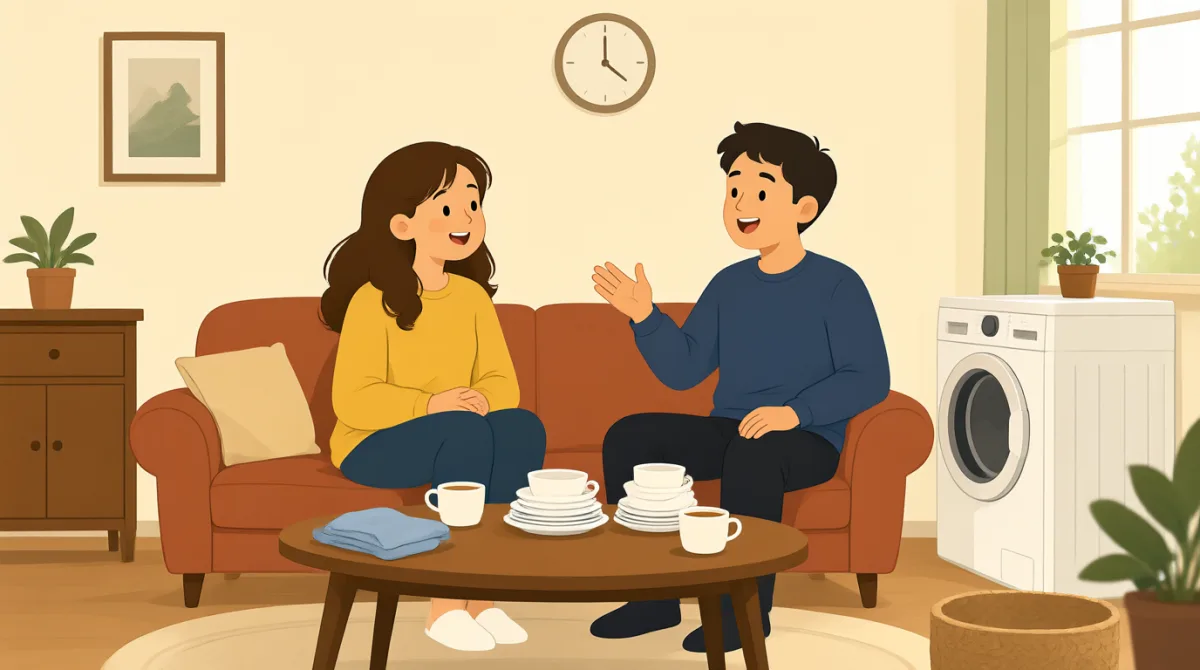

Hey Jack, the kitchen is a bit of a mess. Who's on dishes tonight?
अरे जैक, रसोई थोड़ी बिखरी हुई है। आज रात बर्तन कौन धोएगा?

Hmm, I did them last night, so I think it's your turn. I can take out the trash though.
हम्म, मैंने कल रात बर्तन धोए थे, तो मुझे लगता है अब तुम्हारी बारी है। लेकिन मैं कचरा बाहर ले जा सकता हूँ।
Right, I forgot. Okay, I'll do the dishes then. What about the living room? It needs tidying up too.
हाँ, मैं भूल गई थी। ठीक है, तो बर्तन मैं धो लूँगी। बैठक का क्या? उसे भी समेटना है।
I can tackle the living room after I take out the trash. Just need to put the remote back and fold those blankets.
कचरा बाहर ले जाने के बाद मैं बैठक समेट लूँगा। बस रिमोट वापस रखना है और उन कंबलों को तह करना है।
Perfect! And the laundry? Did you put that load in, or should I start one?
बढ़िया! और कपड़े? क्या तुमने कपड़े धोने की मशीन चला दी, या मैं शुरू करूँ?
Oh, I completely forgot about the laundry. It's still in the hamper. If you could start it, that would be a huge help.
ओह, मैं कपड़े धोना बिल्कुल भूल गया। वे अभी भी कपड़ों की टोकरी में हैं। अगर तुम मशीन चला दो, तो बहुत मदद होगी।
No worries. I'll get that going after the dishes are done. So, dishes and laundry for me, and trash and living room for you. Sound good?
कोई बात नहीं। बर्तन धुलने के बाद मैं मशीन चला दूँगी। तो, बर्तन और कपड़े मैं करूँगी, और कचरा व बैठक तुम। ठीक है?
Sounds like a plan! Thanks, Emma.
ठीक है, ऐसा ही करते हैं! शुक्रिया, एमा।
शब्दावली7
- messगंदगी; बिखराव
A 'mess' means a dirty or untidy state, like when things are scattered around. Use it to describe a room that's not clean, e.g., 'The room is a mess.'
'mess' का मतलब है गंदी या बिखरी हुई हालत, जैसे जब चीज़ें इधर-उधर पड़ी हों। किसी ऐसे कमरे के लिए इसका इस्तेमाल करें जो साफ़-सुथरा न हो, जैसे 'The room is a mess.' (कमरा बिखरा हुआ है।)
- dishesबर्तन
'Dishes' refers to plates, bowls, and utensils used for eating. In chores, it means washing them after meals, e.g., 'I need to do the dishes.'
'Dishes' का मतलब है खाने में इस्तेमाल होने वाली प्लेटें, कटोरियाँ और चम्मच-काँटे। घर के कामों के संदर्भ में इसका मतलब खाना खाने के बाद उन्हें धोना होता है, जैसे 'I need to do the dishes.' (मुझे बर्तन धोने हैं।)
- trashकचरा
'Trash' means garbage or waste that needs to be thrown away. Common in home tasks like 'take out the trash' to empty the bin.
'Trash' का मतलब है फेंकने योग्य कूड़ा या बेकार चीज़ें। घर के कामों में 'take out the trash' का मतलब कूड़ेदान खाली करने के लिए कचरा बाहर ले जाना है।
- tidying upसमेटना; व्यवस्थित करना
'Tidying up' means making a space neat by putting things in order. It's a polite way to say cleaning lightly, e.g., 'Let's tidy up the room.'
'Tidying up' का मतलब है चीज़ों को सही जगह रखकर किसी जगह को व्यवस्थित करना। हल्के-फुल्के ढंग से सफ़ाई करने के लिए भी यह कहा जाता है, जैसे 'Let's tidy up the room.' (चलो, कमरा समेट लें।)
- tackleहाथ में लेना; निपटना
In this context, 'tackle' means to deal with or start a task, especially a challenging one. Use it for chores like 'I'll tackle the garden.'
इस संदर्भ में 'tackle' का मतलब है किसी काम को शुरू करना या उससे निपटना, खासकर जब वह थोड़ा मुश्किल हो। घर के कामों के लिए भी इसका इस्तेमाल कर सकते हैं, जैसे 'I'll tackle the garden.' (मैं बगीचे का काम निपटा लूँगा।)
- laundryधोने वाले कपड़े; कपड़े धोना
'Laundry' means dirty clothes that need washing. It's often used for the whole process, e.g., 'I have to do the laundry today.'
'Laundry' का मतलब है वे गंदे कपड़े जिन्हें धोना है। यह अक्सर कपड़े धोने की पूरी प्रक्रिया के लिए भी इस्तेमाल होता है, जैसे 'I have to do the laundry today.' (मुझे आज कपड़े धोने हैं।)
- hamperगंदे कपड़ों की टोकरी
A 'hamper' is a basket for holding dirty clothes before washing. Say 'The laundry is in the hamper' to mean it's waiting to be washed.
'Hamper' गंदे कपड़े धोने से पहले रखने वाली टोकरी को कहते हैं। 'The laundry is in the hamper' कहने का मतलब है कि कपड़े धोने के इंतज़ार में टोकरी में रखे हैं।
मुख्य वाक्य8
- 1
Hey Jack, the kitchen is a bit of a mess. Who's on dishes tonight?
अरे जैक, रसोई थोड़ी बिखरी हुई है। आज रात बर्तन कौन धोएगा?
This sentence starts a casual conversation about chores. 'A bit of a mess' softens the complaint, and 'Who's on dishes?' uses 'on' to mean whose turn it is. Useful for asking about responsibilities in family talks.
यह वाक्य घर के कामों के बारे में अनौपचारिक बातचीत शुरू करता है। 'A bit of a mess' (थोड़ी बिखरी हुई) शिकायत को नरम बनाता है, और 'Who's on dishes?' में 'on' का मतलब है कि किसकी बारी है। परिवार में काम बाँटने के बारे में पूछने के लिए यह उपयोगी है।
- 2
Hmm, I did them last night, so I think it's your turn.
हम्म, मैंने कल रात बर्तन धोए थे, तो मुझे लगता है अब तुम्हारी बारी है।
Here, 'Hmm' shows thinking, and 'so' connects reasons to conclusions. 'It's your turn' is a common phrase for sharing tasks fairly. Great for negotiating chores politely.
यहाँ 'Hmm' सोचने का भाव दिखाता है और 'so' वजह को नतीजे से जोड़ता है। 'It's your turn' कामों को बारी-बारी से बाँटने के लिए आम तौर पर कहा जाता है। घर के कामों पर विनम्रता से बात करते समय यह काम आता है।
- 3
I can take out the trash though.
लेकिन मैं कचरा बाहर ले जा सकता हूँ।
'Though' adds a positive offer after a refusal. 'Take out the trash' is a fixed expression for emptying garbage. Use this to compromise in discussions.
'Though' किसी काम से मना करने के बाद एक सकारात्मक प्रस्ताव जोड़ता है। 'Take out the trash' कचरा बाहर ले जाकर कूड़ेदान खाली करने के लिए इस्तेमाल होने वाला तयशुदा वाक्यांश है। बातचीत में बीच का रास्ता निकालने के लिए इसका इस्तेमाल करें।
- 4
What about the living room? It needs tidying up too.
बैठक का क्या? उसे भी समेटना है।
This asks about another task using 'What about...?' to suggest more. 'Needs tidying up' uses 'needs' for something requiring action. Helpful for expanding on household duties.
'What about...?' का इस्तेमाल करके यह किसी दूसरे काम के बारे में पूछता और उसका सुझाव देता है। 'Needs tidying up' में 'needs' बताता है कि किसी चीज़ पर काम करना ज़रूरी है। घर के कामों की सूची में एक और काम जोड़ने के लिए यह उपयोगी है।
- 5
If you could start it, that would be a huge help.
अगर तुम मशीन चला दो, तो बहुत मदद होगी।
This is a polite request with 'if you could' for hypothetical help, and 'that would be a huge help' expresses gratitude in advance. Ideal for asking family for assistance without demanding.
'If you could' कहकर विनम्रता से मदद माँगी जाती है, जबकि 'that would be a huge help' पहले से ही आभार जताता है। परिवार से बिना दबाव डाले मदद माँगने के लिए यह अच्छा वाक्य है।
- 6
No worries. I'll get that going after the dishes are done.
कोई बात नहीं। बर्तन धुलने के बाद मैं मशीन चला दूँगी।
'No worries' means 'don't worry' casually. 'Get that going' is an idiom for starting a task. Use this to agree and sequence actions in chore planning.
'No worries' का अनौपचारिक मतलब है 'चिंता मत करो'। 'Get that going' किसी काम को शुरू करने के लिए इस्तेमाल होने वाला मुहावरा है। घर के कामों की योजना बनाते समय सहमति जताने और कामों का क्रम बताने के लिए इसका इस्तेमाल करें।
- 7
So, dishes and laundry for me, and trash and living room for you. Sound good?
तो, बर्तन और कपड़े मैं करूँगी, और कचरा व बैठक तुम। ठीक है?
This summarizes the agreement with 'So' for conclusion, lists tasks clearly, and ends with 'Sound good?' for confirmation. Perfect for wrapping up discussions on dividing work.
'So' से नतीजा बताते हुए यह वाक्य तय हुई बात का सार देता है, कामों को साफ़-साफ़ बाँटता है और 'Sound good?' से पुष्टि माँगता है। काम बाँटने की बातचीत को समेटने के लिए यह बहुत अच्छा है।
- 8
Sounds like a plan!
ठीक है, ऐसा ही करते हैं!
This idiom means 'that's a good idea' or 'agreed.' It's a positive way to end a conversation. Use it in casual settings to show approval of arrangements.
इस मुहावरे का मतलब है 'यह अच्छा विचार है' या 'मंज़ूर है'। बातचीत को सकारात्मक ढंग से खत्म करने का यह अच्छा तरीका है। अनौपचारिक बातचीत में किसी तय योजना से सहमति जताने के लिए इसका इस्तेमाल करें।