Discussing Chores with a Family Member
คุยกันเรื่องแบ่งงานบ้านกับคนในครอบครัว
Two family members are talking about who will do which household chores, like dishes, laundry, or tidying up common areas.
สมาชิกในครอบครัวสองคนคุยกันว่าใครจะทำงานบ้านอะไรบ้าง เช่น ล้างจาน ซักผ้า หรือเก็บกวาดพื้นที่ส่วนกลาง
บทสนทนา8
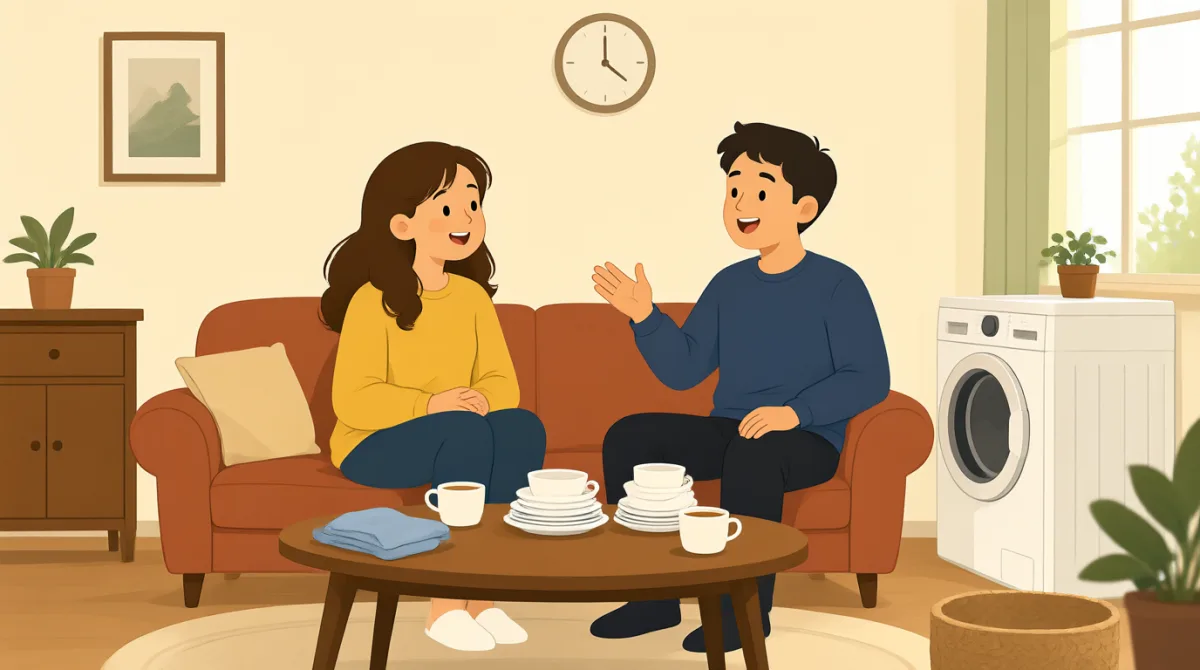

Hey Jack, the kitchen is a bit of a mess. Who's on dishes tonight?
เฮ้ แจ็ก ห้องครัวรกนิดหน่อย คืนนี้ใครล้างจานล่ะ?

Hmm, I did them last night, so I think it's your turn. I can take out the trash though.
อืม เมื่อคืนฉันล้างไปแล้ว งั้นคืนนี้น่าจะถึงตาเธอนะ แต่ฉันเอาขยะไปทิ้งให้ได้
Right, I forgot. Okay, I'll do the dishes then. What about the living room? It needs tidying up too.
จริงด้วย ฉันลืมไปเลย โอเค งั้นฉันล้างจานเอง แล้วห้องนั่งเล่นล่ะ? ต้องเก็บกวาดเหมือนกันนะ
I can tackle the living room after I take out the trash. Just need to put the remote back and fold those blankets.
ฉันจัดการห้องนั่งเล่นหลังเอาขยะไปทิ้งได้ แค่เอารีโมตไปวางที่เดิมแล้วก็พับผ้าห่มพวกนั้น
Perfect! And the laundry? Did you put that load in, or should I start one?
ดีเลย! แล้วผ้าล่ะ เธอเอาผ้าลงเครื่องไว้หรือยัง หรือให้ฉันเริ่มซักดี?
Oh, I completely forgot about the laundry. It's still in the hamper. If you could start it, that would be a huge help.
โอ๊ย ฉันลืมเรื่องผ้าไปสนิทเลย ยังอยู่ในตะกร้าอยู่เลย ถ้าเธอช่วยเริ่มซักให้หน่อยจะดีมากเลย
No worries. I'll get that going after the dishes are done. So, dishes and laundry for me, and trash and living room for you. Sound good?
ไม่เป็นไร เดี๋ยวฉันเริ่มซักหลังล้างจานเสร็จ งั้นฉันล้างจานกับซักผ้า ส่วนเธอเอาขยะไปทิ้งแล้วก็จัดห้องนั่งเล่น โอเคไหม?
Sounds like a plan! Thanks, Emma.
ตกลงตามนี้เลย! ขอบใจนะ เอ็มมา
คำศัพท์7
- messความรก
A 'mess' means a dirty or untidy state, like when things are scattered around. Use it to describe a room that's not clean, e.g., 'The room is a mess.'
'mess' หมายถึงสภาพที่สกปรกหรือไม่เป็นระเบียบ เช่น มีของวางกระจัดกระจาย ใช้บรรยายห้องที่ไม่สะอาดหรือรกได้ เช่น 'The room is a mess.' (ห้องรกมาก)
- dishesจานชาม
'Dishes' refers to plates, bowls, and utensils used for eating. In chores, it means washing them after meals, e.g., 'I need to do the dishes.'
'Dishes' หมายถึงจาน ชาม และช้อนส้อมที่ใช้กินอาหาร เวลาพูดถึงงานบ้าน มักหมายถึงการล้างของเหล่านี้หลังมื้ออาหาร เช่น 'I need to do the dishes.' (ฉันต้องล้างจาน)
- trashขยะ
'Trash' means garbage or waste that needs to be thrown away. Common in home tasks like 'take out the trash' to empty the bin.
'Trash' หมายถึงสิ่งของเหลือทิ้งที่ต้องนำไปทิ้ง มักใช้พูดถึงงานบ้าน เช่น 'take out the trash' หมายถึงเอาขยะไปทิ้งหรือเอาขยะออกจากถัง
- tidying upเก็บกวาดให้เป็นระเบียบ
'Tidying up' means making a space neat by putting things in order. It's a polite way to say cleaning lightly, e.g., 'Let's tidy up the room.'
'Tidying up' หมายถึงจัดของให้เป็นระเบียบ เป็นวิธีพูดถึงการเก็บกวาดเล็ก ๆ น้อย ๆ เช่น 'Let's tidy up the room.' (มาเก็บห้องให้เรียบร้อยกันเถอะ)
- tackleจัดการ
In this context, 'tackle' means to deal with or start a task, especially a challenging one. Use it for chores like 'I'll tackle the garden.'
ในบริบทนี้ 'tackle' หมายถึงลงมือทำหรือจัดการงาน โดยเฉพาะงานที่อาจดูท้าทาย ใช้กับงานบ้านได้ เช่น 'I'll tackle the garden.' (ฉันจะจัดการสวนเอง)
- laundryผ้าที่ต้องซัก; การซักผ้า
'Laundry' means dirty clothes that need washing. It's often used for the whole process, e.g., 'I have to do the laundry today.'
'Laundry' หมายถึงเสื้อผ้าที่สกปรกและต้องซัก และยังใช้เรียกงานซักผ้าทั้งหมดได้ด้วย เช่น 'I have to do the laundry today.' (วันนี้ฉันต้องซักผ้า)
- hamperตะกร้าผ้า
A 'hamper' is a basket for holding dirty clothes before washing. Say 'The laundry is in the hamper' to mean it's waiting to be washed.
'Hamper' คือตะกร้าสำหรับใส่เสื้อผ้าสกปรกก่อนนำไปซัก พูดว่า 'The laundry is in the hamper' เพื่อบอกว่าผ้าที่ต้องซักอยู่ในตะกร้า
ประโยคสำคัญ8
- 1
Hey Jack, the kitchen is a bit of a mess. Who's on dishes tonight?
เฮ้ แจ็ก ห้องครัวรกนิดหน่อย คืนนี้ใครล้างจานล่ะ?
This sentence starts a casual conversation about chores. 'A bit of a mess' softens the complaint, and 'Who's on dishes?' uses 'on' to mean whose turn it is. Useful for asking about responsibilities in family talks.
ประโยคนี้ใช้เริ่มคุยเรื่องงานบ้านแบบสบาย ๆ 'A bit of a mess' (รกนิดหน่อย) ช่วยทำให้คำบ่นฟังดูเบาลง ส่วน 'Who's on dishes?' ใช้ 'on' เพื่อถามว่าถึงตาใครทำหน้าที่นั้น เหมาะสำหรับถามถึงความรับผิดชอบในครอบครัว
- 2
Hmm, I did them last night, so I think it's your turn.
อืม เมื่อคืนฉันล้างไปแล้ว งั้นคืนนี้น่าจะถึงตาเธอนะ
Here, 'Hmm' shows thinking, and 'so' connects reasons to conclusions. 'It's your turn' is a common phrase for sharing tasks fairly. Great for negotiating chores politely.
'Hmm' ใช้แสดงว่ากำลังคิด ส่วน 'so' เชื่อมเหตุผลกับข้อสรุป 'It's your turn' เป็นวลีที่ใช้บ่อยเมื่อแบ่งงานกันอย่างยุติธรรม เหมาะกับการตกลงแบ่งงานบ้านกันอย่างสุภาพ
- 3
I can take out the trash though.
แต่ฉันเอาขยะไปทิ้งให้ได้นะ
'Though' adds a positive offer after a refusal. 'Take out the trash' is a fixed expression for emptying garbage. Use this to compromise in discussions.
'Though' ใช้เสนอตัวช่วยในแง่บวกหลังจากปฏิเสธหรือบอกว่าทำบางอย่างไม่ได้ ส่วน 'Take out the trash' เป็นสำนวนที่หมายถึงเอาขยะไปทิ้ง ใช้ประโยคนี้เพื่อหาทางประนีประนอมเวลาคุยกันได้
- 4
What about the living room? It needs tidying up too.
แล้วห้องนั่งเล่นล่ะ? ต้องเก็บกวาดเหมือนกันนะ
This asks about another task using 'What about...?' to suggest more. 'Needs tidying up' uses 'needs' for something requiring action. Helpful for expanding on household duties.
ประโยคนี้ถามถึงงานอีกอย่างโดยใช้ 'What about...?' เพื่อเสนอให้พูดถึงเรื่องเพิ่มเติม ส่วน 'Needs tidying up' ใช้ 'needs' บอกว่าต้องทำอะไรสักอย่าง เหมาะสำหรับพูดถึงงานบ้านที่ยังต้องทำ
- 5
If you could start it, that would be a huge help.
ถ้าเธอช่วยเริ่มซักให้หน่อยจะดีมากเลย
This is a polite request with 'if you could' for hypothetical help, and 'that would be a huge help' expresses gratitude in advance. Ideal for asking family for assistance without demanding.
นี่เป็นคำขออย่างสุภาพ โดยใช้ 'if you could' เพื่อขอให้ช่วยอย่างไม่บังคับ ส่วน 'that would be a huge help' แสดงความขอบคุณล่วงหน้า เหมาะสำหรับขอความช่วยเหลือจากคนในครอบครัวอย่างนุ่มนวล
- 6
No worries. I'll get that going after the dishes are done.
ไม่เป็นไร เดี๋ยวฉันเริ่มซักหลังล้างจานเสร็จ
'No worries' means 'don't worry' casually. 'Get that going' is an idiom for starting a task. Use this to agree and sequence actions in chore planning.
'No worries' หมายถึงไม่ต้องกังวล เป็นคำพูดสบาย ๆ ส่วน 'Get that going' เป็นสำนวนที่หมายถึงเริ่มลงมือทำงาน ใช้ตอบตกลงและบอกลำดับการทำงานบ้านได้
- 7
So, dishes and laundry for me, and trash and living room for you. Sound good?
งั้นฉันล้างจานกับซักผ้า ส่วนเธอเอาขยะไปทิ้งแล้วก็จัดห้องนั่งเล่น โอเคไหม?
This summarizes the agreement with 'So' for conclusion, lists tasks clearly, and ends with 'Sound good?' for confirmation. Perfect for wrapping up discussions on dividing work.
ประโยคนี้สรุปข้อตกลงโดยใช้ 'So' เพื่อเกริ่นข้อสรุป แล้วแจกแจงงานของแต่ละคนให้ชัดเจน ปิดท้ายด้วย 'Sound good?' เพื่อถามว่าอีกฝ่ายเห็นด้วยไหม เหมาะสำหรับสรุปการแบ่งงาน
- 8
Sounds like a plan!
ตกลงตามนี้เลย!
This idiom means 'that's a good idea' or 'agreed.' It's a positive way to end a conversation. Use it in casual settings to show approval of arrangements.
สำนวนนี้หมายถึง 'เป็นความคิดที่ดี' หรือ 'ตกลงตามนั้น' เป็นวิธีตอบรับเชิงบวกเพื่อจบบทสนทนา ใช้ในสถานการณ์สบาย ๆ เพื่อแสดงว่าเห็นด้วยกับข้อตกลง