Discussing Chores with a Family Member
التحدث عن الأعمال المنزلية مع أحد أفراد الأسرة
Two family members are talking about who will do which household chores, like dishes, laundry, or tidying up common areas.
يتحدث فردان من الأسرة عن الأعمال المنزلية التي سيتولاها كل منهما، مثل غسل الصحون وغسل الملابس وترتيب الأماكن المشتركة.
حوار8
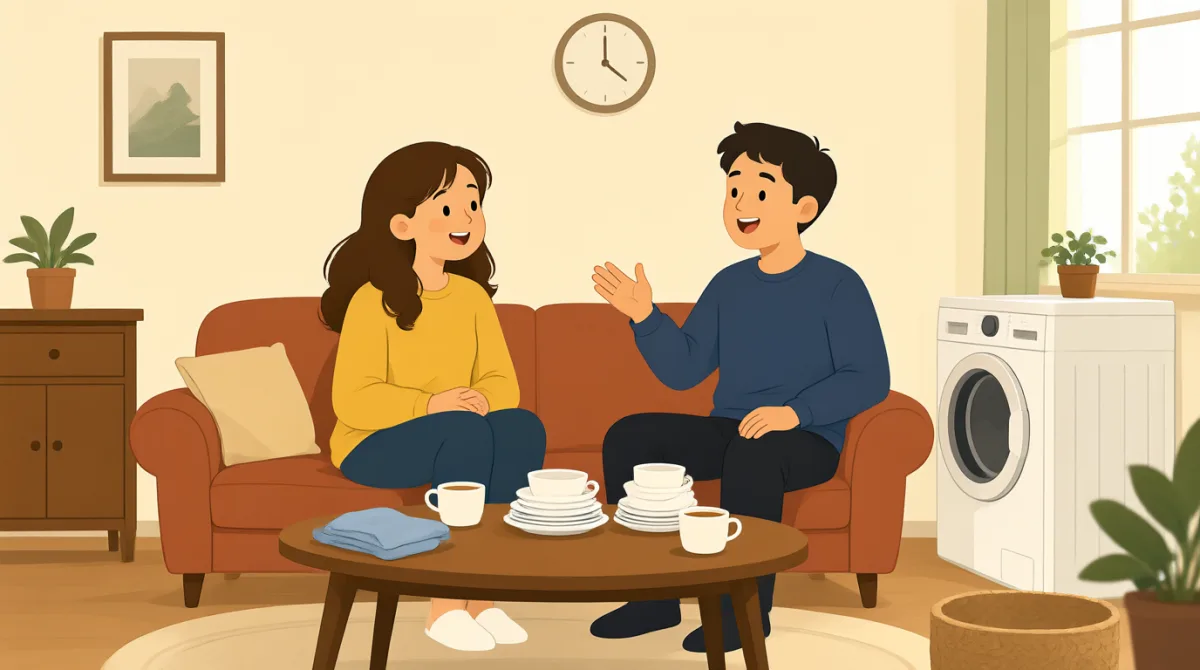

Hey Jack, the kitchen is a bit of a mess. Who's on dishes tonight?
مرحبًا يا Jack، المطبخ فوضوي قليلًا. مَن عليه غسل الصحون الليلة؟

Hmm, I did them last night, so I think it's your turn. I can take out the trash though.
همم، غسلتها ليلة أمس، لذا أظن أن دورك الآن. لكن يمكنني إخراج القمامة.
Right, I forgot. Okay, I'll do the dishes then. What about the living room? It needs tidying up too.
صحيح، نسيت ذلك. حسنًا، سأغسل الصحون إذن. وماذا عن غرفة المعيشة؟ تحتاج إلى ترتيب أيضًا.
I can tackle the living room after I take out the trash. Just need to put the remote back and fold those blankets.
يمكنني ترتيب غرفة المعيشة بعد إخراج القمامة. عليّ فقط إعادة جهاز التحكم إلى مكانه وطيّ تلك البطانيات.
Perfect! And the laundry? Did you put that load in, or should I start one?
ممتاز! وماذا عن الغسيل؟ هل وضعت تلك الدفعة في الغسالة، أم أبدأ واحدة؟
Oh, I completely forgot about the laundry. It's still in the hamper. If you could start it, that would be a huge help.
أوه، نسيت أمر الغسيل تمامًا. ما زال في سلة الغسيل. سيكون رائعًا لو بدأتِ تشغيل الغسالة.
No worries. I'll get that going after the dishes are done. So, dishes and laundry for me, and trash and living room for you. Sound good?
لا بأس. سأبدأ الغسيل بعد الانتهاء من غسل الصحون. إذن، الصحون والغسيل عليّ، والقمامة وغرفة المعيشة عليك. اتفقنا؟
Sounds like a plan! Thanks, Emma.
اتفقنا! شكرًا يا Emma.
المفردات7
- messفوضى
A 'mess' means a dirty or untidy state, like when things are scattered around. Use it to describe a room that's not clean, e.g., 'The room is a mess.'
تعني كلمة 'mess' حالة من الاتساخ أو عدم الترتيب، كأن تكون الأشياء مبعثرة. تُستخدم لوصف غرفة غير نظيفة، مثل: 'The room is a mess.' (الغرفة فوضوية).
- dishesالصحون
'Dishes' refers to plates, bowls, and utensils used for eating. In chores, it means washing them after meals, e.g., 'I need to do the dishes.'
تشير كلمة 'dishes' إلى الصحون والأوعية وأدوات الطعام. وفي سياق الأعمال المنزلية، تعني غسلها بعد الوجبات، مثل: 'I need to do the dishes.' (عليّ غسل الصحون).
- trashالقمامة
'Trash' means garbage or waste that needs to be thrown away. Common in home tasks like 'take out the trash' to empty the bin.
تعني كلمة 'trash' النفايات التي ينبغي التخلص منها. وتشيع في الأعمال المنزلية ضمن التعبير 'take out the trash'، أي إخراج القمامة لإفراغ سلة المهملات.
- tidying upترتيب
'Tidying up' means making a space neat by putting things in order. It's a polite way to say cleaning lightly, e.g., 'Let's tidy up the room.'
يعني 'tidying up' جعل المكان مرتبًا بوضع الأشياء في أماكنها. وهو تعبير لطيف عن التنظيف الخفيف، مثل: 'Let's tidy up the room.' (لنرتب الغرفة).
- tackleيتولى
In this context, 'tackle' means to deal with or start a task, especially a challenging one. Use it for chores like 'I'll tackle the garden.'
تعني كلمة 'tackle' في هذا السياق البدء بمهمة أو التصدي لها، ولا سيما إن كانت صعبة. تُستخدم مع الأعمال المنزلية، مثل: 'I'll tackle the garden.' (سأتولى ترتيب الحديقة).
- laundryالغسيل
'Laundry' means dirty clothes that need washing. It's often used for the whole process, e.g., 'I have to do the laundry today.'
تعني كلمة 'laundry' الملابس المتسخة التي تحتاج إلى الغسل، وقد تشير أيضًا إلى عملية غسل الملابس عمومًا، مثل: 'I have to do the laundry today.' (عليّ غسل الملابس اليوم).
- hamperسلة الغسيل
A 'hamper' is a basket for holding dirty clothes before washing. Say 'The laundry is in the hamper' to mean it's waiting to be washed.
كلمة 'hamper' تعني سلة توضع فيها الملابس المتسخة قبل غسلها. ويعني قول 'The laundry is in the hamper' (الملابس المتسخة في سلة الغسيل) أنها تنتظر الغسل.
الجمل الأساسية8
- 1
Hey Jack, the kitchen is a bit of a mess. Who's on dishes tonight?
مرحبًا يا Jack، المطبخ فوضوي قليلًا. مَن عليه غسل الصحون الليلة؟
This sentence starts a casual conversation about chores. 'A bit of a mess' softens the complaint, and 'Who's on dishes?' uses 'on' to mean whose turn it is. Useful for asking about responsibilities in family talks.
تبدأ هذه الجملة حديثًا عفويًا عن الأعمال المنزلية. تخفف عبارة 'a bit of a mess' (فوضوي قليلًا) من حدة الشكوى، وتستخدم 'Who's on dishes?' للسؤال عمّن جاء دوره. وهي مفيدة للسؤال عن المسؤوليات في حديث عائلي.
- 2
Hmm, I did them last night, so I think it's your turn.
همم، غسلتها ليلة أمس، لذا أظن أن دورك الآن.
Here, 'Hmm' shows thinking, and 'so' connects reasons to conclusions. 'It's your turn' is a common phrase for sharing tasks fairly. Great for negotiating chores politely.
تُظهر 'Hmm' التفكير هنا، وتربط 'so' السبب بالنتيجة. أما 'It's your turn' فعبارة شائعة تعني أن الدور قد حان لك، وتفيد عند تقسيم المهام بعدل.
- 3
I can take out the trash though.
لكن يمكنني إخراج القمامة.
'Though' adds a positive offer after a refusal. 'Take out the trash' is a fixed expression for emptying garbage. Use this to compromise in discussions.
تضيف 'though' عرضًا إيجابيًا بعد الرفض. وعبارة 'take out the trash' تعبير ثابت يعني إخراج القمامة. استخدمها للتوصل إلى حل وسط عند مناقشة المهام.
- 4
What about the living room? It needs tidying up too.
وماذا عن غرفة المعيشة؟ تحتاج إلى ترتيب أيضًا.
This asks about another task using 'What about...?' to suggest more. 'Needs tidying up' uses 'needs' for something requiring action. Helpful for expanding on household duties.
يسأل هذا السؤال عن مهمة أخرى، إذ تُستخدم 'What about...?' لاقتراح إضافة شيء. أما 'Needs tidying up' فتستخدم 'needs' للإشارة إلى شيء يتطلب إجراءً. يفيد هذا عند الحديث عن مزيد من الأعمال المنزلية.
- 5
If you could start it, that would be a huge help.
سيكون رائعًا لو بدأت تشغيل الغسالة.
This is a polite request with 'if you could' for hypothetical help, and 'that would be a huge help' expresses gratitude in advance. Ideal for asking family for assistance without demanding.
هذا طلب مهذب يستخدم 'if you could' للتعبير عن طلب المساعدة بصيغة افتراضية، وتعبّر 'that would be a huge help' عن الامتنان مقدمًا. وهو مناسب لطلب المساعدة من أفراد الأسرة دون فرض الأمر عليهم.
- 6
No worries. I'll get that going after the dishes are done.
لا بأس. سأبدأ الغسيل بعد الانتهاء من غسل الصحون.
'No worries' means 'don't worry' casually. 'Get that going' is an idiom for starting a task. Use this to agree and sequence actions in chore planning.
تعني 'No worries' «لا تقلق» بأسلوب عفوي. أما 'get that going' فهو تعبير اصطلاحي يعني البدء بمهمة. استخدم هذه العبارة للموافقة وترتيب المهام بحسب تسلسلها.
- 7
So, dishes and laundry for me, and trash and living room for you. Sound good?
إذن، الصحون والغسيل عليّ، والقمامة وغرفة المعيشة عليك. اتفقنا؟
This summarizes the agreement with 'So' for conclusion, lists tasks clearly, and ends with 'Sound good?' for confirmation. Perfect for wrapping up discussions on dividing work.
تلخص هذه الجملة الاتفاق باستخدام 'So' للاستنتاج، ثم تسرد المهام بوضوح، وتختتم بـ 'Sound good?' للتأكد من الموافقة. إنها طريقة مناسبة لإنهاء الحديث عن تقسيم العمل.
- 8
Sounds like a plan!
اتفقنا!
This idiom means 'that's a good idea' or 'agreed.' It's a positive way to end a conversation. Use it in casual settings to show approval of arrangements.
يعني هذا التعبير الاصطلاحي «فكرة جيدة» أو «موافق». وهو أسلوب إيجابي لإنهاء الحديث، ويُستخدم في المواقف العفوية للتعبير عن الموافقة على الترتيبات.