Unexpected Visitor (Unsolicited)
مهمان ناخوانده (بدون هماهنگی قبلی)
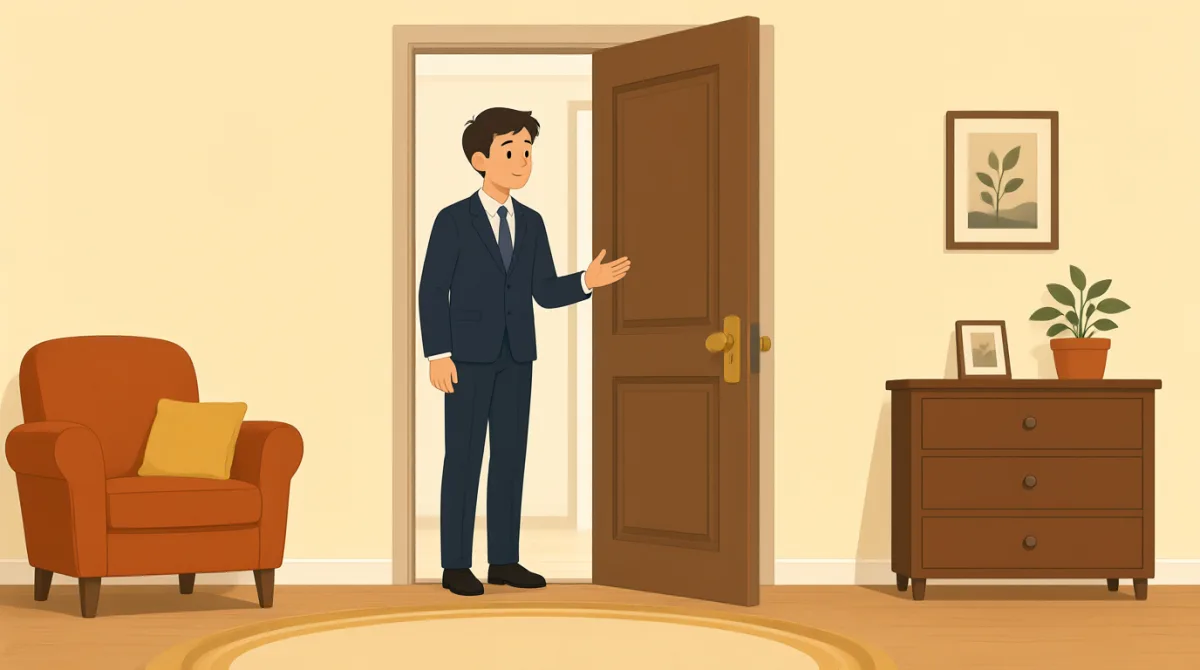
You open the door to an unexpected visitor, such as a salesperson, a charity worker, or someone you don't recognize. You need to politely inquire about their purpose without inviting them inside.
در را به روی مهمانی غیرمنتظره باز میکنید؛ مثلاً فروشندهای دورهگرد، کسی که برای خیریه کمک جمع میکند یا فردی که نمیشناسید. باید مؤدبانه بپرسید برای چه کاری آمده، بیآنکه دعوتش کنید داخل شود.
گفتوگو7

Hello?
بله؟

Good afternoon. My name is Jack from Green Home Solutions. We're in the neighborhood offering free energy audits.
عصر بخیر. من جک هستم، از شرکت گرین هوم سولوشنز. امروز در این محله هستیم و بازدیدهای رایگان برای بررسی مصرف انرژی انجام میدهیم.
Oh, an energy audit. I see. We're actually not looking for anything like that right now.
آهان، بررسی مصرف انرژی. متوجه شدم. راستش فعلاً دنبال چنین چیزی نیستیم.
It only takes a moment, and it could save you quite a bit on your utility bills.
فقط چند لحظه وقت میگیرد و ممکن است مبلغ قابلتوجهی از هزینههای خدمات منزلتان کم کند.
I appreciate the offer, but we're really not interested at the moment. Thank you for stopping by.
از پیشنهادتان ممنونم، اما واقعاً فعلاً علاقهای نداریم. ممنون که سر زدید.
Alright, no problem. Have a good day!
باشه، اشکالی نداره. روز خوبی داشته باشید!
You too.
شما هم همینطور.
واژگان6
- neighborhoodمحله
A neighborhood is the area around your home where you live, including nearby houses and people. Use it when talking about local community activities, like 'We're in your neighborhood today.'
محله به محدودهای گفته میشود که خانهتان در آن قرار دارد و خانهها و آدمهای اطراف را هم در بر میگیرد. برای حرف زدن دربارهٔ فعالیتهای محلی از این واژه استفاده کنید؛ مثلاً: «امروز در محلهٔ شما هستیم.»
- auditبازرسی؛ ارزیابی
An audit here means a check or inspection, like an energy audit which examines how much energy your home uses. It's a formal word for reviewing something to find improvements.
در اینجا audit یعنی بررسی یا بازرسی؛ مثلاً energy audit بررسی میکند خانهتان چقدر انرژی مصرف میکند. این واژه رسمی برای بازبینی چیزی بهمنظور پیدا کردن راههای بهبود آن به کار میرود.
- appreciateقدردان بودن؛ سپاسگزار بودن
To appreciate means to be grateful for something. Use it politely to thank someone, as in 'I appreciate your help,' to show respect without agreeing.
appreciate یعنی بابت چیزی سپاسگزار بودن. برای تشکر مؤدبانه از آن استفاده کنید؛ مثل «I appreciate your help» (از کمکتان ممنونم). این عبارت احترام را نشان میدهد، بیآنکه به معنی موافقت باشد.
- offerپیشنهاد
An offer is a proposal of something, like a service or deal. In conversations, say 'I appreciate the offer' to politely acknowledge but possibly decline it.
offer یعنی پیشنهادی برای دریافت چیزی، مثل یک خدمت یا معامله. در گفتوگو میتوانید بگویید «I appreciate the offer» تا مؤدبانه پیشنهاد را به رسمیت بشناسید، اما در صورت لزوم رد کنید.
- utility billsقبضهای خدماتی
Utility bills are monthly payments for services like electricity, water, and gas. Common in household talks, e.g., 'This can save on your utility bills.'
utility bills قبضهای ماهانهٔ خدماتی مثل برق، آب و گاز هستند. این عبارت در صحبت دربارهٔ امور خانه رایج است؛ مثلاً: «This can save on your utility bills.» (این میتواند هزینهٔ قبضهای خدماتیتان را کم کند.)
- stopping byسر زدن
Stopping by means visiting briefly without prior invitation. Use it to thank someone casually, like 'Thanks for stopping by,' in door-to-door situations.
stopping by یعنی بدون دعوت قبلی، برای مدت کوتاهی به جایی رفتن. در موقعیتهایی مثل مراجعهٔ خانهبهخانه، برای تشکر دوستانه از کسی میتوانید بگویید «Thanks for stopping by.» (ممنون که سر زدید.)
جملات کلیدی6
- 1
Hello?
بله؟
This is a simple, tentative greeting when opening the door to an unknown visitor. It's useful for starting interactions politely and shows caution. Use it with rising intonation to ask who's there.
این یک سلام ساده و محتاطانه است که هنگام باز کردن در به روی فردی ناشناس میگویید. برای شروع مؤدبانهٔ گفتوگو و نشان دادن احتیاط مفید است. آن را با آهنگ صدای پرسشی بگویید تا بپرسید چه کسی پشت در است.
- 2
Good afternoon. My name is Jack from Green Home Solutions.
عصر بخیر. من جک هستم، از شرکت گرین هوم سولوشنز.
This introduces yourself and your purpose formally. 'Good afternoon' is a time-specific greeting (after noon). Useful for salespeople; it builds trust by giving your name and company early.
این جمله شما را بهطور رسمی معرفی میکند و میگوید از طرف کجا آمدهاید. «Good afternoon» (عصر بخیر) سلامی متناسب با زمان است که بعدازظهر گفته میشود. این عبارت برای فروشندگان مفید است؛ گفتن نام و شرکت از همان ابتدا اعتماد ایجاد میکند.
- 3
Oh, an energy audit. I see.
آهان، بررسی مصرف انرژی. متوجه شدم.
This shows understanding and acknowledgment. 'I see' is an idiomatic way to say you comprehend. Useful in responses to explanations; it keeps the conversation flowing without commitment.
این جمله نشان میدهد که متوجه حرف طرف مقابل شدهاید و آن را تأیید میکنید. «I see» اصطلاحی برای گفتن «متوجه شدم» است. در پاسخ به توضیحات مفید است و کمک میکند گفتوگو بدون تعهد به ادامه پیش برود.
- 4
We're actually not looking for anything like that right now.
راستش فعلاً دنبال چنین چیزی نیستیم.
A polite way to refuse an offer. 'Actually' softens the rejection, and 'right now' implies possible future interest. Use this pattern for declining services without being rude; 'we're' uses plural for household.
این روشی مؤدبانه برای رد کردن پیشنهاد است. «Actually» (راستش) از صراحت جواب کم میکند و «right now» (فعلاً) احتمال علاقهمندی در آینده را باز میگذارد. برای رد کردن خدمات بدون بیادبی از این الگو استفاده کنید؛ «we're» شکل کوتاه «we are» است و چون دربارهٔ اهل خانه صحبت میشود، از ضمیر جمع استفاده شده است.
- 5
I appreciate the offer, but we're really not interested at the moment.
از پیشنهادتان ممنونم، اما واقعاً فعلاً علاقهای نداریم.
This combines thanks with firm refusal. 'At the moment' means currently, allowing for change later. Essential for polite door-to-door rejections; the 'but' contrasts positive and negative parts.
این جمله تشکر را با رد قاطعانهٔ پیشنهاد ترکیب میکند. «At the moment» یعنی در حال حاضر و امکان تغییر نظر در آینده را باز میگذارد. برای رد مؤدبانهٔ پیشنهادهای خانهبهخانه کاربردی است؛ «but» دو بخش مثبت و منفی جمله را به هم پیوند میدهد.
- 6
Thank you for stopping by. Have a good day!
ممنون که سر زدید. روز خوبی داشته باشید!
A courteous ending to end the interaction positively. 'Stopping by' acknowledges the visit. Use this to close doors politely; 'Have a good day' is a common farewell, responded with 'You too.'
این جمله راهی مؤدبانه برای پایان دادن به گفتوگو با لحنی مثبت است. «Stopping by» به دیدار کوتاه طرف مقابل اشاره میکند. برای پایان دادن محترمانه به گفتوگو پشت در از آن استفاده کنید؛ «Have a good day» (روز خوبی داشته باشید) بدرقهای رایج است و در پاسخ میتوان گفت «You too.» (شما هم همینطور.)