Unexpected Visitor (Unsolicited)
زائر غير متوقَّع (من دون دعوة)
You open the door to an unexpected visitor, such as a salesperson, a charity worker, or someone you don't recognize. You need to politely inquire about their purpose without inviting them inside.
تفتح الباب لزائر غير متوقَّع، مثل مندوب مبيعات أو عامل في جمعية خيرية أو شخص لا تعرفه. عليك أن تسأله بأدب عن سبب زيارته من دون دعوته إلى الدخول.
حوار7
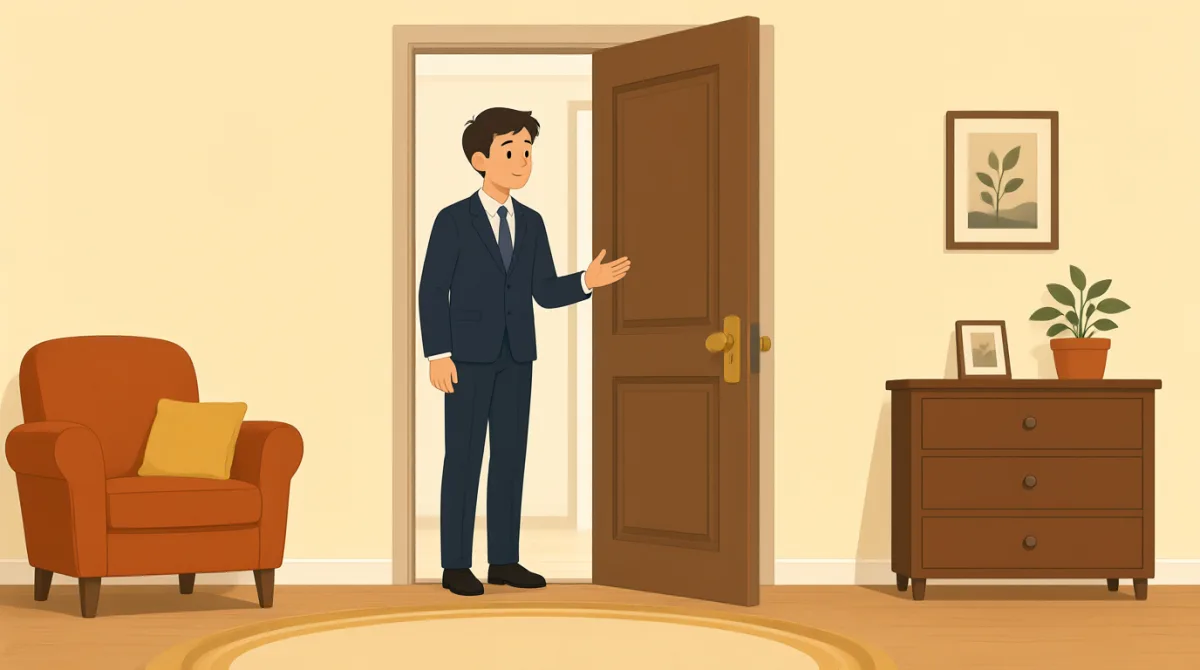

Hello?
مرحبًا؟

Good afternoon. My name is Jack from Green Home Solutions. We're in the neighborhood offering free energy audits.
مساء الخير. اسمي جاك، وأنا من شركة Green Home Solutions. نحن في الحي اليوم ونقدّم فحوصات مجانية لاستهلاك الطاقة.
Oh, an energy audit. I see. We're actually not looking for anything like that right now.
آه، فحص لاستهلاك الطاقة. فهمت. في الواقع، لا نبحث عن شيء من هذا القبيل في الوقت الحالي.
It only takes a moment, and it could save you quite a bit on your utility bills.
لن يستغرق الأمر سوى لحظة، وقد يوفّر عليكم مبلغًا لا بأس به في فواتير الخدمات.
I appreciate the offer, but we're really not interested at the moment. Thank you for stopping by.
أقدّر عرضك، لكننا غير مهتمين حقًا في الوقت الحالي. شكرًا لزيارتك.
Alright, no problem. Have a good day!
حسنًا، لا مشكلة. أتمنى لك يومًا طيبًا!
You too.
ولك بالمثل.
المفردات6
- neighborhoodالحيّ
A neighborhood is the area around your home where you live, including nearby houses and people. Use it when talking about local community activities, like 'We're in your neighborhood today.'
الحيّ هو المنطقة المحيطة بمنزلك التي تسكن فيها، بما يشمل المنازل القريبة وسكانها. تُستخدم هذه الكلمة عند الحديث عن أنشطة المجتمع المحلي، مثل: 'We're in your neighborhood today.' (نحن في حيّك اليوم).
- auditفحص
An audit here means a check or inspection, like an energy audit which examines how much energy your home uses. It's a formal word for reviewing something to find improvements.
تعني كلمة "audit" هنا فحصًا أو تفتيشًا، مثل فحص استهلاك الطاقة الذي يقيّم مقدار الطاقة التي يستخدمها منزلك. وهي كلمة رسمية تُستخدم عند مراجعة شيء ما لمعرفة ما يمكن تحسينه.
- appreciateيقدّر
To appreciate means to be grateful for something. Use it politely to thank someone, as in 'I appreciate your help,' to show respect without agreeing.
تعني كلمة "appreciate" أن تكون ممتنًا لشيء ما. استخدمها لشكر شخص بأدب، مثل 'I appreciate your help,' (أقدّر مساعدتك)، للتعبير عن الاحترام من دون الموافقة على طلبه.
- offerعرض
An offer is a proposal of something, like a service or deal. In conversations, say 'I appreciate the offer' to politely acknowledge but possibly decline it.
الـ"offer" هو اقتراح لتقديم شيء ما، مثل خدمة أو صفقة. في المحادثات، يمكنك قول 'I appreciate the offer' (أقدّر العرض) لتُظهر بأدب أنك أخذته بعين الاعتبار، مع احتمال رفضه.
- utility billsفواتير الخدمات
Utility bills are monthly payments for services like electricity, water, and gas. Common in household talks, e.g., 'This can save on your utility bills.'
"Utility bills" هي المبالغ الشهرية المستحقة مقابل خدمات مثل الكهرباء والماء والغاز. يُستخدم هذا التعبير كثيرًا عند الحديث عن شؤون المنزل، مثل: 'This can save on your utility bills.' (قد يساعدك هذا على خفض فواتير الخدمات).
- stopping byزيارة سريعة
Stopping by means visiting briefly without prior invitation. Use it to thank someone casually, like 'Thanks for stopping by,' in door-to-door situations.
تعني عبارة "stopping by" زيارة قصيرة من دون دعوة مسبقة. استخدمها لشكر شخص بطريقة ودّية، مثل 'Thanks for stopping by,' (شكرًا لزيارتك)، في مواقف الزيارات من منزل إلى منزل.
الجمل الأساسية6
- 1
Hello?
مرحبًا؟
This is a simple, tentative greeting when opening the door to an unknown visitor. It's useful for starting interactions politely and shows caution. Use it with rising intonation to ask who's there.
هذه تحية بسيطة تعبّر عن شيء من التردّد، وتُقال عند فتح الباب لشخص لا تعرفه. تفيد في بدء الحديث بأدب وتُظهر الحذر. قلها بنبرة تصاعدية لتسأل عمّن يقف عند الباب.
- 2
Good afternoon. My name is Jack from Green Home Solutions.
مساء الخير. اسمي جاك، وأنا من شركة Green Home Solutions.
This introduces yourself and your purpose formally. 'Good afternoon' is a time-specific greeting (after noon). Useful for salespeople; it builds trust by giving your name and company early.
تعرّف هذه العبارة بنفسك وتوضح الجهة التي تمثّلها بأسلوب رسمي. عبارة 'Good afternoon' هي تحية تُستخدم بعد الظهر. وهي مفيدة لمندوبي المبيعات؛ فذكر الاسم والشركة منذ البداية يساعد على بناء الثقة.
- 3
Oh, an energy audit. I see.
آه، فحص لاستهلاك الطاقة. فهمت.
This shows understanding and acknowledgment. 'I see' is an idiomatic way to say you comprehend. Useful in responses to explanations; it keeps the conversation flowing without commitment.
تُظهر هذه العبارة أنك فهمت كلام الشخص وتقرّ به. و'I see' تعبير اصطلاحي يعني أنك استوعبت ما قيل. يفيد في الرد على الشروحات، ويساعد على استمرار الحديث من دون التزام بشيء.
- 4
We're actually not looking for anything like that right now.
في الواقع، لا نبحث عن شيء من هذا القبيل في الوقت الحالي.
A polite way to refuse an offer. 'Actually' softens the rejection, and 'right now' implies possible future interest. Use this pattern for declining services without being rude; 'we're' uses plural for household.
هذه طريقة مهذبة لرفض عرض. تخفف كلمة 'actually' (في الواقع) من حدّة الرفض، بينما توحي عبارة 'right now' (في الوقت الحالي) باحتمال الاهتمام مستقبلًا. استخدم هذا النمط لرفض الخدمات من دون إساءة، وتذكّر أن 'we're' تشير هنا إلى أفراد الأسرة بصيغة الجمع.
- 5
I appreciate the offer, but we're really not interested at the moment.
أقدّر العرض، لكننا غير مهتمين حقًا في الوقت الحالي.
This combines thanks with firm refusal. 'At the moment' means currently, allowing for change later. Essential for polite door-to-door rejections; the 'but' contrasts positive and negative parts.
تجمع هذه العبارة بين الشكر والرفض الحازم. تعني 'at the moment' (في الوقت الحالي)، وتترك مجالًا للتغيير لاحقًا. وهي مفيدة جدًا للرفض بأدب في الزيارات من منزل إلى منزل؛ إذ تقابل 'but' بين الجزء الإيجابي والجزء السلبي.
- 6
Thank you for stopping by. Have a good day!
شكرًا لزيارتك. أتمنى لك يومًا طيبًا!
A courteous ending to end the interaction positively. 'Stopping by' acknowledges the visit. Use this to close doors politely; 'Have a good day' is a common farewell, responded with 'You too.'
هذه خاتمة مهذبة تنهي الحديث بإيجابية. وتشير عبارة 'stopping by' إلى الزيارة. استخدمها لإنهاء الحديث عند الباب بأدب؛ أما 'Have a good day' فهي عبارة شائعة للتوديع، ويمكن الرد عليها بقول 'You too.'