Unexpected Visitor (Unsolicited)
意外訪客(非邀)
You open the door to an unexpected visitor, such as a salesperson, a charity worker, or someone you don't recognize. You need to politely inquire about their purpose without inviting them inside.
你開啟門卻發現一位不速之客,例如推銷員、慈善工作者或你不認識的人。你需要禮貌地詢問他們的來意,而不邀請他們進屋。
對話7
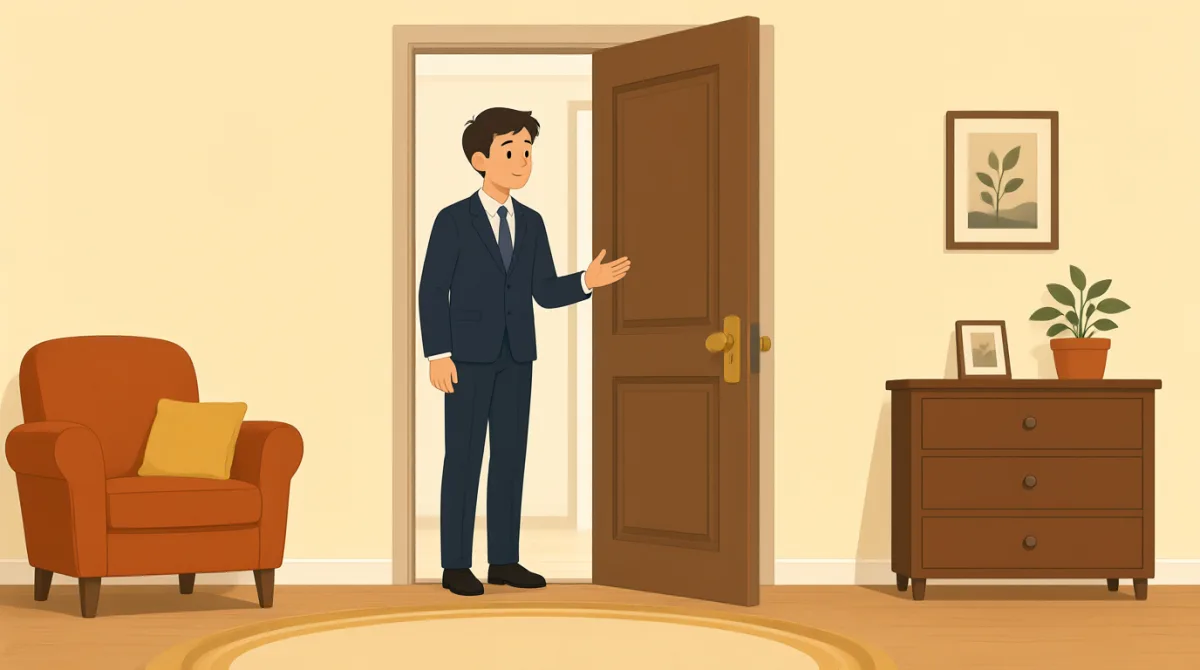

Hello?
你好?

Good afternoon. My name is Jack from Green Home Solutions. We're in the neighborhood offering free energy audits.
下午好。我叫傑克,來自綠色家居解決方案公司。我們正在這個社群提供免費能源審計服務。
Oh, an energy audit. I see. We're actually not looking for anything like that right now.
哦,能源審計。我明白了。我們現在暫時不需要這類的服務。
It only takes a moment, and it could save you quite a bit on your utility bills.
這只需要一點時間,而且可以幫你節省相當多的水電費。
I appreciate the offer, but we're really not interested at the moment. Thank you for stopping by.
我很感謝您的好意,但我們目前確實不感興趣。謝謝您特意前來。
Alright, no problem. Have a good day!
好的,沒問題。祝您有美好的一天!
You too.
您也一樣。
詞彙6
- neighborhood街區
A neighborhood is the area around your home where you live, including nearby houses and people. Use it when talking about local community activities, like 'We're in your neighborhood today.'
Neighborhood 指你居住的周邊區域,包括附近的房屋和居民。談到當地社群活動時可以用這個詞,比如:'We're in your neighborhood today.'(我們今天在你們這個街區。)
- audit審查
An audit here means a check or inspection, like an energy audit which examines how much energy your home uses. It's a formal word for reviewing something to find improvements.
這裡的 audit 指檢查或評估,例如 energy audit(能源審查)就是檢查家中能源的使用情況。這個詞比較正式,指透過檢查來發現可以改進的地方。
- appreciate感謝
To appreciate means to be grateful for something. Use it politely to thank someone, as in 'I appreciate your help,' to show respect without agreeing.
Appreciate 表示對某事心懷感激。可以用它禮貌地向別人道謝,比如 'I appreciate your help,'(感謝你的幫助),表達尊重,但不代表你同意對方的提議。
- offer提議
An offer is a proposal of something, like a service or deal. In conversations, say 'I appreciate the offer' to politely acknowledge but possibly decline it.
Offer 指提出某項服務或交易。在交談中可以說 'I appreciate the offer'(感謝您的提議),禮貌地表示你聽到了對方的提議,但也可能會婉拒。
- utility bills水電煤賬單
Utility bills are monthly payments for services like electricity, water, and gas. Common in household talks, e.g., 'This can save on your utility bills.'
Utility bills 指每月支付的電費、水費和燃氣費等賬單。這個詞常用於談論家庭開支,比如:'This can save on your utility bills.'(這樣可以幫您節省水電煤費用。)
- stopping by順道拜訪
Stopping by means visiting briefly without prior invitation. Use it to thank someone casually, like 'Thanks for stopping by,' in door-to-door situations.
Stopping by 指沒有事先邀請而短暫拜訪。上門拜訪時,可以用 'Thanks for stopping by,'(謝謝您特意前來)隨口向對方道謝。
關鍵句6
- 1
Hello?
你好?
This is a simple, tentative greeting when opening the door to an unknown visitor. It's useful for starting interactions politely and shows caution. Use it with rising intonation to ask who's there.
開啟門時,如果來訪者是陌生人,可以用這個簡單而試探性的問候語。它能禮貌地開啟對話,也表達出一絲謹慎。說的時候語調上揚,就像是在問對方是誰。
- 2
Good afternoon. My name is Jack from Green Home Solutions.
下午好。我叫傑克,來自綠色家居解決方案公司。
This introduces yourself and your purpose formally. 'Good afternoon' is a time-specific greeting (after noon). Useful for salespeople; it builds trust by giving your name and company early.
這句話可以正式地介紹自己和來意。'Good afternoon' 是中午之後使用的問候語。推銷員等上門拜訪時可以這樣說,及早說明姓名和公司有助於取得對方的信任。
- 3
Oh, an energy audit. I see.
哦,能源審查。我明白了。
This shows understanding and acknowledgment. 'I see' is an idiomatic way to say you comprehend. Useful in responses to explanations; it keeps the conversation flowing without commitment.
這句話表示你聽懂並理解了對方的話。'I see' 是一種習慣說法,表示“我明白了”。在回應對方的解釋時很實用,既能讓對話繼續,也不代表你作出了承諾。
- 4
We're actually not looking for anything like that right now.
不過,我們現在暫時不需要這類服務。
A polite way to refuse an offer. 'Actually' softens the rejection, and 'right now' implies possible future interest. Use this pattern for declining services without being rude; 'we're' uses plural for household.
這是一種禮貌拒絕提議的說法。'Actually' 可以讓拒絕聽起來委婉一些,'right now' 則暗示將來可能會感興趣。用這個句型拒絕服務時不顯得失禮;'we're' 用複數形式,表示一家人或住戶的共同立場。
- 5
I appreciate the offer, but we're really not interested at the moment.
感謝您的提議,但我們目前確實不感興趣。
This combines thanks with firm refusal. 'At the moment' means currently, allowing for change later. Essential for polite door-to-door rejections; the 'but' contrasts positive and negative parts.
這句話先表示感謝,再明確拒絕。'At the moment' 意為“目前”,留有以後情況可能改變的餘地。禮貌拒絕上門推銷時很實用;'but' 用來連線前後意思相反的部分。
- 6
Thank you for stopping by. Have a good day!
謝謝您特意前來。祝您有美好的一天!
A courteous ending to end the interaction positively. 'Stopping by' acknowledges the visit. Use this to close doors politely; 'Have a good day' is a common farewell, responded with 'You too.'
這是一種禮貌的結束語,能讓對話愉快地收尾。'Stopping by' 點明對方前來拜訪。想禮貌地結束上門拜訪時可以這樣說;'Have a good day' 是常見的道別語,對方通常會回答 'You too.'(您也一樣。)