Unexpected Visitor (Unsolicited)
แขกมาเยือนโดยไม่ได้นัดหมาย
You open the door to an unexpected visitor, such as a salesperson, a charity worker, or someone you don't recognize. You need to politely inquire about their purpose without inviting them inside.
คุณเปิดประตูพบผู้มาเยือนที่ไม่คาดคิด เช่น พนักงานขาย เจ้าหน้าที่องค์กรการกุศล หรือคนที่คุณไม่รู้จัก คุณต้องถามอย่างสุภาพว่าเขามาทำธุระอะไร โดยไม่เชิญเข้าบ้าน
บทสนทนา7
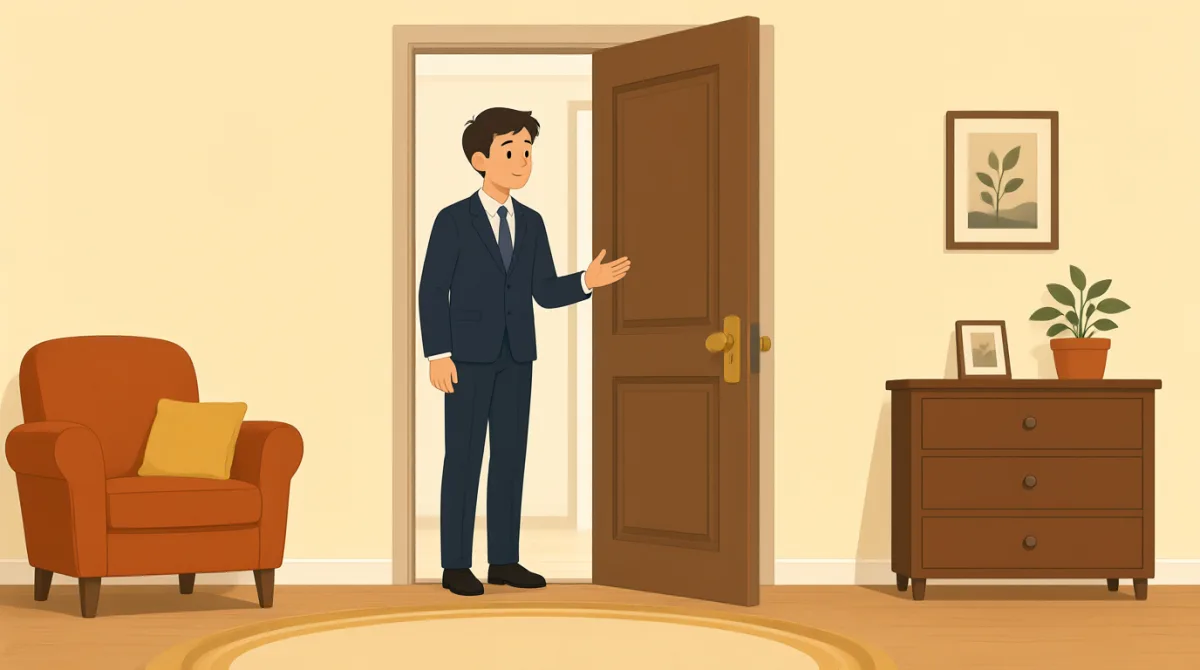

Hello?
สวัสดีคะ?

Good afternoon. My name is Jack from Green Home Solutions. We're in the neighborhood offering free energy audits.
สวัสดีตอนบ่ายครับ ผมชื่อแจ็ก มาจาก Green Home Solutions ครับ วันนี้เรามาให้บริการตรวจประเมินการใช้พลังงานฟรีในละแวกนี้ครับ
Oh, an energy audit. I see. We're actually not looking for anything like that right now.
อ๋อ ตรวจประเมินการใช้พลังงาน เข้าใจแล้วค่ะ แต่ตอนนี้เราไม่ได้กำลังมองหาบริการแบบนั้นค่ะ
It only takes a moment, and it could save you quite a bit on your utility bills.
ใช้เวลาแค่ครู่เดียวเองครับ แล้วก็อาจช่วยให้คุณประหยัดค่าสาธารณูปโภคได้ไม่น้อยเลยครับ
I appreciate the offer, but we're really not interested at the moment. Thank you for stopping by.
ขอบคุณที่เสนอมานะคะ แต่ตอนนี้เราไม่สนใจจริง ๆ ค่ะ ขอบคุณที่แวะมานะคะ
Alright, no problem. Have a good day!
ได้ครับ ไม่มีปัญหา ขอให้วันนี้เป็นวันที่ดีนะครับ!
You too.
เช่นกันค่ะ
คำศัพท์6
- neighborhoodละแวกบ้าน
A neighborhood is the area around your home where you live, including nearby houses and people. Use it when talking about local community activities, like 'We're in your neighborhood today.'
ละแวกบ้านคือบริเวณรอบ ๆ บ้านที่คุณอาศัยอยู่ รวมถึงบ้านและผู้คนที่อยู่ใกล้เคียง ใช้พูดถึงกิจกรรมในชุมชน เช่น 'We're in your neighborhood today.' (วันนี้เรามาในละแวกบ้านของคุณ)
- auditการตรวจประเมิน
An audit here means a check or inspection, like an energy audit which examines how much energy your home uses. It's a formal word for reviewing something to find improvements.
ในที่นี้ audit หมายถึงการตรวจสอบหรือสำรวจ เช่น energy audit คือการตรวจสอบว่าบ้านของคุณใช้พลังงานมากแค่ไหน คำนี้ค่อนข้างเป็นทางการ ใช้พูดถึงการทบทวนสิ่งต่าง ๆ เพื่อหาทางปรับปรุง
- appreciateซาบซึ้ง / ขอบคุณ
To appreciate means to be grateful for something. Use it politely to thank someone, as in 'I appreciate your help,' to show respect without agreeing.
appreciate หมายถึงรู้สึกขอบคุณในสิ่งที่ใครบางคนทำให้ ใช้แสดงความขอบคุณอย่างสุภาพ เช่น 'I appreciate your help,' (ขอบคุณที่ช่วยนะคะ) เพื่อแสดงความนับถือโดยไม่จำเป็นต้องตอบตกลง
- offerข้อเสนอ
An offer is a proposal of something, like a service or deal. In conversations, say 'I appreciate the offer' to politely acknowledge but possibly decline it.
offer คือข้อเสนอให้บริการหรือข้อตกลงบางอย่าง ในบทสนทนา คุณพูดว่า 'I appreciate the offer' เพื่อรับทราบข้อเสนออย่างสุภาพ แม้อาจตั้งใจปฏิเสธก็ตาม
- utility billsค่าสาธารณูปโภค
Utility bills are monthly payments for services like electricity, water, and gas. Common in household talks, e.g., 'This can save on your utility bills.'
utility bills คือค่าใช้จ่ายรายเดือนสำหรับบริการต่าง ๆ เช่น ไฟฟ้า น้ำ และแก๊ส มักใช้พูดถึงค่าใช้จ่ายในบ้าน เช่น 'This can save on your utility bills.' (สิ่งนี้ช่วยประหยัดค่าสาธารณูปโภคของคุณได้)
- stopping byแวะมา
Stopping by means visiting briefly without prior invitation. Use it to thank someone casually, like 'Thanks for stopping by,' in door-to-door situations.
stopping by หมายถึงแวะมาเยี่ยมช่วงสั้น ๆ โดยไม่ได้นัดหมายล่วงหน้า ใช้กล่าวขอบคุณอย่างเป็นกันเองได้ เช่น 'Thanks for stopping by,' (ขอบคุณที่แวะมานะ) โดยเฉพาะเวลาไปเยี่ยมตามบ้าน
ประโยคสำคัญ6
- 1
Hello?
สวัสดีคะ?
This is a simple, tentative greeting when opening the door to an unknown visitor. It's useful for starting interactions politely and shows caution. Use it with rising intonation to ask who's there.
นี่เป็นคำทักทายสั้น ๆ ที่ฟังดูไม่แน่ใจเล็กน้อย เหมาะกับตอนเปิดประตูพบคนที่ไม่รู้จัก ใช้เริ่มบทสนทนาอย่างสุภาพและแสดงความระมัดระวัง ลองลงเสียงสูงท้ายประโยคเพื่อถามว่าใครอยู่ตรงนั้น
- 2
Good afternoon. My name is Jack from Green Home Solutions.
สวัสดีตอนบ่ายครับ ผมชื่อแจ็ก มาจาก Green Home Solutions ครับ
This introduces yourself and your purpose formally. 'Good afternoon' is a time-specific greeting (after noon). Useful for salespeople; it builds trust by giving your name and company early.
ประโยคนี้ใช้แนะนำตัวและบอกจุดประสงค์อย่างเป็นทางการ 'Good afternoon' เป็นคำทักทายที่ใช้หลังเที่ยง เหมาะกับพนักงานขาย การบอกชื่อและบริษัทตั้งแต่ต้นช่วยสร้างความน่าเชื่อถือ
- 3
Oh, an energy audit. I see.
อ๋อ ตรวจประเมินการใช้พลังงาน เข้าใจแล้วค่ะ
This shows understanding and acknowledgment. 'I see' is an idiomatic way to say you comprehend. Useful in responses to explanations; it keeps the conversation flowing without commitment.
ประโยคนี้แสดงว่าคุณเข้าใจและรับทราบสิ่งที่อีกฝ่ายพูด 'I see' เป็นสำนวนที่หมายถึงเข้าใจแล้ว ใช้ตอบหลังได้รับคำอธิบายเพื่อให้บทสนทนาดำเนินต่อไป โดยที่ยังไม่ต้องรับปากอะไร
- 4
We're actually not looking for anything like that right now.
แต่ตอนนี้เราไม่ได้กำลังมองหาบริการแบบนั้นค่ะ
A polite way to refuse an offer. 'Actually' softens the rejection, and 'right now' implies possible future interest. Use this pattern for declining services without being rude; 'we're' uses plural for household.
นี่เป็นวิธีปฏิเสธข้อเสนออย่างสุภาพ 'Actually' ช่วยให้การปฏิเสธฟังนุ่มนวลขึ้น ส่วน 'right now' สื่อว่าอาจสนใจในอนาคต ใช้รูปแบบนี้เพื่อปฏิเสธบริการโดยไม่ฟังดูหยาบคาย คำว่า 'we're' ใช้รูปพหูพจน์แทนคนในบ้าน
- 5
I appreciate the offer, but we're really not interested at the moment.
ขอบคุณที่เสนอมานะคะ แต่ตอนนี้เราไม่สนใจจริง ๆ ค่ะ
This combines thanks with firm refusal. 'At the moment' means currently, allowing for change later. Essential for polite door-to-door rejections; the 'but' contrasts positive and negative parts.
ประโยคนี้รวมการขอบคุณกับการปฏิเสธอย่างหนักแน่น 'At the moment' หมายถึงในตอนนี้ และเปิดโอกาสว่าสิ่งต่าง ๆ อาจเปลี่ยนแปลงภายหลัง เป็นประโยคสำคัญสำหรับปฏิเสธคนที่มาเสนอขายถึงบ้านอย่างสุภาพ ส่วน 'but' ใช้เชื่อมส่วนที่เป็นบวกกับส่วนที่เป็นการปฏิเสธ
- 6
Thank you for stopping by. Have a good day!
ขอบคุณที่แวะมานะคะ ขอให้วันนี้เป็นวันที่ดีนะคะ!
A courteous ending to end the interaction positively. 'Stopping by' acknowledges the visit. Use this to close doors politely; 'Have a good day' is a common farewell, responded with 'You too.'
ประโยคนี้เป็นคำลงท้ายสุภาพที่ช่วยจบบทสนทนาด้วยบรรยากาศที่ดี 'Stopping by' กล่าวถึงการแวะมา ใช้ประโยคนี้เพื่อปิดบทสนทนาที่หน้าประตูอย่างสุภาพ 'Have a good day' เป็นคำลาอีกแบบที่ใช้กันทั่วไป โดยอีกฝ่ายอาจตอบว่า 'You too.'