Unexpected Visitor (Unsolicited)
बिन बुलाया मेहमान
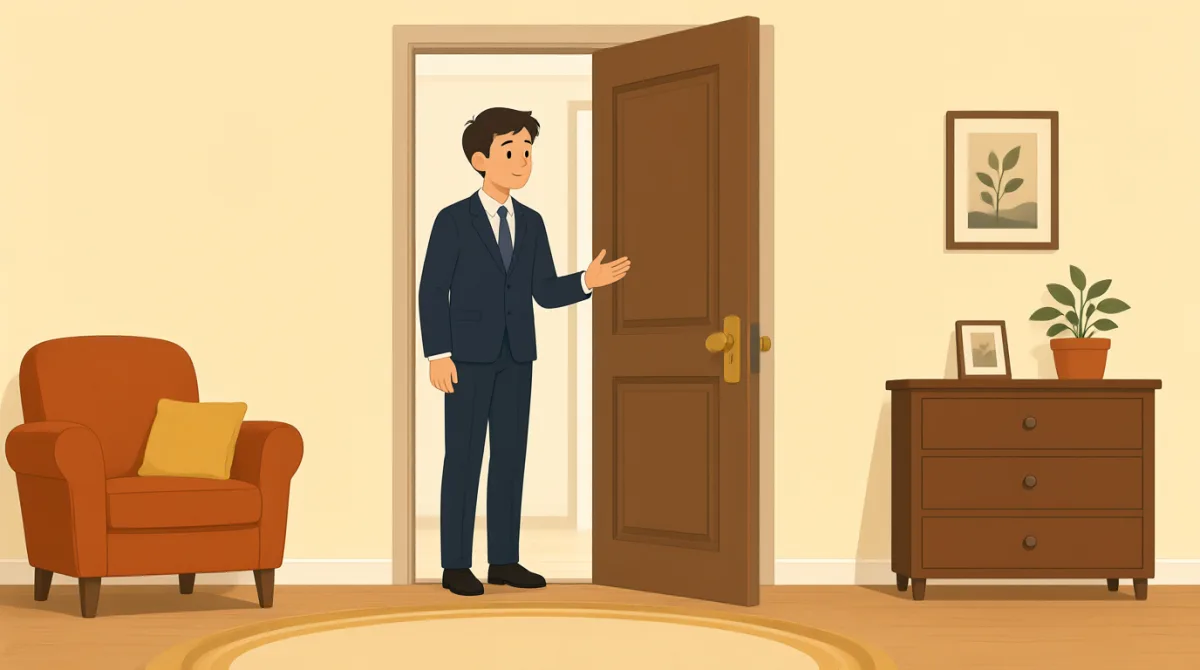
You open the door to an unexpected visitor, such as a salesperson, a charity worker, or someone you don't recognize. You need to politely inquire about their purpose without inviting them inside.
आप दरवाज़ा खोलते हैं और सामने कोई अनजान व्यक्ति होता है—जैसे कोई विक्रेता, किसी चैरिटी का कार्यकर्ता या ऐसा कोई जिसे आप पहचानते नहीं। आपको उन्हें अंदर बुलाए बिना विनम्रता से पूछना है कि वे किस काम से आए हैं।
संवाद7

Hello?
जी?

Good afternoon. My name is Jack from Green Home Solutions. We're in the neighborhood offering free energy audits.
नमस्कार। मेरा नाम जैक है, मैं ग्रीन होम सॉल्यूशंस से आया हूँ। हम आज इस इलाके में घरों की मुफ़्त ऊर्जा जाँच की पेशकश कर रहे हैं।
Oh, an energy audit. I see. We're actually not looking for anything like that right now.
अच्छा, ऊर्जा जाँच। समझ गई। दरअसल, हमें अभी ऐसी किसी चीज़ की ज़रूरत नहीं है।
It only takes a moment, and it could save you quite a bit on your utility bills.
इसमें बस थोड़ा-सा समय लगेगा, और इससे आपके बिजली-पानी-गैस के बिलों में काफ़ी बचत हो सकती है।
I appreciate the offer, but we're really not interested at the moment. Thank you for stopping by.
आपकी पेशकश के लिए धन्यवाद, लेकिन हमें फ़िलहाल इसमें बिल्कुल दिलचस्पी नहीं है। आने के लिए शुक्रिया।
Alright, no problem. Have a good day!
ठीक है, कोई बात नहीं। आपका दिन अच्छा गुज़रे!
You too.
आपका भी।
शब्दावली6
- neighborhoodइलाका
A neighborhood is the area around your home where you live, including nearby houses and people. Use it when talking about local community activities, like 'We're in your neighborhood today.'
Neighborhood का मतलब है आपके घर के आसपास का वह इलाका जहाँ आप रहते हैं, जिसमें पास के घर और लोग शामिल हैं। स्थानीय गतिविधियों के बारे में बात करते समय इसका इस्तेमाल करें, जैसे 'We're in your neighborhood today.' (हम आज आपके इलाके में हैं।)
- auditजाँच
An audit here means a check or inspection, like an energy audit which examines how much energy your home uses. It's a formal word for reviewing something to find improvements.
यहाँ audit का मतलब है जाँच या निरीक्षण—जैसे energy audit में देखा जाता है कि आपका घर कितनी ऊर्जा इस्तेमाल करता है। किसी चीज़ की समीक्षा करके उसमें सुधार के तरीके ढूँढ़ने के लिए इस्तेमाल होने वाला यह एक औपचारिक शब्द है।
- appreciateआभारी होना
To appreciate means to be grateful for something. Use it politely to thank someone, as in 'I appreciate your help,' to show respect without agreeing.
Appreciate का मतलब है किसी चीज़ के लिए आभारी होना। किसी को विनम्रता से धन्यवाद देने के लिए इसका इस्तेमाल करें, जैसे 'I appreciate your help,' (मैं आपकी मदद के लिए आभारी हूँ।) इससे आप सहमति दिए बिना सम्मान जता सकते हैं।
- offerपेशकश
An offer is a proposal of something, like a service or deal. In conversations, say 'I appreciate the offer' to politely acknowledge but possibly decline it.
Offer का मतलब है किसी चीज़ का प्रस्ताव, जैसे कोई सेवा या सौदा। बातचीत में 'I appreciate the offer' (आपकी पेशकश के लिए धन्यवाद) कहकर आप विनम्रता से प्रस्ताव को स्वीकार कर सकते हैं, भले ही उसे ठुकराना हो।
- utility billsबिजली-पानी-गैस के बिल
Utility bills are monthly payments for services like electricity, water, and gas. Common in household talks, e.g., 'This can save on your utility bills.'
Utility bills वे मासिक बिल हैं जो बिजली, पानी और गैस जैसी सेवाओं के लिए दिए जाते हैं। घर-गृहस्थी की बातचीत में यह आम तौर पर इस्तेमाल होता है, जैसे 'This can save on your utility bills.' (इससे आपके बिजली-पानी-गैस के बिलों में बचत हो सकती है।)
- stopping byथोड़ी देर के लिए मिलने आना
Stopping by means visiting briefly without prior invitation. Use it to thank someone casually, like 'Thanks for stopping by,' in door-to-door situations.
Stopping by का मतलब है बिना पहले से बुलाए थोड़ी देर के लिए मिलने आना। घर-घर जाकर मिलने जैसी स्थिति में किसी को सहज ढंग से धन्यवाद देते समय इसका इस्तेमाल करें, जैसे 'Thanks for stopping by,' (आने के लिए शुक्रिया।)
मुख्य वाक्य6
- 1
Hello?
जी?
This is a simple, tentative greeting when opening the door to an unknown visitor. It's useful for starting interactions politely and shows caution. Use it with rising intonation to ask who's there.
अनजान व्यक्ति के लिए दरवाज़ा खोलते समय यह एक सरल और संकोच भरा अभिवादन है। बातचीत को विनम्रता से शुरू करने के लिए यह उपयोगी है और आपकी सतर्कता भी दिखाता है। सामने कौन है, यह पूछने के लिए इसे आवाज़ में हल्का उतार-चढ़ाव रखते हुए कहें।
- 2
Good afternoon. My name is Jack from Green Home Solutions.
नमस्कार। मेरा नाम जैक है, मैं ग्रीन होम सॉल्यूशंस से आया हूँ।
This introduces yourself and your purpose formally. 'Good afternoon' is a time-specific greeting (after noon). Useful for salespeople; it builds trust by giving your name and company early.
इस वाक्य से आप अपना परिचय देते हैं और औपचारिक ढंग से बताते हैं कि आप किसलिए आए हैं। 'Good afternoon' दोपहर के बाद किया जाने वाला अभिवादन है। विक्रेताओं के लिए यह उपयोगी है; शुरुआत में अपना और अपनी कंपनी का नाम बताने से भरोसा पैदा होता है।
- 3
Oh, an energy audit. I see.
अच्छा, ऊर्जा जाँच। समझ गई।
This shows understanding and acknowledgment. 'I see' is an idiomatic way to say you comprehend. Useful in responses to explanations; it keeps the conversation flowing without commitment.
यह वाक्य दिखाता है कि आपने बात समझ ली है और उसे स्वीकार किया है। 'I see' समझने की बात कहने का एक मुहावरेदार तरीका है। किसी की बात का जवाब देते समय यह उपयोगी है; इससे बिना कोई वादा किए बातचीत आगे बढ़ती रहती है।
- 4
We're actually not looking for anything like that right now.
दरअसल, हमें अभी ऐसी किसी चीज़ की ज़रूरत नहीं है।
A polite way to refuse an offer. 'Actually' softens the rejection, and 'right now' implies possible future interest. Use this pattern for declining services without being rude; 'we're' uses plural for household.
किसी पेशकश को ठुकराने का यह एक विनम्र तरीका है। 'Actually' (दरअसल) इनकार को थोड़ा नरम बनाता है, और 'right now' (अभी) से लगता है कि भविष्य में आपकी रुचि हो सकती है। बिना रूखे हुए किसी सेवा को मना करने के लिए इस ढाँचे का इस्तेमाल करें। 'We're' में बहुवचन का इस्तेमाल घर के सभी लोगों की ओर से बोलने के लिए किया गया है।
- 5
I appreciate the offer, but we're really not interested at the moment.
आपकी पेशकश के लिए धन्यवाद, लेकिन हमें फ़िलहाल इसमें बिल्कुल दिलचस्पी नहीं है।
This combines thanks with firm refusal. 'At the moment' means currently, allowing for change later. Essential for polite door-to-door rejections; the 'but' contrasts positive and negative parts.
इस वाक्य में धन्यवाद के साथ साफ़ इनकार भी है। 'At the moment' का मतलब है इस समय, जिससे बाद में स्थिति बदलने की गुंजाइश रहती है। घर-घर आकर की जाने वाली पेशकशों को विनम्रता से ठुकराने के लिए यह बहुत उपयोगी है; 'but' सकारात्मक और नकारात्मक बातों के बीच अंतर दिखाता है।
- 6
Thank you for stopping by. Have a good day!
आने के लिए शुक्रिया। आपका दिन अच्छा गुज़रे!
A courteous ending to end the interaction positively. 'Stopping by' acknowledges the visit. Use this to close doors politely; 'Have a good day' is a common farewell, responded with 'You too.'
बातचीत को अच्छे ढंग से खत्म करने के लिए यह एक विनम्र तरीका है। 'Stopping by' आने का ज़िक्र करता है। दरवाज़े पर हुई बातचीत को शालीनता से समाप्त करने के लिए इसका इस्तेमाल करें। 'Have a good day' विदा कहने का आम तरीका है, जिसका जवाब 'You too.' (आपका भी।) कहकर दिया जा सकता है।