Passing a Beverage Pitcher
رد کردن پارچ نوشیدنی
Someone has finished pouring their drink and needs to pass the pitcher of water or juice to another person who wants some.
کسی نوشیدنیاش را در لیوان ریخته و باید پارچ آب یا آبمیوه را به نفر دیگری که نوشیدنی میخواهد بدهد.
گفتوگو5
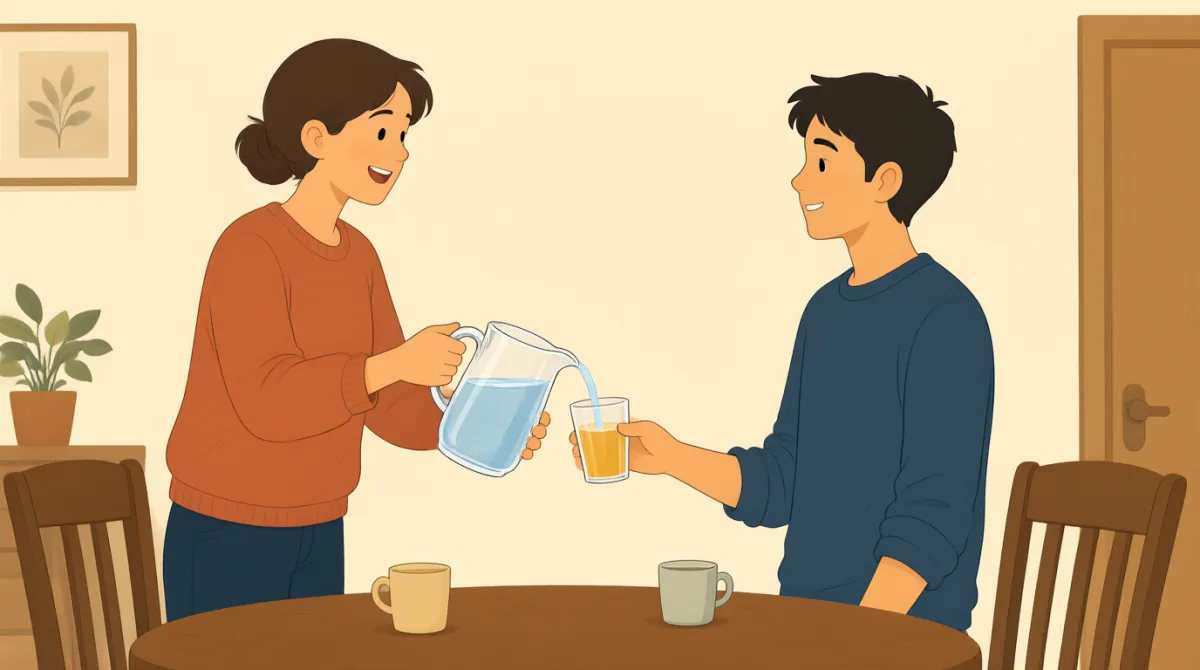

Could you pass the water pitcher, please?
ممکنه لطفاً پارچ آب رو بدی؟

Oh, sorry! Of course. Here you go.
اوه، ببخشید! حتماً. بفرما.
Thanks a lot.
خیلی ممنون.
Do you need more ice in that?
یخ بیشتری میخوای؟
No, this is perfect. Thanks for asking.
نه، همین عالیه. ممنون که پرسیدی.
واژگان5
- pitcherپارچ
A container with a handle and spout used for holding and pouring liquids like water or juice. In this dialogue, it's the water pitcher being passed at the table.
ظرفی دستهدار و دهانهدار برای نگهداشتن و ریختن مایعاتی مثل آب یا آبمیوه. در این گفتوگو، منظور پارچ آبی است که سر میز دستبهدست میشود.
- passدادن؛ دستبهدست کردن
To hand something to someone else. Here, it means to give the pitcher to another person politely during a meal.
چیزی را به شخص دیگری دادن. اینجا یعنی پارچ را هنگام غذا خوردن، مؤدبانه به نفر دیگری بدهی.
- sorryببخشید
An expression used to apologize for a small mistake, like not noticing someone needs something. It's polite and common in everyday interactions.
عبارتی برای عذرخواهی بابت اشتباه کوچکی است؛ مثلاً وقتی متوجه نمیشوی کسی به چیزی نیاز دارد. در گفتوگوهای روزمره، مؤدبانه و رایج است.
- of courseحتماً
A polite way to say 'yes' or 'certainly' when agreeing to help. It shows willingness and is very natural in English conversations.
راهی مؤدبانه برای گفتن «بله» یا «حتماً» هنگام موافقت با کمک کردن است. نشان میدهد که با میل خودت کمک میکنی و در گفتوگوهای انگلیسی بسیار طبیعی است.
- iceیخ
Frozen water cubes added to drinks to make them cold. In meals, people often ask if others need more ice in their beverages.
تکههای آب یخزدهای که برای خنک کردن نوشیدنی به آن اضافه میشوند. هنگام غذا خوردن، معمولاً میپرسند کسی یخ بیشتری برای نوشیدنیاش میخواهد یا نه.
جملات کلیدی5
- 1
Could you pass the water pitcher, please?
ممکنه لطفاً پارچ آب رو بدی؟
This is a polite request using 'could you' for asking favors, plus 'please' for courtesy. It's useful for table manners when you need something passed during a meal, teaching indirect questions for politeness.
در این جمله،
- 2
Oh, sorry! Of course. Here you go.
اوه، ببخشید! حتماً. بفرما.
This combines an apology ('sorry') with agreement ('of course') and offering the item ('here you go'). It's a natural response when passing something, showing empathy and helpfulness in social situations like dining.
این پاسخ، عذرخواهی («sorry») را با موافقت («of course») و دادن وسیله («here you go») ترکیب میکند. وقتی چیزی را به کسی میدهی، پاسخی طبیعی است و در موقعیتهای اجتماعی مثل غذا خوردن، همدلی و تمایل به کمک را نشان میدهد.
- 3
Thanks a lot.
خیلی ممنون.
A casual way to express strong gratitude after receiving help. 'A lot' emphasizes appreciation more than just 'thanks.' Use it after someone passes you an item to build good manners.
راهی خودمانی برای تشکر فراوان پس از دریافت کمک است. «A lot» میزان قدردانی را بیشتر از «thanks» بهتنهایی نشان میدهد. وقتی کسی چیزی را به تو میدهد، از این عبارت استفاده کن تا مؤدب باشی.
- 4
Do you need more ice in that?
یخ بیشتری میخوای؟
This is an offer of help using a yes/no question with 'do you need.' It's thoughtful for checking on others' drinks, useful in meals to show care and continue polite conversation.
این پرسش بله یا خیر با «do you need» برای پیشنهاد کمک به کار میرود. پرسیدن درباره نوشیدنی دیگران نشانه توجه است و هنگام غذا خوردن کمک میکند گفتوگویی مؤدبانه و صمیمی ادامه پیدا کند.
- 5
No, this is perfect. Thanks for asking.
نه، همین عالیه. ممنون که پرسیدی.
A polite refusal ('no') followed by a compliment ('perfect') and thanks. It teaches how to respond positively even when declining, maintaining good relations at the table.
این پاسخ با یک جواب منفی مؤدبانه («no») شروع میشود، بعد با گفتن «perfect» وضعیت را عالی توصیف میکند و در پایان تشکر میکند. این جمله یاد میدهد که حتی هنگام رد کردن پیشنهاد هم میتوان با لحنی مثبت پاسخ داد و رابطه خوبی را سر میز حفظ کرد.