Passing a Beverage Pitcher
傳遞飲料壺
Someone has finished pouring their drink and needs to pass the pitcher of water or juice to another person who wants some.
有人倒完飲料後,需要將水壺或果汁壺傳遞給想喝飲料的另一個人。
對話5
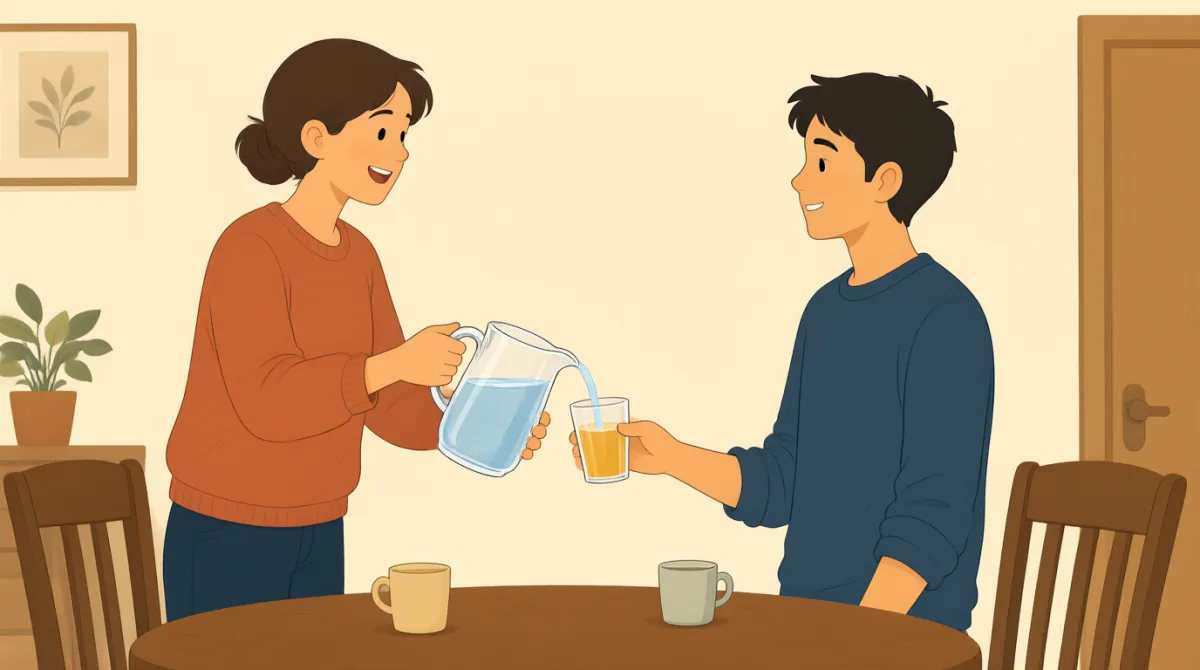

Could you pass the water pitcher, please?
能把水壺遞給我嗎?

Oh, sorry! Of course. Here you go.
哦,抱歉!當然。給你。
Thanks a lot.
多謝。
Do you need more ice in that?
你的水需要加冰嗎?
No, this is perfect. Thanks for asking.
不用了,這樣正好。謝謝你問。
詞彙5
- pitcher水壺
A container with a handle and spout used for holding and pouring liquids like water or juice. In this dialogue, it's the water pitcher being passed at the table.
帶把手和壺嘴的容器,用來盛裝和傾倒水或果汁等液體。在這段對話中,指的是在餐桌上傳遞的水壺。
- pass遞
To hand something to someone else. Here, it means to give the pitcher to another person politely during a meal.
把某樣東西交給別人。這裡指用餐時禮貌地把水壺遞給另一個人。
- sorry抱歉
An expression used to apologize for a small mistake, like not noticing someone needs something. It's polite and common in everyday interactions.
用於為小失誤道歉的表達,比如沒注意到有人需要某樣東西。這種說法禮貌又常見,適用於日常交流。
- of course當然
A polite way to say 'yes' or 'certainly' when agreeing to help. It shows willingness and is very natural in English conversations.
同意幫忙時,用來禮貌地表示“可以”或“當然可以”。這表達了願意幫忙的意思,在英語對話中很自然。
- ice冰塊
Frozen water cubes added to drinks to make them cold. In meals, people often ask if others need more ice in their beverages.
加進飲料裡讓飲料變涼的冰凍水塊。用餐時,人們常會問別人是否需要在飲料里加冰。
關鍵句5
- 1
Could you pass the water pitcher, please?
能請你把水壺遞給我嗎?
This is a polite request using 'could you' for asking favors, plus 'please' for courtesy. It's useful for table manners when you need something passed during a meal, teaching indirect questions for politeness.
這是一個禮貌的請求,用 'could you'(你能……嗎)來請別人幫忙,並用 'please'(請)表達客氣。用餐時需要別人遞東西,這種說法很實用,也能讓請求聽起來更委婉。
- 2
Oh, sorry! Of course. Here you go.
哦,抱歉!當然可以。給你。
This combines an apology ('sorry') with agreement ('of course') and offering the item ('here you go'). It's a natural response when passing something, showing empathy and helpfulness in social situations like dining.
這句話先用 'sorry'(抱歉)道歉,再用 'of course'(當然)答應幫忙,最後用 'here you go'(給你)遞出東西。用餐等社交場合中,遞東西時這樣回應很自然,既體貼又熱心。
- 3
Thanks a lot.
太感謝了。
A casual way to express strong gratitude after receiving help. 'A lot' emphasizes appreciation more than just 'thanks.' Use it after someone passes you an item to build good manners.
這是得到幫助後表達由衷感謝的一種隨意說法。'A lot' 比單說 'thanks' 更能強調感激之情。別人遞東西給你後,可以這樣說,顯得很有禮貌。
- 4
Do you need more ice in that?
你還需要加點冰嗎?
This is an offer of help using a yes/no question with 'do you need.' It's thoughtful for checking on others' drinks, useful in meals to show care and continue polite conversation.
這是用 'do you need'(你需要……嗎)構成的一般疑問句,用來主動提供幫助。用餐時這樣關心別人的飲料很貼心,也能讓禮貌的交談繼續下去。
- 5
No, this is perfect. Thanks for asking.
不用了,這樣正好。謝謝你問。
A polite refusal ('no') followed by a compliment ('perfect') and thanks. It teaches how to respond positively even when declining, maintaining good relations at the table.
這句話先禮貌地用 'no'(不用)婉拒,再用 'perfect'(正好)表示滿意,最後道謝。即使拒絕別人的好意,也能積極回應,保持餐桌上的融洽氣氛。