Passing a Beverage Pitcher
ส่งเหยือกเครื่องดื่มให้กัน
Someone has finished pouring their drink and needs to pass the pitcher of water or juice to another person who wants some.
คนหนึ่งรินเครื่องดื่มเสร็จแล้ว และต้องส่งเหยือกน้ำหรือน้ำผลไม้ให้คนอื่นที่อยากดื่มบ้าง
บทสนทนา5
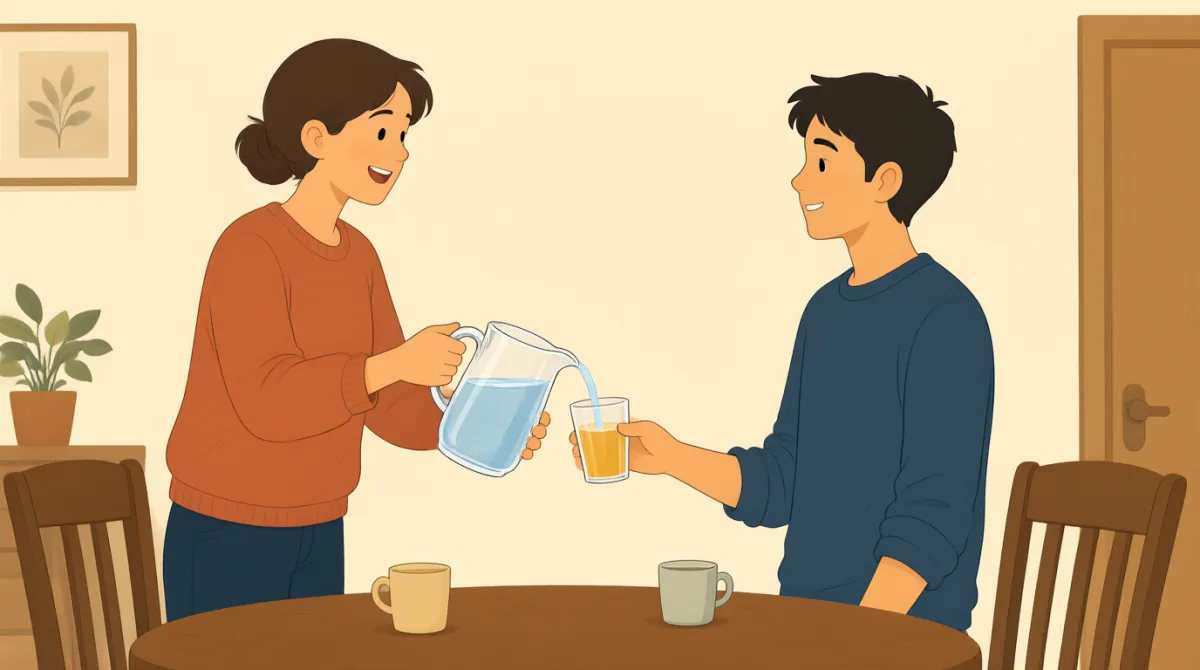

Could you pass the water pitcher, please?
ช่วยส่งเหยือกน้ำให้หน่อยได้ไหม?

Oh, sorry! Of course. Here you go.
อุ๊ย ขอโทษนะ ได้เลย นี่จ้ะ
Thanks a lot.
ขอบใจมาก
Do you need more ice in that?
อยากเติมน้ำแข็งอีกไหม?
No, this is perfect. Thanks for asking.
ไม่ล่ะ แค่นี้กำลังดีเลย ขอบใจที่ถามนะ
คำศัพท์5
- pitcherเหยือก
A container with a handle and spout used for holding and pouring liquids like water or juice. In this dialogue, it's the water pitcher being passed at the table.
ภาชนะที่มีหูจับและปากเหยือก ใช้ใส่และรินของเหลวอย่างน้ำหรือน้ำผลไม้ ในบทสนทนานี้ หมายถึงเหยือกน้ำที่ส่งให้กันบนโต๊ะอาหาร
- passส่งให้
To hand something to someone else. Here, it means to give the pitcher to another person politely during a meal.
ยื่นสิ่งของให้คนอื่น ในที่นี้หมายถึงส่งเหยือกให้คนอื่นอย่างสุภาพระหว่างมื้ออาหาร
- sorryขอโทษ
An expression used to apologize for a small mistake, like not noticing someone needs something. It's polite and common in everyday interactions.
คำที่ใช้ขอโทษเมื่อทำพลาดเล็กน้อย เช่น ไม่ทันสังเกตว่ามีคนต้องการของบางอย่าง เป็นคำสุภาพที่ใช้กันทั่วไปในชีวิตประจำวัน
- of courseได้เลย
A polite way to say 'yes' or 'certainly' when agreeing to help. It shows willingness and is very natural in English conversations.
คำตอบรับอย่างสุภาพเมื่อยินดีช่วยใครสักคน มีความหมายว่า “ได้” หรือ “แน่นอน” และฟังดูเป็นธรรมชาติมากในการสนทนาภาษาอังกฤษ
- iceน้ำแข็ง
Frozen water cubes added to drinks to make them cold. In meals, people often ask if others need more ice in their beverages.
น้ำที่แช่แข็งเป็นก้อนเล็ก ๆ แล้วใส่ในเครื่องดื่มเพื่อให้เย็น ระหว่างมื้ออาหาร ผู้คนมักถามกันว่าต้องการน้ำแข็งเพิ่มไหม
ประโยคสำคัญ5
- 1
Could you pass the water pitcher, please?
ช่วยส่งเหยือกน้ำให้หน่อยได้ไหม?
This is a polite request using 'could you' for asking favors, plus 'please' for courtesy. It's useful for table manners when you need something passed during a meal, teaching indirect questions for politeness.
ประโยคนี้เป็นการขอร้องอย่างสุภาพ โดยใช้ 'could you' เมื่อต้องการขอให้ใครช่วย และเติม 'please' เพื่อให้สุภาพยิ่งขึ้น ใช้ได้ดีเมื่อต้องการให้คนอื่นส่งของให้ระหว่างมื้ออาหาร เป็นตัวอย่างของการถามอ้อม ๆ เพื่อให้ฟังสุภาพ
- 2
Oh, sorry! Of course. Here you go.
อุ๊ย ขอโทษนะ ได้เลย นี่จ้ะ
This combines an apology ('sorry') with agreement ('of course') and offering the item ('here you go'). It's a natural response when passing something, showing empathy and helpfulness in social situations like dining.
ประโยคนี้รวมคำขอโทษ ('sorry') การตอบรับ ('of course') และการยื่นของให้ ('here you go') เป็นคำตอบที่เป็นธรรมชาติเมื่อต้องส่งของให้กัน แสดงถึงความใส่ใจและความเต็มใจช่วยเหลือในสถานการณ์ทางสังคมอย่างการรับประทานอาหาร
- 3
Thanks a lot.
ขอบใจมาก
A casual way to express strong gratitude after receiving help. 'A lot' emphasizes appreciation more than just 'thanks.' Use it after someone passes you an item to build good manners.
เป็นวิธีพูดขอบคุณแบบเป็นกันเองและเน้นความซาบซึ้งหลังได้รับความช่วยเหลือ 'A lot' ช่วยเน้นความขอบคุณให้มากกว่าแค่ 'thanks' ใช้พูดหลังจากมีคนส่งของให้ เพื่อแสดงมารยาทที่ดี
- 4
Do you need more ice in that?
อยากเติมน้ำแข็งอีกไหม?
This is an offer of help using a yes/no question with 'do you need.' It's thoughtful for checking on others' drinks, useful in meals to show care and continue polite conversation.
นี่เป็นการเสนอความช่วยเหลือด้วยคำถามที่ตอบได้ว่าใช่หรือไม่ โดยใช้ 'do you need' เหมาะสำหรับถามไถ่เรื่องเครื่องดื่มของคนอื่น แสดงความใส่ใจและช่วยให้บทสนทนาระหว่างมื้ออาหารดำเนินต่อไปอย่างสุภาพ
- 5
No, this is perfect. Thanks for asking.
ไม่ล่ะ แค่นี้กำลังดีเลย ขอบใจที่ถามนะ
A polite refusal ('no') followed by a compliment ('perfect') and thanks. It teaches how to respond positively even when declining, maintaining good relations at the table.
ประโยคนี้ปฏิเสธอย่างสุภาพ ('no') ตามด้วยคำชม ('perfect') และคำขอบคุณ เป็นตัวอย่างวิธีตอบรับอย่างเป็นมิตรแม้จะปฏิเสธ ช่วยรักษาบรรยากาศที่ดีบนโต๊ะอาหาร