Passing a Beverage Pitcher
पानी का जग बढ़ाना
Someone has finished pouring their drink and needs to pass the pitcher of water or juice to another person who wants some.
किसी ने अपना पेय डाल लिया है और अब पानी या जूस का जग किसी और को देना है, जिसे पेय चाहिए।
संवाद5
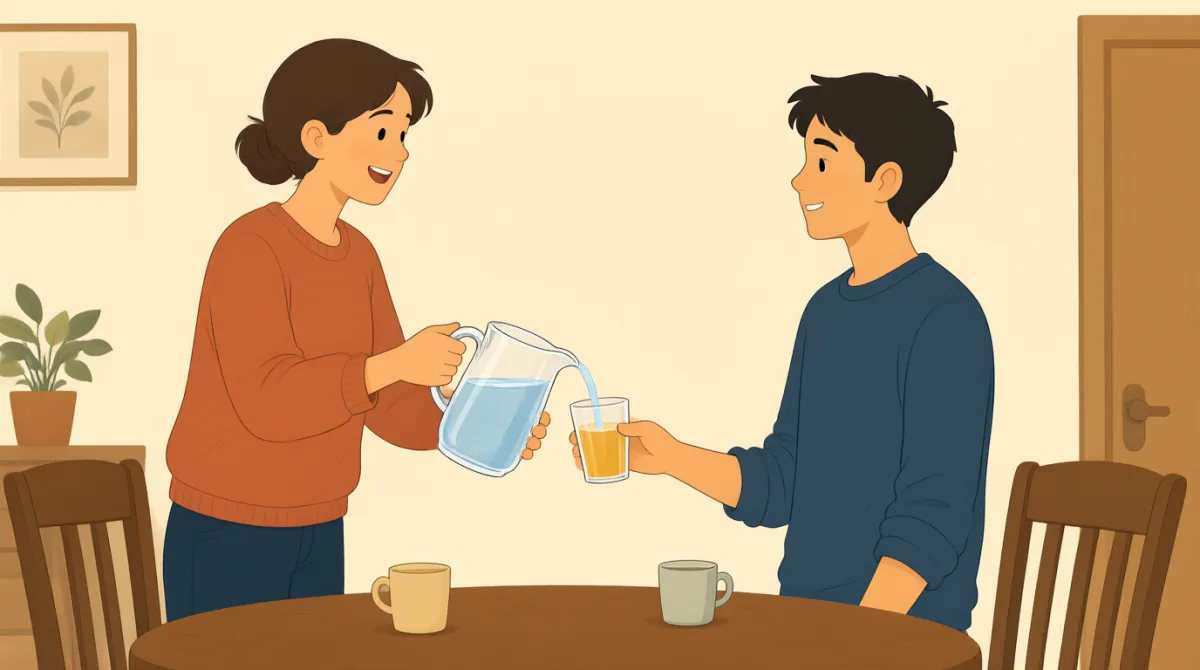

Could you pass the water pitcher, please?
क्या तुम पानी का जग मुझे दे सकते हो, प्लीज़?

Oh, sorry! Of course. Here you go.
ओह, माफ़ करना! हाँ, बिल्कुल। लो, ये लो।
Thanks a lot.
बहुत-बहुत शुक्रिया।
Do you need more ice in that?
क्या तुम्हें इसमें और बर्फ़ चाहिए?
No, this is perfect. Thanks for asking.
नहीं, यह बिल्कुल ठीक है। पूछने के लिए शुक्रिया।
शब्दावली5
- pitcherजग
A container with a handle and spout used for holding and pouring liquids like water or juice. In this dialogue, it's the water pitcher being passed at the table.
पानी या जूस जैसे तरल पदार्थ रखने और डालने के लिए इस्तेमाल होने वाला, हत्थे और टोंटी वाला बर्तन। इस बातचीत में खाने की मेज़ पर पानी का जग आगे बढ़ाया जा रहा है।
- passआगे बढ़ाना; थमाना
To hand something to someone else. Here, it means to give the pitcher to another person politely during a meal.
किसी चीज़ को किसी दूसरे व्यक्ति को देना। यहाँ इसका मतलब है, खाना खाते समय विनम्रता से जग दूसरे व्यक्ति को थमाना।
- sorryमाफ़ करना
An expression used to apologize for a small mistake, like not noticing someone needs something. It's polite and common in everyday interactions.
छोटी-सी गलती के लिए माफ़ी माँगने का आम तरीका, जैसे यह ध्यान न देना कि किसी को किसी चीज़ की ज़रूरत है। रोज़मर्रा की बातचीत में यह विनम्र और आम है।
- of courseबिल्कुल
A polite way to say 'yes' or 'certainly' when agreeing to help. It shows willingness and is very natural in English conversations.
मदद करने के लिए सहमति जताते हुए 'हाँ' या 'ज़रूर' कहने का विनम्र तरीका। इससे मदद करने की इच्छा ज़ाहिर होती है और यह अंग्रेज़ी बातचीत में बहुत स्वाभाविक है।
- iceबर्फ़
Frozen water cubes added to drinks to make them cold. In meals, people often ask if others need more ice in their beverages.
पेय को ठंडा करने के लिए उसमें डाले जाने वाले जमे हुए पानी के टुकड़े। खाने के समय लोग अक्सर पूछते हैं कि किसी को अपने पेय में और बर्फ़ चाहिए या नहीं।
मुख्य वाक्य5
- 1
Could you pass the water pitcher, please?
क्या तुम पानी का जग मुझे दे सकते हो, प्लीज़?
This is a polite request using 'could you' for asking favors, plus 'please' for courtesy. It's useful for table manners when you need something passed during a meal, teaching indirect questions for politeness.
'could you' और 'please' का इस्तेमाल करके विनम्रता से कोई काम करने का अनुरोध किया जाता है। खाने के समय मेज़ पर किसी से चीज़ मँगवाने के लिए यह वाक्य उपयोगी है।
- 2
Oh, sorry! Of course. Here you go.
ओह, माफ़ करना! हाँ, बिल्कुल। लो, ये लो।
This combines an apology ('sorry') with agreement ('of course') and offering the item ('here you go'). It's a natural response when passing something, showing empathy and helpfulness in social situations like dining.
इसमें माफ़ी ('sorry'), सहमति ('of course') और चीज़ देते समय कहे जाने वाले शब्द ('here you go') शामिल हैं। खाना खाते समय किसी को चीज़ थमाते हुए यह एक स्वाभाविक जवाब है, जो समझदारी और मददगार रवैया दिखाता है।
- 3
Thanks a lot.
बहुत-बहुत शुक्रिया।
A casual way to express strong gratitude after receiving help. 'A lot' emphasizes appreciation more than just 'thanks.' Use it after someone passes you an item to build good manners.
मदद मिलने पर आभार जताने का अनौपचारिक तरीका। 'a lot' से सिर्फ़ 'thanks' कहने के मुकाबले ज़्यादा शुक्रिया जताया जाता है। कोई चीज़ थमाने पर धन्यवाद देने के लिए इसका इस्तेमाल करें।
- 4
Do you need more ice in that?
क्या तुम्हें इसमें और बर्फ़ चाहिए?
This is an offer of help using a yes/no question with 'do you need.' It's thoughtful for checking on others' drinks, useful in meals to show care and continue polite conversation.
'do you need' के साथ हाँ या ना में जवाब दिए जाने वाला सवाल पूछकर मदद की पेशकश की जाती है। किसी के पेय के बारे में पूछना सोच-समझकर किया गया एक अच्छा इशारा है और खाने के समय विनम्र बातचीत जारी रखने में मदद करता है।
- 5
No, this is perfect. Thanks for asking.
नहीं, यह बिल्कुल ठीक है। पूछने के लिए शुक्रिया।
A polite refusal ('no') followed by a compliment ('perfect') and thanks. It teaches how to respond positively even when declining, maintaining good relations at the table.
इसमें पहले विनम्रता से मना किया जाता है ('no'), फिर बताया जाता है कि सब ठीक है ('perfect') और शुक्रिया कहा जाता है। इससे सीखते हैं कि मना करते हुए भी सकारात्मक जवाब देकर मेज़ पर अच्छे संबंध बनाए रखे जा सकते हैं।