Passing a Beverage Pitcher
تمرير إبريق المشروبات
Someone has finished pouring their drink and needs to pass the pitcher of water or juice to another person who wants some.
انتهى شخص من صبّ مشروبه، ويحتاج إلى تمرير إبريق الماء أو العصير إلى شخص آخر يريد بعضًا منه.
حوار5
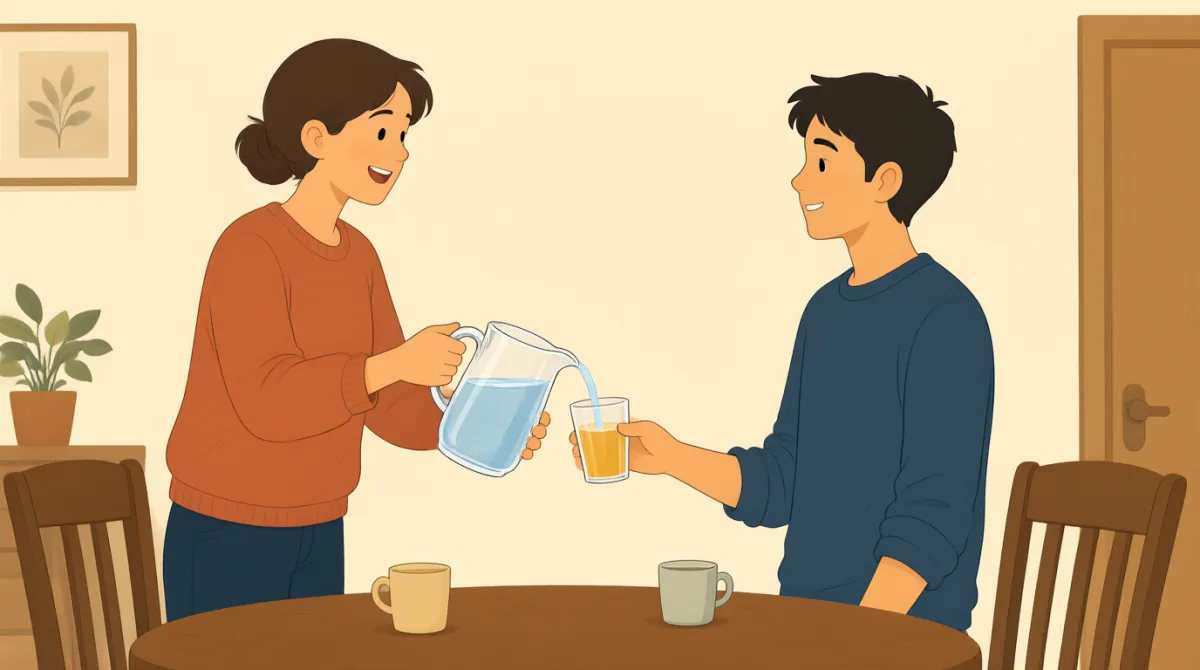

Could you pass the water pitcher, please?
هل يمكنك أن تمرّر إبريق الماء، من فضلك؟

Oh, sorry! Of course. Here you go.
آه، آسفة! بالطبع. تفضّل.
Thanks a lot.
شكرًا جزيلًا.
Do you need more ice in that?
هل تريد المزيد من الثلج في مشروبك؟
No, this is perfect. Thanks for asking.
لا، هكذا هو مثالي. شكرًا لسؤالك.
المفردات5
- pitcherإبريق
A container with a handle and spout used for holding and pouring liquids like water or juice. In this dialogue, it's the water pitcher being passed at the table.
وعاء له مقبض وفوّهة، يُستخدم لحفظ السوائل مثل الماء أو العصير وصبّها. في هذا الحوار، المقصود إبريق الماء الذي يُمرَّر حول المائدة.
- passيمرّر
To hand something to someone else. Here, it means to give the pitcher to another person politely during a meal.
أن يناول شيئًا لشخص آخر. هنا، تعني إعطاء الإبريق لشخص آخر بأدب أثناء تناول الطعام.
- sorryآسف
An expression used to apologize for a small mistake, like not noticing someone needs something. It's polite and common in everyday interactions.
تعبير يُستخدم للاعتذار عن خطأ بسيط، مثل عدم الانتباه إلى أن أحدهم يحتاج إلى شيء. وهو مهذّب وشائع في التعاملات اليومية.
- of courseبالطبع
A polite way to say 'yes' or 'certainly' when agreeing to help. It shows willingness and is very natural in English conversations.
طريقة مهذّبة لقول «نعم» أو «بكل تأكيد» عند الموافقة على المساعدة. وهي تعبّر عن الاستعداد للمساعدة وتبدو طبيعية جدًا في المحادثات الإنجليزية.
- iceثلج
Frozen water cubes added to drinks to make them cold. In meals, people often ask if others need more ice in their beverages.
مكعّبات ماء متجمّد تُضاف إلى المشروبات لتبريدها. أثناء تناول الطعام، كثيرًا ما يسأل الناس إن كان الآخرون يريدون المزيد من الثلج في مشروباتهم.
الجمل الأساسية5
- 1
Could you pass the water pitcher, please?
هل يمكنك أن تمرّر إبريق الماء، من فضلك؟
This is a polite request using 'could you' for asking favors, plus 'please' for courtesy. It's useful for table manners when you need something passed during a meal, teaching indirect questions for politeness.
هذا طلب مهذّب يستخدم 'could you' لطلب خدمة، ويضيف 'please' للتعبير عن الأدب. يفيدك هذا التعبير عند طلب تمرير شيء إليك أثناء تناول الطعام، إذ يجعل الطلب غير مباشر وأكثر تهذيبًا.
- 2
Oh, sorry! Of course. Here you go.
آه، آسفة! بالطبع. تفضّل.
This combines an apology ('sorry') with agreement ('of course') and offering the item ('here you go'). It's a natural response when passing something, showing empathy and helpfulness in social situations like dining.
يجمع هذا الرد بين الاعتذار ('sorry') والموافقة ('of course') ومناولة الشيء ('here you go'). إنه رد طبيعي عند تمرير شيء إلى شخص آخر، ويُظهر التعاطف والرغبة في المساعدة في المواقف الاجتماعية، مثل تناول الطعام معًا.
- 3
Thanks a lot.
شكرًا جزيلًا.
A casual way to express strong gratitude after receiving help. 'A lot' emphasizes appreciation more than just 'thanks.' Use it after someone passes you an item to build good manners.
طريقة ودّية للتعبير عن الامتنان الشديد بعد تلقي المساعدة. تؤكد 'a lot' على الامتنان أكثر من كلمة 'thanks' وحدها. استخدم هذا التعبير بعد أن يناولك أحدهم شيئًا، فهو يعكس حسن الأدب.
- 4
Do you need more ice in that?
هل تريد المزيد من الثلج في مشروبك؟
This is an offer of help using a yes/no question with 'do you need.' It's thoughtful for checking on others' drinks, useful in meals to show care and continue polite conversation.
هذا عرض للمساعدة في صيغة سؤال إجابته نعم أو لا، باستخدام 'do you need'. من اللطيف أن تسأل الآخرين إن كانوا يحتاجون إلى شيء في مشروباتهم؛ فهذا يُظهر اهتمامك ويساعد على استمرار الحديث المهذّب أثناء تناول الطعام.
- 5
No, this is perfect. Thanks for asking.
لا، هكذا هو مثالي. شكرًا لسؤالك.
A polite refusal ('no') followed by a compliment ('perfect') and thanks. It teaches how to respond positively even when declining, maintaining good relations at the table.
يبدأ الرد برفض مهذّب ('no')، ثم يتبعه إطراء ('perfect') وشكر. يعلّمك هذا الرد كيف تجيب بإيجابية حتى عند الرفض، لتحافظ على الودّ حول المائدة.