Agreeing on a Better Way Forward
Acordar una mejor manera de seguir adelante
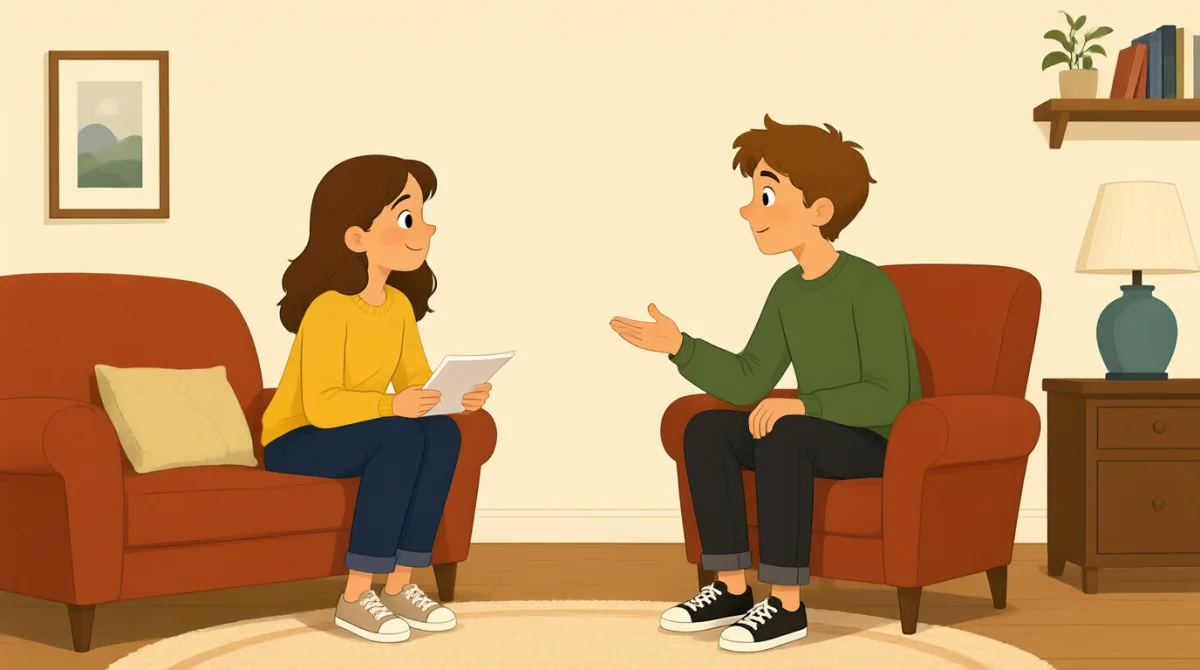
Emma and Jack agree to confirm important plans and let each other know as early as possible if something changes. They talk about how to bring up frustrations before they build into another argument.
Emma y Jack acuerdan confirmar los planes importantes y avisarse lo antes posible si algo cambia. Hablan de cómo expresar sus frustraciones antes de que den pie a otra discusión.
Diálogo10

I’m glad we’re talking about what to do differently. I don’t want us to keep revisiting the argument every time one of us feels let down.
Me alegra que estemos hablando de qué podemos hacer diferente. No quiero que sigamos volviendo a la discusión cada vez que alguno de los dos se sienta decepcionado.

Me neither. Could we agree to confirm plans that really matter, maybe the day before? That way, we can catch a misunderstanding before it turns into a missed evening.
Yo tampoco. ¿Podríamos acordar confirmar los planes que de verdad importan, quizá el día anterior? Así podemos aclarar cualquier malentendido antes de que termine en una noche arruinada.
That sounds reasonable. And if something changes, I’d rather hear about it as soon as you know, even if you’re still figuring out the details.
Me parece razonable. Y si algo cambia, prefiero que me avises en cuanto lo sepas, aunque todavía estés resolviendo los detalles.
I can do that. I sometimes put off sending a message because I think I need a complete solution first, but I can see how that leaves you in the dark.
Puedo hacerlo. A veces dejo para después mandar un mensaje porque pienso que primero necesito tener una solución completa, pero entiendo que eso te deja sin saber qué está pasando.
And I’ll try to bring things up earlier, before I’ve been sitting with them for hours. I don’t want frustration to build until it comes out sharper than I mean it to.
Y yo voy a intentar sacar las cosas a tiempo, antes de llevar horas dándoles vueltas. No quiero que la frustración se acumule hasta que termine diciendo las cosas con más dureza de la que pretendo.
That would help. Maybe we can say, “Something’s bothering me—can we talk about it?” That feels less like an accusation and more like an invitation to sort it out.
Eso ayudaría. Quizá podríamos decir: «Hay algo que me preocupa, ¿podemos hablarlo?». Suena menos a acusación y más a una invitación a resolverlo.
I like that. And if one of us isn’t ready to talk right away, we can say so and suggest a time to come back to it, instead of just going quiet.
Me gusta. Y si alguno de los dos no está listo para hablar en ese momento, podemos decirlo y proponer cuándo retomarlo, en vez de quedarnos callados.
Agreed. I don’t expect us to get everything right, but I want us to be more upfront and give each other the benefit of the doubt when we can.
De acuerdo. No espero que hagamos todo perfecto, pero quiero que hablemos con más franqueza y que, cuando podamos, nos demos el beneficio de la duda.
I want that too. Let’s try these things and check in after a few weeks to see whether they’re working for both of us.
Yo también quiero eso. Probemos estas cosas y hablemos dentro de unas semanas para ver si nos están funcionando a los dos.
Deal. And if I forget to confirm, you can remind me without having to soften it into a hint. I’ll do my best to listen instead of getting defensive.
Trato hecho. Y si se me olvida confirmar, puedes recordármelo sin tener que disimularlo con indirectas. Haré lo posible por escuchar en vez de ponerme a la defensiva.
Vocabulario5
- keep revisiting the argumentseguir volviendo a la discusión
To keep bringing up the same disagreement again and again. It suggests the speakers want to resolve the issue rather than repeatedly return to it.
Significa volver a sacar el mismo desacuerdo una y otra vez. Sugiere que las personas quieren resolver el problema en lugar de retomarlo repetidamente.
- confirm plansconfirmar los planes
To check and make sure an arrangement is still happening. You can use this phrase when agreeing on plans that are important to you.
Comprobar que un plan sigue en pie. Puedes usar esta expresión cuando acuerdes planes que son importantes para ti.
- bring things upsacar un tema
To start talking about a subject, especially a concern or problem. You can bring something up early to discuss it before it becomes more serious.
Empezar a hablar de un tema, sobre todo de una preocupación o un problema. Puedes sacar un tema pronto para hablarlo antes de que se vuelva más serio.
- build until it comes out sharper than I mean it toacumularse hasta que termino diciendo las cosas con más dureza de la que pretendo
To grow stronger over time and eventually come out in a harsher way than intended. This phrase describes how unspoken frustration can affect the way someone speaks.
Significa que algo se intensifica con el tiempo y acaba expresándose de una manera más dura de lo que se quería. Esta expresión describe cómo la frustración que no se expresa puede afectar la forma de hablar.
- give each other the benefit of the doubtdarse el beneficio de la duda
To assume that someone had good intentions rather than immediately thinking the worst. This can help people respond more generously when something goes wrong.
Suponer que alguien tenía buenas intenciones en vez de pensar enseguida lo peor. Esto puede ayudar a responder con más comprensión cuando algo sale mal.
Frases clave8
- 1
Could we agree to confirm plans that really matter, maybe the day before?
¿Podríamos acordar confirmar los planes que de verdad importan, quizá el día anterior?
This is a polite way to suggest a practical agreement. Reuse “Could we agree to…” when you want to propose a shared routine or expectation.
Esta es una forma amable de proponer un acuerdo práctico. Puedes reutilizar “Could we agree to…” (¿Podríamos acordar…?) para proponer una rutina o una expectativa compartida.
- 2
And if something changes, I’d rather hear about it as soon as you know, even if you’re still figuring out the details.
Y si algo cambia, prefiero que me avises en cuanto lo sepas, aunque todavía estés resolviendo los detalles.
This clearly explains what kind of update would help and allows for uncertainty. Reuse “I’d rather hear about it…” to express a communication preference.
Esta frase explica claramente qué tipo de aviso sería útil y permite que todavía haya cosas por resolver. Puedes reutilizar “I’d rather hear about it…” (prefiero que me avises…) para expresar cómo prefieres que te comuniquen algo.
- 3
I sometimes put off sending a message because I think I need a complete solution first, but I can see how that leaves you in the dark.
A veces dejo para después mandar un mensaje porque pienso que primero necesito tener una solución completa, pero entiendo que eso te deja sin saber qué está pasando.
This sentence explains a habit, acknowledges its effect on another person, and shows understanding. It is useful for taking responsibility without making excuses.
Esta frase explica un hábito, reconoce cómo afecta a otra persona y demuestra comprensión. Es útil para asumir la responsabilidad sin poner excusas.
- 4
And I’ll try to bring things up earlier, before I’ve been sitting with them for hours.
Y voy a intentar sacar las cosas a tiempo, antes de llevar horas dándoles vueltas.
This is a constructive way to commit to changing a behavior. Reuse “I’ll try to… earlier” when you want to discuss how you will handle a problem differently.
Esta es una forma constructiva de comprometerte a cambiar una conducta. Puedes reutilizar “I’ll try to… earlier” (intentaré… antes) para explicar cómo vas a abordar un problema de otra manera.
- 5
Maybe we can say, “Something’s bothering me—can we talk about it?”
Quizá podríamos decir: «Hay algo que me preocupa, ¿podemos hablarlo?»
This offers a direct but non-accusatory way to start a difficult conversation. You can use the question to raise a concern while inviting the other person to talk.
Esta frase ofrece una forma directa, pero sin acusar, de iniciar una conversación difícil. Puedes usar esta pregunta para expresar una preocupación e invitar a la otra persona a hablar.
- 6
And if one of us isn’t ready to talk right away, we can say so and suggest a time to come back to it, instead of just going quiet.
Y si alguno de los dos no está listo para hablar en ese momento, podemos decirlo y proponer cuándo retomarlo, en vez de quedarnos callados.
This sentence sets a considerate boundary while keeping the conversation open. Reuse “suggest a time to come back to it” when you need a pause but still want to resolve an issue.
Esta frase establece un límite con consideración y mantiene abierta la conversación. Puedes reutilizar “suggest a time to come back to it” (proponer cuándo retomarlo) si necesitas hacer una pausa, pero quieres resolver el problema.
- 7
I don’t expect us to get everything right, but I want us to be more upfront and give each other the benefit of the doubt when we can.
No espero que hagamos todo perfecto, pero quiero que hablemos con más franqueza y que, cuando podamos, nos demos el beneficio de la duda.
This balances realistic expectations with a clear goal for the relationship. It is useful when agreeing to improve communication without expecting perfection.
Esta frase combina expectativas realistas con un objetivo claro para la relación. Es útil para acordar mejorar la comunicación sin esperar que todo sea perfecto.
- 8
Let’s try these things and check in after a few weeks to see whether they’re working for both of us.
Probemos estas cosas y hablemos dentro de unas semanas para ver si nos están funcionando a los dos.
This proposes a practical follow-up and makes the agreement something both people can review. Reuse “check in after…” when you want to revisit a plan after some time.
Esta frase propone un seguimiento práctico y permite que ambas personas revisen el acuerdo. Puedes reutilizar “check in after…” (hablar después de…) si quieres volver a revisar un plan pasado un tiempo.