Explaining Symptoms to the Doctor
Explicar los síntomas al médico
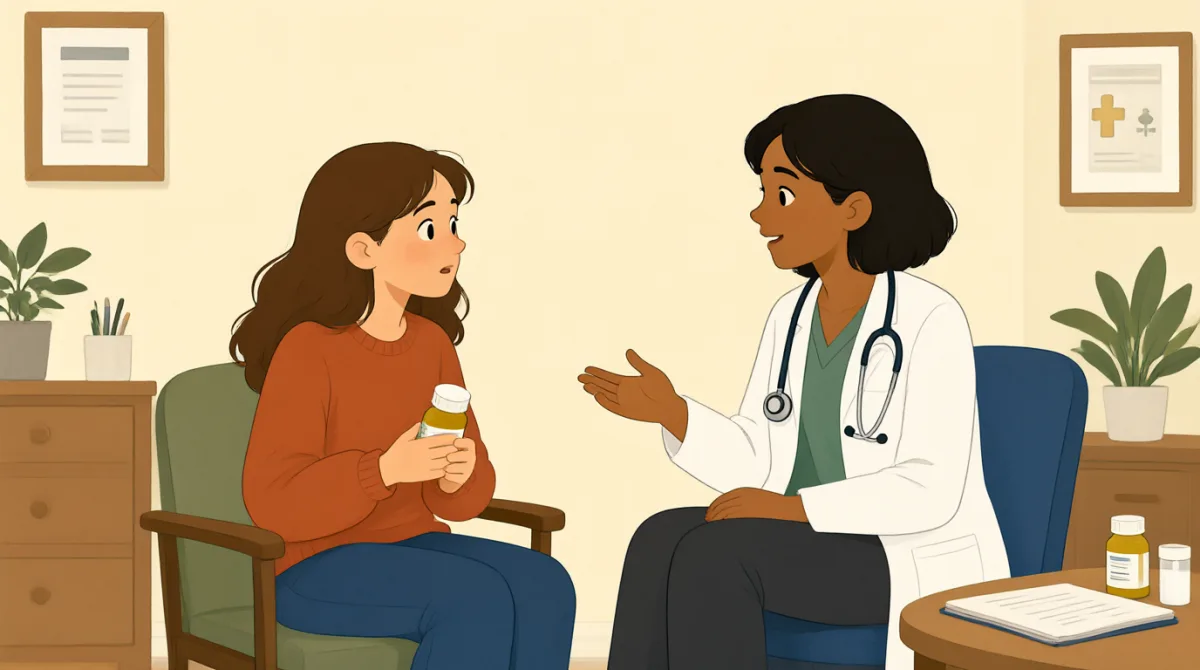
At the clinic, Emma describes her symptoms and when they started, while Dr. Grace asks questions and recommends treatment. Emma checks whether the medicine will affect her planned activities.
En la clínica, Emma describe sus síntomas y cuándo empezaron, mientras la doctora Grace le hace preguntas y le recomienda un tratamiento. Emma pregunta si el medicamento afectará las actividades que tiene planeadas.
Diálogo10

Hi, Dr. Wilson. I’ve had a fever and stomach pain since yesterday evening, and I feel worse this morning.
Hola, doctora Wilson. Tengo fiebre y dolor de estómago desde ayer por la tarde, y esta mañana me siento peor.

I’m sorry to hear that. Have you had any nausea, vomiting, or diarrhea since the pain started?
Siento que se encuentre así. ¿Ha tenido náuseas, vómitos o diarrea desde que empezó el dolor?
I felt nauseous last night, but I haven’t thrown up. I’ve had diarrhea twice, and the pain comes and goes.
Anoche tuve náuseas, pero no he vomitado. He tenido diarrea dos veces y el dolor va y viene.
Where exactly does it hurt? And have you been able to drink water and keep it down?
¿Dónde le duele exactamente? ¿Ha podido beber agua y retenerla?
It’s mostly around my stomach, not on one side. I can drink water, but I don’t have much appetite.
Me duele sobre todo alrededor del estómago, no en un solo lado. Puedo beber agua, pero no tengo mucho apetito.
Okay. Your temperature is a little high, but your symptoms may be from a stomach infection. I’ll examine you first.
De acuerdo. Tiene la temperatura un poco alta, pero los síntomas podrían deberse a una infección estomacal. Primero voy a examinarla.
That makes sense. I was worried it might be something serious. Do you think I’ll need any tests?
Tiene sentido. Me preocupaba que pudiera ser algo grave. ¿Cree que necesitaré pruebas?
For now, rest and drink plenty of fluids. I’ll give you medicine for the fever and nausea. Take it as directed.
Por ahora, descanse y beba muchos líquidos. Le daré medicamentos para la fiebre y las náuseas. Tómelos según las indicaciones.
Thanks. Will the medicine make me sleepy? We planned to visit a museum this afternoon, but I can skip it.
Gracias. ¿El medicamento me dará sueño? Habíamos planeado visitar un museo esta tarde, pero puedo no ir.
It might make you a little drowsy, so take it easy today. If the pain gets worse or you can’t keep fluids down, come back.
Puede que le dé un poco de sueño, así que tómeselo con calma hoy. Si el dolor empeora o no puede retener los líquidos, vuelva.
Vocabulario7
- since yesterday eveningdesde ayer por la tarde
This tells someone when a symptom began and suggests it has continued until now.
Esta expresión indica cuándo empezó un síntoma y da a entender que ha continuado hasta ahora.
- thrown upvomitar
This is an informal way to say “vomited.” You can say whether you have or haven’t thrown up.
Es una forma informal de decir “vomitar”. Puedes decir si has vomitado o si no has vomitado.
- comes and goesir y venir
This means something happens for a while, stops, and then returns. It is useful for describing pain that is not constant.
Significa que algo ocurre durante un rato, desaparece y luego vuelve. Sirve para describir un dolor que no es constante.
- keep it downretenerlo
This means to drink or eat something without vomiting it. A doctor may ask if you can keep water or medicine down.
Significa beber o comer algo sin vomitarlo. El médico puede preguntarte si puedes retener el agua o los medicamentos.
- plenty of fluidsmuchos líquidos
This means a large enough amount of drinks, especially water. It is a common recommendation when you are sick.
Se refiere a beber una cantidad suficiente de líquidos, especialmente agua. Es una recomendación habitual cuando estás enfermo.
- take it easytomárselo con calma
This means to rest and avoid doing too much. You can use it when advising someone to have a quiet day.
Significa descansar y evitar hacer demasiadas cosas. Puedes usar esta expresión para aconsejarle a alguien que se tome el día con tranquilidad.
- a little drowsyun poco de sueño
This means slightly sleepy. It can describe a possible effect of medicine.
Significa tener algo de sueño, pero no mucho. Puede describir un posible efecto de un medicamento.
Frases clave7
- 1
I’ve had a fever and stomach pain since yesterday evening, and I feel worse this morning.
Tengo fiebre y dolor de estómago desde ayer por la tarde, y esta mañana me siento peor.
This is a useful way to explain your symptoms and when they started. You can replace the symptoms and time with your own details.
Es una forma útil de explicar tus síntomas y cuándo empezaron. Puedes cambiar los síntomas y el momento por tus propios datos.
- 2
I’ve had diarrhea twice, and the pain comes and goes.
He tenido diarrea dos veces y el dolor va y viene.
This gives the doctor specific information about how often a symptom happened and what the pain is like. Use “comes and goes” for symptoms that are not constant.
Esta frase le da al médico información concreta sobre cuántas veces apareció un síntoma y cómo es el dolor. Usa “comes and goes” para describir síntomas que no son constantes.
- 3
I can drink water, but I don’t have much appetite.
Puedo beber agua, pero no tengo mucho apetito.
This describes what you can manage and what is difficult for you. You can use “I can…, but I don’t…” to explain two contrasting details.
Describe lo que puedes hacer y lo que te resulta difícil. Puedes usar “I can…, but I don’t…” para explicar dos detalles opuestos.
- 4
I was worried it might be something serious.
Me preocupaba que pudiera ser algo grave.
This is a natural way to tell a doctor what you have been concerned about. “I was worried it might be…” can introduce a possible problem.
Es una forma natural de contarle al médico qué te preocupaba. “I was worried it might be…” sirve para introducir un posible problema.
- 5
Do you think I’ll need any tests?
¿Cree que necesitaré pruebas?
This is a polite way to ask a healthcare professional what may happen next. You can replace “tests” with another expected step or treatment.
Es una forma cortés de preguntarle a un profesional de la salud qué podría pasar después. Puedes reemplazar “tests” por otro paso o tratamiento que esperes.
- 6
Will the medicine make me sleepy?
¿El medicamento me dará sueño?
This asks about a possible side effect of medicine. You can replace “sleepy” with another effect you want to ask about.
Pregunta por un posible efecto secundario de un medicamento. Puedes reemplazar “sleepy” por otro efecto sobre el que quieras preguntar.
- 7
If the pain gets worse or you can’t keep fluids down, come back.
Si el dolor empeora o no puede retener los líquidos, vuelva.
This gives clear conditions for when someone should return for medical help. Use “If…” to describe a situation that requires action.
Esta frase indica claramente en qué casos alguien debería volver para recibir atención médica. Usa “If…” para describir una situación que requiere actuar.