Explaining Symptoms to the Doctor
อธิบายอาการให้หมอฟัง
At the clinic, Emma describes her symptoms and when they started, while Dr. Grace asks questions and recommends treatment. Emma checks whether the medicine will affect her planned activities.
ที่คลินิก เอมมาเล่าอาการและบอกว่าเริ่มเป็นตั้งแต่เมื่อไร ขณะที่คุณหมอเกรซซักถามและแนะนำการรักษา เอมมาถามว่ายาจะส่งผลต่อกิจกรรมที่วางแผนไว้หรือไม่
บทสนทนา10
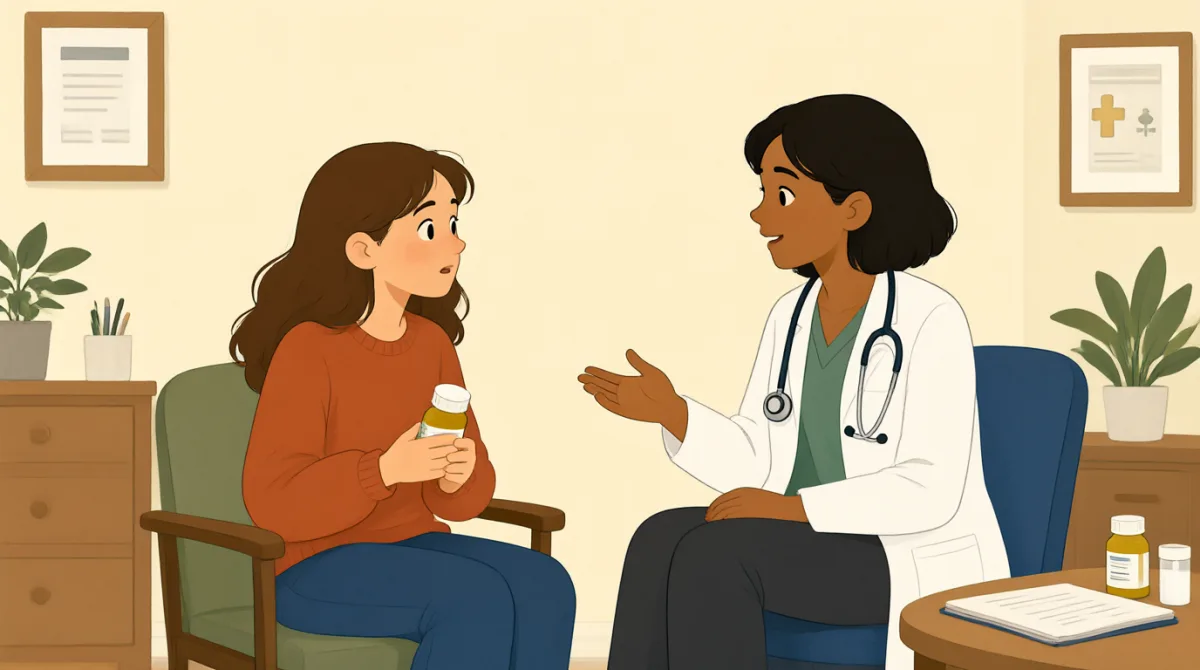

Hi, Dr. Wilson. I’ve had a fever and stomach pain since yesterday evening, and I feel worse this morning.
สวัสดีค่ะ คุณหมอวิลสัน ฉันมีไข้และปวดท้องมาตั้งแต่เมื่อเย็นวาน แล้วเช้านี้รู้สึกแย่ลงค่ะ

I’m sorry to hear that. Have you had any nausea, vomiting, or diarrhea since the pain started?
เสียใจด้วยนะคะที่เป็นแบบนี้ ตั้งแต่เริ่มปวด มีอาการคลื่นไส้ อาเจียน หรือท้องเสียบ้างไหมคะ
I felt nauseous last night, but I haven’t thrown up. I’ve had diarrhea twice, and the pain comes and goes.
เมื่อคืนฉันรู้สึกคลื่นไส้ค่ะ แต่ไม่ได้อาเจียน ท้องเสียไปสองครั้ง แล้วอาการปวดก็เป็น ๆ หาย ๆ ค่ะ
Where exactly does it hurt? And have you been able to drink water and keep it down?
ปวดตรงไหนแน่คะ แล้วดื่มน้ำได้ไหม ดื่มแล้วอาเจียนออกมาหรือเปล่า
It’s mostly around my stomach, not on one side. I can drink water, but I don’t have much appetite.
ส่วนใหญ่ปวดแถวท้องค่ะ ไม่ได้ปวดข้างใดข้างหนึ่ง ฉันดื่มน้ำได้ แต่ไม่ค่อยอยากอาหารค่ะ
Okay. Your temperature is a little high, but your symptoms may be from a stomach infection. I’ll examine you first.
เข้าใจแล้วค่ะ อุณหภูมิร่างกายสูงนิดหน่อย แต่อาการอาจเกิดจากการติดเชื้อในกระเพาะอาหาร เดี๋ยวหมอตรวจร่างกายก่อนนะคะ
That makes sense. I was worried it might be something serious. Do you think I’ll need any tests?
ฟังดูสมเหตุสมผลค่ะ ฉันกังวลว่าอาจเป็นอะไรที่ร้ายแรง คุณหมอคิดว่าฉันต้องตรวจอะไรไหมคะ
For now, rest and drink plenty of fluids. I’ll give you medicine for the fever and nausea. Take it as directed.
ตอนนี้พักผ่อนและดื่มน้ำให้มากนะคะ หมอจะให้ยาลดไข้กับยาแก้คลื่นไส้ รับประทานตามคำแนะนำค่ะ
Thanks. Will the medicine make me sleepy? We planned to visit a museum this afternoon, but I can skip it.
ขอบคุณค่ะ ยาจะทำให้ง่วงไหมคะ บ่ายนี้เราวางแผนจะไปพิพิธภัณฑ์ แต่ฉันไม่ไปก็ได้ค่ะ
It might make you a little drowsy, so take it easy today. If the pain gets worse or you can’t keep fluids down, come back.
ยาอาจทำให้ง่วงซึมนิดหน่อยค่ะ วันนี้อย่าหักโหมนะคะ ถ้าปวดมากขึ้นหรือดื่มน้ำแล้วอาเจียนออกมา ให้กลับมาพบหมอค่ะ
คำศัพท์7
- since yesterday eveningมาตั้งแต่เมื่อเย็นวาน
This tells someone when a symptom began and suggests it has continued until now.
วลี “since yesterday evening” ใช้บอกว่าอาการเริ่มเมื่อไร และสื่อว่าอาการเป็นต่อเนื่องมาจนถึงตอนนี้ค่ะ
- thrown upอาเจียน
This is an informal way to say “vomited.” You can say whether you have or haven’t thrown up.
“thrown up” เป็นคำพูดแบบไม่เป็นทางการที่หมายถึง “อาเจียน” ค่ะ ใช้บอกได้ว่าคุณอาเจียนหรือไม่ได้อาเจียน
- comes and goesเป็น ๆ หาย ๆ
This means something happens for a while, stops, and then returns. It is useful for describing pain that is not constant.
“comes and goes” หมายถึงเกิดขึ้นอยู่พักหนึ่ง แล้วหยุดไปก่อนจะกลับมาอีก ใช้บรรยายอาการปวดที่ไม่ได้เป็นตลอดเวลาได้ดีค่ะ
- keep it downดื่มแล้วไม่อาเจียนออกมา
This means to drink or eat something without vomiting it. A doctor may ask if you can keep water or medicine down.
“keep it down” หมายถึงกินหรือดื่มบางอย่างแล้วไม่อาเจียนออกมาค่ะ หมออาจถามว่าคุณดื่มน้ำหรือกินยาแล้วเก็บไว้ได้ไหม
- plenty of fluidsน้ำและเครื่องดื่มให้มาก
This means a large enough amount of drinks, especially water. It is a common recommendation when you are sick.
“plenty of fluids” หมายถึงดื่มน้ำหรือเครื่องดื่มในปริมาณมากพอ โดยเฉพาะน้ำเปล่าค่ะ เป็นคำแนะนำที่พบบ่อยเวลาป่วย
- take it easyพักผ่อน อย่าหักโหม
This means to rest and avoid doing too much. You can use it when advising someone to have a quiet day.
“take it easy” หมายถึงพักผ่อนและอย่าทำอะไรหนักเกินไปค่ะ ใช้แนะนำให้ใครสักคนใช้เวลาทั้งวันอย่างสบาย ๆ ได้
- a little drowsyง่วงซึมนิดหน่อย
This means slightly sleepy. It can describe a possible effect of medicine.
“a little drowsy” หมายถึงง่วงเล็กน้อยค่ะ ใช้พูดถึงผลข้างเคียงที่ยาอาจทำให้เกิดขึ้นได้
ประโยคสำคัญ7
- 1
I’ve had a fever and stomach pain since yesterday evening, and I feel worse this morning.
ฉันมีไข้และปวดท้องมาตั้งแต่เมื่อเย็นวาน แล้วเช้านี้รู้สึกแย่ลงค่ะ
This is a useful way to explain your symptoms and when they started. You can replace the symptoms and time with your own details.
ประโยคนี้ใช้บอกอาการและเวลาที่เริ่มเป็นได้ดีค่ะ คุณเปลี่ยนอาการกับเวลาให้ตรงกับข้อมูลของตัวเองได้
- 2
I’ve had diarrhea twice, and the pain comes and goes.
ฉันท้องเสียไปสองครั้ง แล้วอาการปวดก็เป็น ๆ หาย ๆ ค่ะ
This gives the doctor specific information about how often a symptom happened and what the pain is like. Use “comes and goes” for symptoms that are not constant.
ประโยคนี้ให้ข้อมูลเฉพาะเจาะจงกับหมอว่าอาการเกิดขึ้นบ่อยแค่ไหน และอาการปวดเป็นอย่างไรค่ะ ใช้ “comes and goes” กับอาการที่ไม่ได้เป็นตลอดเวลาได้
- 3
I can drink water, but I don’t have much appetite.
ฉันดื่มน้ำได้ แต่ไม่ค่อยอยากอาหารค่ะ
This describes what you can manage and what is difficult for you. You can use “I can…, but I don’t…” to explain two contrasting details.
ประโยคนี้บอกว่าคุณทำอะไรได้และอะไรเป็นเรื่องยากสำหรับคุณค่ะ ใช้รูปแบบ “I can…, but I don’t…” เพื่อบอกข้อมูลสองอย่างที่แตกต่างกันได้
- 4
I was worried it might be something serious.
ฉันกังวลว่าอาจเป็นอะไรที่ร้ายแรงค่ะ
This is a natural way to tell a doctor what you have been concerned about. “I was worried it might be…” can introduce a possible problem.
นี่เป็นวิธีพูดอย่างเป็นธรรมชาติเพื่อบอกหมอว่าคุณกังวลเรื่องอะไรค่ะ “I was worried it might be…” ใช้เกริ่นถึงปัญหาที่อาจเกิดขึ้นได้
- 5
Do you think I’ll need any tests?
คุณหมอคิดว่าฉันต้องตรวจอะไรไหมคะ
This is a polite way to ask a healthcare professional what may happen next. You can replace “tests” with another expected step or treatment.
นี่เป็นวิธีสุภาพในการถามบุคลากรทางการแพทย์ว่าขั้นตอนต่อไปอาจเป็นอย่างไรค่ะ คุณเปลี่ยน “tests” เป็นขั้นตอนหรือการรักษาอื่นที่คาดว่าจะเกิดขึ้นได้
- 6
Will the medicine make me sleepy?
ยาจะทำให้ฉันง่วงไหมคะ
This asks about a possible side effect of medicine. You can replace “sleepy” with another effect you want to ask about.
ประโยคนี้ใช้ถามถึงผลข้างเคียงที่อาจเกิดจากยาค่ะ คุณเปลี่ยน “sleepy” เป็นผลข้างเคียงอื่นที่อยากถามได้
- 7
If the pain gets worse or you can’t keep fluids down, come back.
ถ้าอาการปวดแย่ลงหรือดื่มน้ำแล้วอาเจียนออกมา ให้กลับมาพบหมอนะคะ
This gives clear conditions for when someone should return for medical help. Use “If…” to describe a situation that requires action.
ประโยคนี้บอกเงื่อนไขอย่างชัดเจนว่าควรกลับมารับการรักษาเมื่อไรค่ะ ใช้ “If…” เพื่ออธิบายสถานการณ์ที่ต้องลงมือทำอะไรสักอย่าง