Asking About a Dog’s History
Preguntar por la historia de un perro
Emma has questions about a dog named Milo’s background, health, and behavior. Grace shares what the shelter knows and explains what they are still learning about him.
Emma tiene preguntas sobre los antecedentes, la salud y el comportamiento de un perro llamado Milo. Grace comparte lo que sabe el refugio y explica qué cosas todavía están averiguando sobre él.
Diálogo10
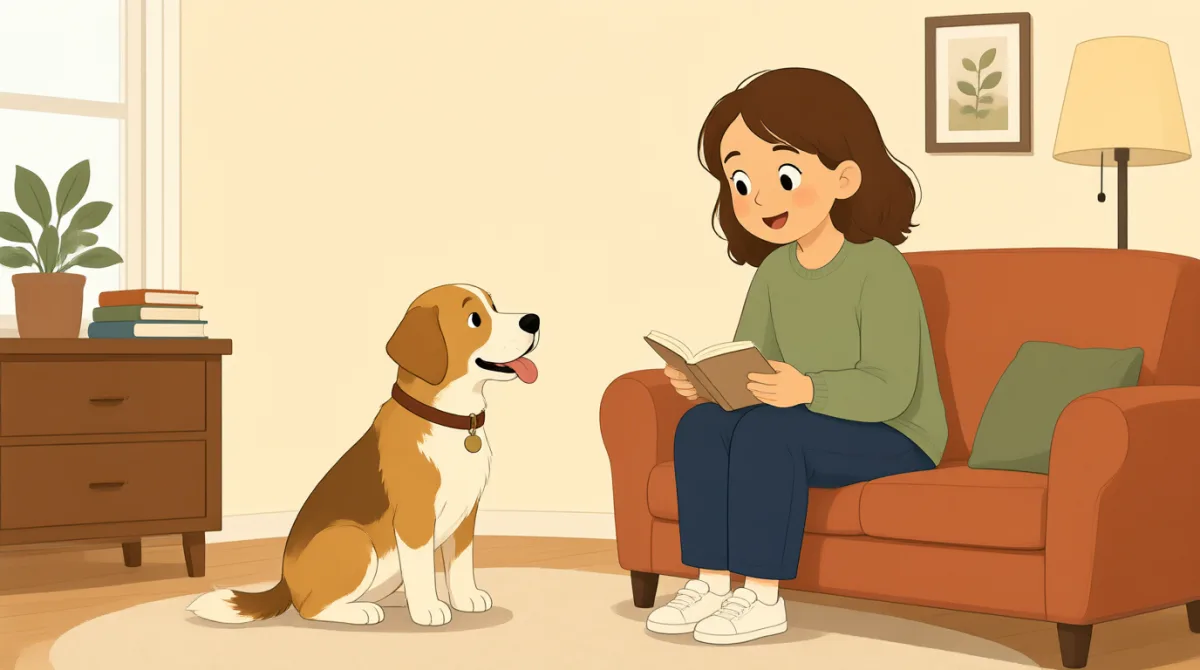

Grace, could you tell me what you know about Milo’s background? I’d like to understand what he’s been through.
Grace, ¿podrías contarme qué sabes sobre los antecedentes de Milo? Me gustaría entender por lo que ha pasado.

Of course. He was brought in as a stray about three weeks ago, so we don’t know who owned him before.
Claro. Lo trajeron como perro callejero hace unas tres semanas, así que no sabemos quién era su dueño antes.
Has he had a health check? I want to make sure I understand any medical needs before I bring him home.
¿Le han hecho un chequeo médico? Quiero asegurarme de entender si tiene alguna necesidad médica antes de llevarlo a casa.
Yes, our veterinarian examined him and gave him his vaccinations. He seems healthy, but we’re still waiting on one test result.
Sí, nuestro veterinario lo examinó y le puso las vacunas. Parece estar sano, pero todavía estamos esperando el resultado de una prueba.
That makes sense. What’s he like around people and other dogs? I live in an apartment, so I want to plan ahead.
Tiene sentido. ¿Cómo se comporta con las personas y con otros perros? Vivo en un departamento, así que quiero planificar con anticipación.
He’s friendly with staff and enjoys meeting people. With other dogs, he can be a little nervous at first, so we introduce them slowly.
Es amigable con el personal y le gusta conocer gente. Con otros perros, puede ponerse un poco nervioso al principio, así que los presentamos poco a poco.
Has he ever been left alone for a few hours? I work from home some days, but I have to go out, too.
¿Se ha quedado solo alguna vez durante unas horas? Algunos días trabajo desde casa, pero también tengo que salir.
We’re still learning about that. He settles in his kennel after a short while, but a home may feel different to him.
Todavía estamos averiguándolo. Se tranquiliza en su jaula después de un rato, pero quizá una casa le resulte diferente.
I appreciate you being honest. If I adopt him, could I get updates on the test and advice about helping him adjust?
Aprecio que seas sincera. Si lo adopto, ¿podría recibir novedades sobre la prueba y consejos para ayudarlo a adaptarse?
Absolutely. We’ll share the test result as soon as it comes in, and we’re here to help you and Milo get off to a good start.
Por supuesto. Te compartiremos el resultado de la prueba en cuanto lo recibamos, y estamos aquí para ayudarlos a ti y a Milo a empezar con buen pie.
Vocabulario7
- backgroundantecedentes
A person or animal’s past and life history. Here, Emma is asking what the shelter knows about Milo before he arrived.
El pasado y la historia de vida de una persona o un animal. Aquí, Emma pregunta qué sabe el refugio sobre Milo antes de que llegara.
- strayperro callejero
An animal that is lost or has no known owner. A shelter may take in a stray and try to learn where it came from.
Un animal que está perdido o cuyo dueño se desconoce. Un refugio puede recibir a un animal callejero e intentar averiguar de dónde viene.
- health checkchequeo médico
A medical examination to see if someone or an animal is healthy. You can ask whether a pet has had a health check before adoption.
Un examen médico para comprobar si una persona o un animal está sano. Puedes preguntar si ya le hicieron un chequeo médico a una mascota antes de adoptarla.
- vaccinationsvacunas
Injections that help protect against certain diseases. Pet shelters often give animals vaccinations as part of their medical care.
Inyecciones que ayudan a proteger contra ciertas enfermedades. Los refugios suelen vacunar a los animales como parte de su atención médica.
- settles inse tranquiliza
Becomes calmer and more comfortable in a place. Here, Milo settles in his kennel after some time.
Se calma y se siente más cómodo en un lugar. Aquí, Milo se tranquiliza en su jaula después de un rato.
- adjustadaptarse
To get used to a new situation or place. A newly adopted dog may need time and support to adjust to a home.
Acostumbrarse a una situación o un lugar nuevos. Un perro recién adoptado puede necesitar tiempo y apoyo para adaptarse a su nuevo hogar.
- get off to a good startempezar con buen pie
To begin something successfully. The shelter uses this phrase to describe helping Emma and Milo start their life together well.
Empezar algo de manera exitosa. El refugio usa esta expresión para hablar de ayudar a Emma y a Milo a comenzar bien su vida juntos.
Frases clave7
- 1
Could you tell me what you know about Milo’s background?
¿Podrías contarme qué sabes sobre los antecedentes de Milo?
This is a polite way to ask for someone’s past or history. You can reuse “Could you tell me what you know about…?” when asking about a person, animal, or situation.
Esta es una forma cortés de preguntar por el pasado o la historia de alguien. Puedes volver a usar “Could you tell me what you know about…?” cuando preguntes por una persona, un animal o una situación.
- 2
Has he had a health check?
¿Le han hecho un chequeo médico?
This asks whether a medical examination has already happened. Use “Has [someone or something] had a health check?” when asking about health care.
Esta pregunta averigua si ya se hizo un examen médico. Usa “Has [someone or something] had a health check?” cuando quieras preguntar sobre la atención médica de alguien o algo.
- 3
I want to make sure I understand any medical needs before I bring him home.
Quiero asegurarme de entender si tiene alguna necesidad médica antes de llevarlo a casa.
This explains why you are asking about health. “I want to make sure I understand…” is useful when you need clear information before making a decision.
Esto explica por qué preguntas sobre la salud. “I want to make sure I understand…” es útil cuando necesitas información clara antes de tomar una decisión.
- 4
What’s he like around people and other dogs?
¿Cómo se comporta con las personas y con otros perros?
This asks about a dog’s behavior in different social situations. You can reuse “What’s [someone or something] like around…?” to ask how they behave with a group or in a setting.
Esta pregunta trata sobre el comportamiento de un perro en distintas situaciones sociales. Puedes volver a usar “What’s [someone or something] like around…?” para preguntar cómo se comporta alguien o algo con un grupo o en cierto entorno.
- 5
We’re still learning about that.
Todavía estamos averiguándolo.
This is a natural way to say that you do not have all the information yet. Use it when something is still being observed or investigated.
Esta es una forma natural de decir que todavía no tienes toda la información. Úsala cuando aún se esté observando o investigando algo.
- 6
I appreciate you being honest.
Aprecio que seas sincera.
This politely shows gratitude for someone’s openness. You can use it when someone shares difficult or incomplete information with you.
Esta frase expresa cortésmente agradecimiento por la franqueza de alguien. Puedes usarla cuando alguien comparte contigo información difícil o incompleta.
- 7
We’ll share the test result as soon as it comes in, and we’re here to help you and Milo get off to a good start.
Te compartiremos el resultado de la prueba en cuanto lo recibamos, y estamos aquí para ayudarlos a ti y a Milo a empezar con buen pie.
This sentence promises an update and offers support. “As soon as it comes in” means immediately after it arrives, and “get off to a good start” means begin successfully.
Esta frase promete mantenerte al tanto y ofrece apoyo. “As soon as it comes in” significa justo después de que llegue, y “get off to a good start” significa empezar con éxito.