Saying Thank You Before You Leave
Dar las gracias antes de irte
Before leaving, Emma thanks Grace and Jack for making her feel at home. They say goodbye and hope to see her again.
Antes de irse, Emma les da las gracias a Grace y Jack por hacerla sentir como en casa. Se despiden y esperan volver a verla.
Diálogo8
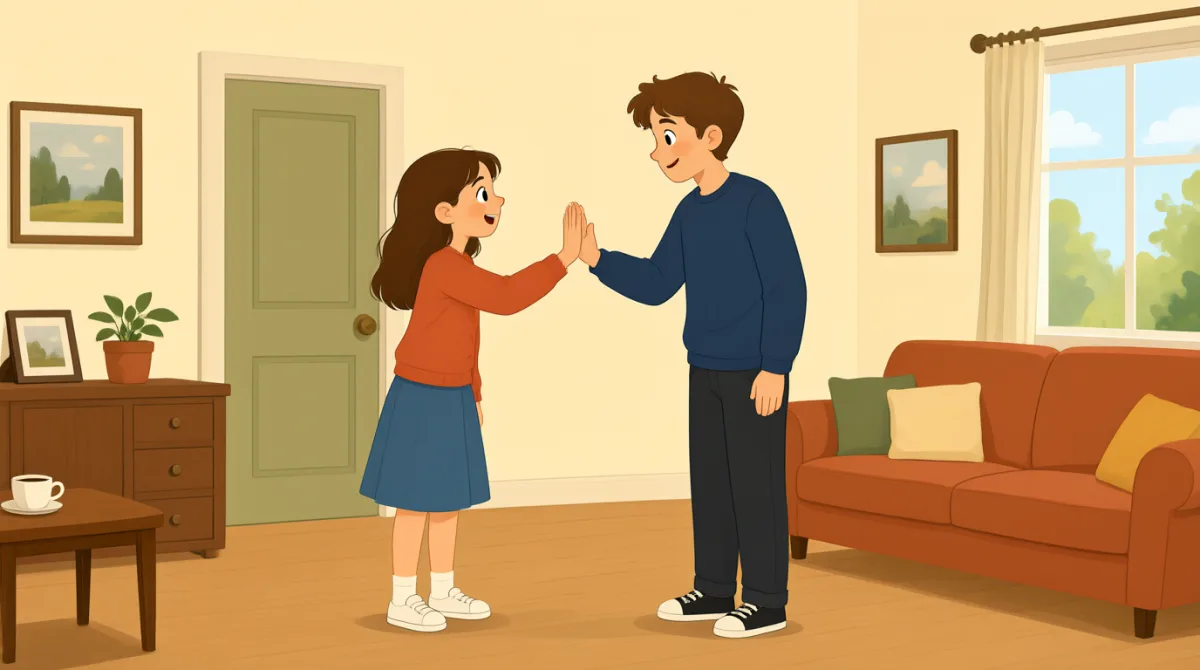

Thank you both for making me feel so welcome here.
Gracias a los dos por hacerme sentir tan bienvenida aquí.

You’re very welcome, Emma. We loved having you stay with us.
De nada, Emma. Nos encantó tenerte en casa.

I hope you enjoyed the family dinners and our trip to the park.
Espero que hayas disfrutado de las cenas en familia y de nuestra excursión al parque.
I did! I learned a lot about the area and your family, too.
¡Sí! Aprendí mucho sobre la zona y también sobre tu familia.
We’ll miss you. Let us know when you get home safely.
Te vamos a extrañar. Avísanos cuando llegues bien a casa.
I will. Thank you for all your help and for making me feel at home.
Lo haré. Gracias por toda su ayuda y por hacerme sentir como en casa.
Have a safe trip, Emma. We hope you’ll come visit us again.
Que tengas un buen viaje, Emma. Esperamos que vuelvas a visitarnos.
I’d love to. Goodbye, Grace. Goodbye, Jack, and thanks again!
Me encantaría. Adiós, Grace. Adiós, Jack, ¡y gracias de nuevo!
Vocabulario8
- making me feel so welcomehacerme sentir tan bienvenida
This means helping someone feel comfortable and happy in a place. You can say this to thank someone for their kindness.
Significa ayudar a alguien a sentirse cómodo y a gusto en un lugar. Puedes decirlo para agradecerle a alguien su amabilidad.
- having you stay with ustenerte en casa
This means letting someone live in your home for a short time. It is a warm way to talk about hosting a guest.
Significa permitir que alguien se quede en tu casa por poco tiempo. Es una forma cálida de hablar de recibir a un huésped.
- family dinnerscenas en familia
These are meals that family members eat together. You can use this phrase to talk about shared meals at home.
Son comidas que los miembros de una familia comparten. Puedes usar esta expresión para hablar de las comidas que comparten en casa.
- Let us knowAvísanos
This means “tell us” or “send us the information.” You can use it when you want someone to share news.
Significa «dinos» o «envíanos la información». Puedes usarlo cuando quieres que alguien te cuente alguna novedad.
- get home safelyllegar bien a casa
This means arrive at home without any problems. It is a caring phrase to use when someone is traveling.
Significa llegar a casa sin problemas. Es una expresión cariñosa que puedes usar cuando alguien está de viaje.
- feel at homesentirse como en casa
This means feel comfortable and relaxed in a place that is not your own home. You can use it to thank someone for making you welcome.
Significa sentirse cómodo y relajado en un lugar que no es tu propia casa. Puedes usar esta expresión para agradecerle a alguien que te haya hecho sentir bienvenido.
- Have a safe tripQue tengas un buen viaje
This is a kind way to wish someone a good and safe journey. You can say it when someone is leaving.
Es una forma amable de desearle a alguien un viaje agradable y seguro. Puedes decirlo cuando alguien se va.
- come visit us againvolver a visitarnos
This means visit us another time in the future. You can use it to invite someone to return.
Significa visitarnos otra vez en el futuro. Puedes usarlo para invitar a alguien a volver.
Frases clave8
- 1
Thank you both for making me feel so welcome here.
Gracias a los dos por hacerme sentir tan bienvenida aquí.
Use this to thank two people for being kind and welcoming. You can change “both” to “all” when thanking a larger group.
Usa esta frase para darles las gracias a dos personas por su amabilidad y por haberte recibido tan bien. Puedes cambiar “both” por “all” si se lo agradeces a un grupo más grande.
- 2
We loved having you stay with us.
Nos encantó tenerte en casa.
This is a warm way to tell a guest you enjoyed hosting them. You can use “We loved having you here” for a shorter visit.
Es una forma cálida de decirle a un huésped que disfrutaste recibirlo en casa. Puedes decir “We loved having you here” para una visita más breve.
- 3
I hope you enjoyed the family dinners and our trip to the park.
Espero que hayas disfrutado de las cenas en familia y de nuestra excursión al parque.
Use this to ask if someone liked activities or experiences they shared with you. Replace “the family dinners” and “our trip to the park” with other activities.
Usa esta frase para preguntar si a alguien le gustaron las actividades o experiencias que compartieron. Sustituye “the family dinners” y “our trip to the park” por otras actividades.
- 4
Let us know when you get home safely.
Avísanos cuando llegues bien a casa.
This is a caring way to ask someone to tell you when they arrive home. You can use “Let me know when…” when speaking to one person.
Es una forma cariñosa de pedirle a alguien que te avise cuando llegue a casa. Puedes usar “Let me know when…” cuando le hablas a una sola persona.
- 5
Thank you for all your help and for making me feel at home.
Gracias por toda su ayuda y por hacerme sentir como en casa.
Use this to thank someone for both their help and their kindness. You can replace “all your help” with another thing they did for you.
Usa esta frase para agradecerle a alguien tanto su ayuda como su amabilidad. Puedes sustituir “all your help” por otra cosa que haya hecho por ti.
- 6
Have a safe trip, Emma.
Que tengas un buen viaje, Emma.
Say this to wish someone a safe journey. Use the person’s name at the end, or leave it out.
Di esto para desearle a alguien un viaje seguro. Puedes poner el nombre de la persona al final o dejarlo fuera.
- 7
We hope you’ll come visit us again.
Esperamos que vuelvas a visitarnos.
This is a friendly way to invite someone to visit in the future. You can say “I hope you’ll come visit me again” when speaking for yourself.
Es una forma amistosa de invitar a alguien a visitarte en el futuro. Puedes decir “I hope you’ll come visit me again” si hablas en tu propio nombre.
- 8
I’d love to.
Me encantaría.
This is a natural way to say yes to an invitation. You can use it when someone suggests doing something you would enjoy.
Es una forma natural de aceptar una invitación. Puedes usarla cuando alguien te propone hacer algo que te gustaría.