Understanding the Doctor's Advice
Entender las indicaciones del médico
The doctor explains that Leo has a common cold and gives simple advice. Leo learns to rest, drink water, and stay home if he feels worse.
El médico le explica a Leo que tiene un resfriado común y le da algunos consejos sencillos. Leo aprende que debe descansar, beber agua y quedarse en casa si se siente peor.
Diálogo9
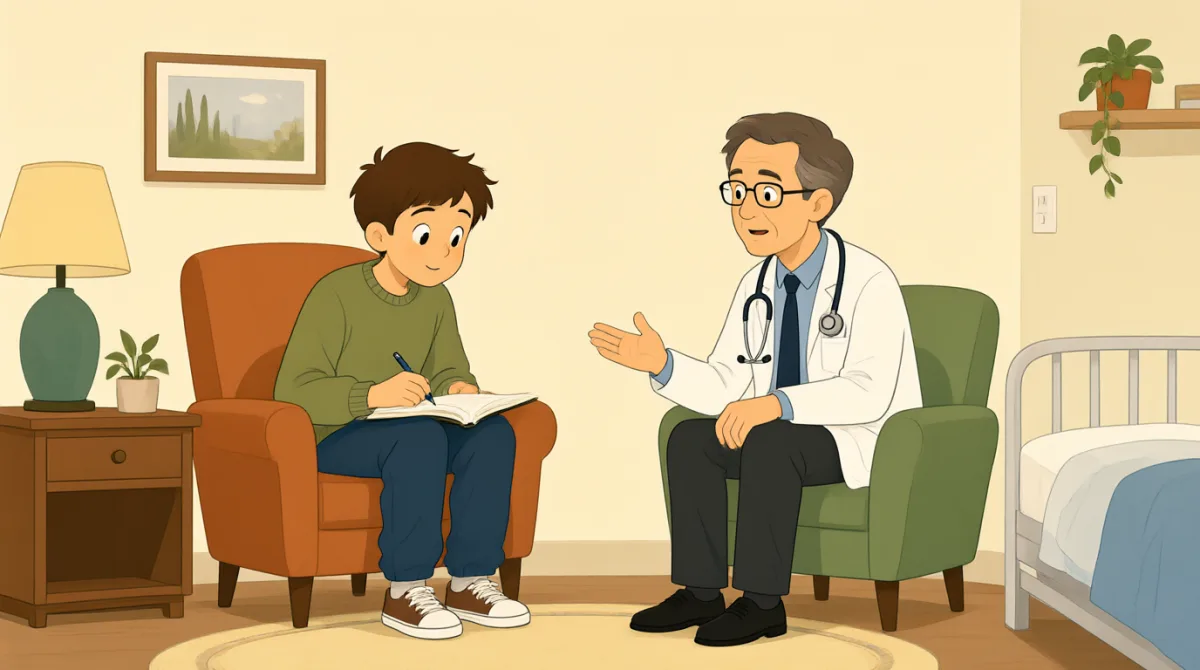

Leo, you have a common cold. It should get better in about a week.
Leo, tienes un resfriado común. Deberías mejorar en una semana más o menos.

That’s good to hear. What should I do at home?
Me alegra oír eso. ¿Qué debería hacer en casa?
Get plenty of rest, and drink lots of water or warm tea.
Descansa mucho y bebe bastante agua o té caliente.
Can I go to work tomorrow, or should I stay home?
¿Puedo ir a trabajar mañana o debería quedarme en casa?
Stay home if you feel worse or have a fever. Try not to spread the cold.
Quédate en casa si te sientes peor o tienes fiebre. Intenta no contagiar el resfriado.
Okay. Should I take any medicine for my cough?
De acuerdo. ¿Debería tomar algún medicamento para la tos?
You can ask the pharmacist about cough medicine. Follow the directions on the package.
Puedes preguntarle al farmacéutico por un medicamento para la tos. Sigue las instrucciones del envase.
All right. I’ll rest and drink more water. When should I call you?
Muy bien. Descansaré y beberé más agua. ¿Cuándo debería llamarte?
Call the clinic if you have trouble breathing or your fever gets worse.
Llama a la clínica si tienes dificultad para respirar o si te sube la fiebre.
Vocabulario7
- common coldresfriado común
A common cold is a mild illness that can cause a cough or runny nose. Use this phrase to name the illness.
Un “common cold” es una enfermedad leve que puede causar tos o moqueo. Usa esta expresión para nombrar la enfermedad.
- get bettermejorar
To get better means to become healthier. You can use it to talk about recovering from an illness.
“Get better” significa recuperar la salud. Puedes usarlo para hablar de la recuperación de una enfermedad.
- plenty of restdescansar mucho
This means getting a lot of rest or sleep. It is common advice when someone is sick.
“Plenty of rest” significa descansar o dormir mucho. Es un consejo habitual cuando alguien está enfermo.
- stay homequedarse en casa
To stay home means not to go out, such as to work or school. You can use it when you need to rest or avoid spreading an illness.
“Stay home” significa no salir, por ejemplo, para ir al trabajo o a la escuela. Puedes usarlo cuando necesitas descansar o evitar contagiar una enfermedad.
- feel worsesentirse peor
To feel worse means to feel less healthy than before. Use it to describe a change in how you feel.
“Feel worse” significa sentirse menos saludable que antes. Úsalo para describir un cambio en cómo te sientes.
- follow the directionsseguir las instrucciones
This means to do what the instructions say. You can use it when talking about medicine or other instructions.
“Follow the directions” significa hacer lo que indican las instrucciones. Puedes usarlo al hablar de medicamentos u otras indicaciones.
- trouble breathingdificultad para respirar
This means difficulty breathing normally. It is important to tell a doctor if you have trouble breathing.
“Trouble breathing” significa tener dificultades para respirar con normalidad. Es importante avisarle al médico si te cuesta respirar.
Frases clave6
- 1
It should get better in about a week.
Deberías mejorar en una semana más o menos.
This sentence gives an estimate of how long recovery may take. Use “should get better” to talk about an expected improvement.
Esta oración da una estimación del tiempo que puede llevar recuperarse. Usa “should get better” para hablar de una mejoría esperada.
- 2
What should I do at home?
¿Qué debería hacer en casa?
This is a useful way to ask for advice. You can replace “at home” with another situation, such as “at work.”
Esta es una forma útil de pedir consejo. Puedes reemplazar “at home” por otra situación, como “at work”.
- 3
Get plenty of rest, and drink lots of water or warm tea.
Descansa mucho y bebe bastante agua o té caliente.
This gives two simple health recommendations. You can use “Get plenty of…” to suggest something someone needs.
Esta oración da dos recomendaciones sencillas para la salud. Puedes usar “Get plenty of…” para sugerir algo que alguien necesita.
- 4
Stay home if you feel worse or have a fever.
Quédate en casa si te sientes peor o tienes fiebre.
This gives advice with a condition using “if.” Use the same pattern to explain what someone should do in a particular situation.
Esta oración da un consejo con una condición usando “if”. Usa el mismo patrón para explicar qué debería hacer alguien en una situación concreta.
- 5
Follow the directions on the package.
Sigue las instrucciones del envase.
This is a clear reminder to read and obey instructions. You can use it when giving advice about medicine or a product.
Este es un recordatorio claro para leer y seguir las instrucciones. Puedes usarlo al dar consejos sobre un medicamento o un producto.
- 6
Call the clinic if you have trouble breathing or your fever gets worse.
Llama a la clínica si tienes dificultad para respirar o si te sube la fiebre.
This explains when to contact a medical service. Use “Call… if…” to give someone a clear next step.
Esta oración explica cuándo ponerse en contacto con un servicio médico. Usa “Call… if…” para indicar claramente cuál es el siguiente paso.