Finishing Your Tasks
Terminar tus tareas
Emma and Jack check what still needs to be done. Emma finishes her report and hands Jack the notes he needs.
Emma y Jack revisan qué queda por hacer. Emma termina su informe y le entrega a Jack las notas que necesita.
Diálogo8
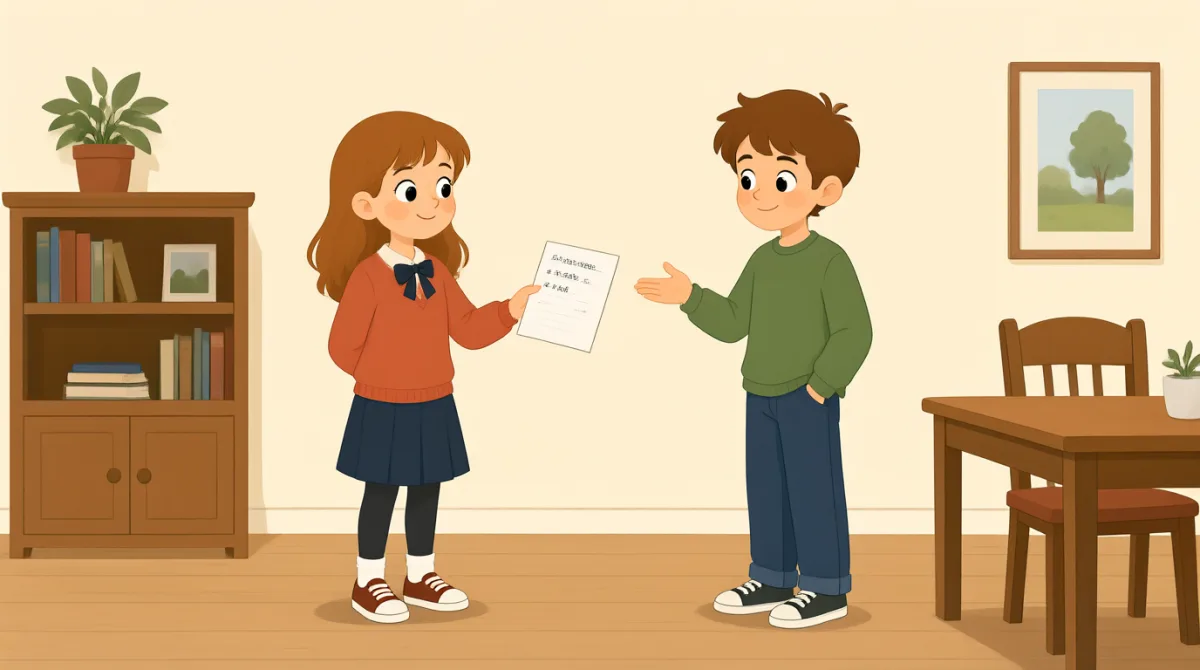

Jack, can you check what we still need to finish today?
Jack, ¿puedes revisar qué nos queda por terminar hoy?

Sure. The report is the main thing, and I still need your notes.
Claro. Lo más importante es el informe, y todavía necesito tus notas.
I’m finishing the report now. I’ll give you the notes in a minute.
Estoy terminando el informe ahora. Te doy las notas en un minuto.
Thanks. Do you need help with any part of the report?
Gracias. ¿Necesitas ayuda con alguna parte del informe?
No, I’m almost done. I just need to check these numbers.
No, ya casi termino. Solo tengo que revisar estos números.
Okay. I’ll look over the notes when you hand them to me.
Vale. Revisaré las notas cuando me las pases.
Here you go. These notes explain the last changes to the schedule.
Aquí tienes. Estas notas explican los últimos cambios en el horario.
Got it. And the report looks finished. You’re all set to go.
Entendido. Y el informe parece terminado. Ya puedes irte.
Vocabulario7
- check what we still need to finishrevisar qué nos queda por terminar
This means to review which tasks are not done yet. Use it when you want to find out what work remains.
Significa revisar qué tareas todavía no están hechas. Úsalo cuando quieras averiguar qué trabajo queda pendiente.
- the main thinglo más importante
This means the most important task or issue. Use it to say what should get attention first.
Se refiere a la tarea o el asunto más importante. Úsalo para decir qué debería atenderse primero.
- in a minuteen un minuto
This means very soon, usually after a short wait. You can use it to say when you will do something.
Significa muy pronto, normalmente después de esperar un poco. Puedes usarlo para decir cuándo harás algo.
- almost donecasi terminado
This means nearly finished, but not completely finished yet. Use it to describe work that needs only a little more time.
Significa que algo está prácticamente terminado, pero aún no del todo. Úsalo para hablar de un trabajo al que solo le falta un poco más de tiempo.
- look overrevisar
This means to read or check something quickly and carefully. You can look over notes, a report, or a form.
Significa leer o comprobar algo de forma rápida y cuidadosa. Puedes revisar unas notas, un informe o un formulario.
- Here you go.Aquí tienes.
This is a friendly way to give something to someone. Use it when handing over an item, such as notes or a document.
Es una forma amable de darle algo a alguien. Úsala al entregar un objeto, como unas notas o un documento.
- all set to golisto para irte
This means ready to leave or do something. Use it to tell someone that everything is ready.
Significa que alguien está listo para irse o hacer algo. Úsalo para decirle a alguien que ya está todo preparado.
Frases clave8
- 1
Jack, can you check what we still need to finish today?
Jack, ¿puedes revisar qué nos queda por terminar hoy?
Use this question to ask someone to review the tasks that remain. You can replace “today” with another time, such as “before the meeting.”
Usa esta pregunta para pedirle a alguien que revise las tareas pendientes. Puedes cambiar “today” por otro momento, como “before the meeting.”
- 2
The report is the main thing, and I still need your notes.
Lo más importante es el informe, y todavía necesito tus notas.
This sentence identifies the most important task and says what is still needed. Use “I still need your…” to ask for something that has not arrived yet.
Esta frase señala cuál es la tarea más importante y dice qué hace falta todavía. Usa “I still need your…” para pedir algo que aún no has recibido.
- 3
I’ll give you the notes in a minute.
Te doy las notas en un minuto.
Use this to promise to give someone something very soon. Replace “the notes” with another item, such as “the file.”
Úsala para prometerle a alguien que le darás algo muy pronto. Puedes sustituir “the notes” por otro objeto, como “the file.”
- 4
Do you need help with any part of the report?
¿Necesitas ayuda con alguna parte del informe?
This is a useful way to offer help with a specific task. You can replace “the report” with another piece of work.
Es una forma útil de ofrecer ayuda con una tarea específica. Puedes sustituir “the report” por otro trabajo.
- 5
I just need to check these numbers.
Solo tengo que revisar estos números.
Use this sentence to explain the one small task you have left. Replace “check these numbers” with another action, such as “send this email.”
Usa esta frase para explicar cuál es la pequeña tarea que te queda. Puedes sustituir “check these numbers” por otra acción, como “send this email.”
- 6
I’ll look over the notes when you hand them to me.
Revisaré las notas cuando me las pases.
This explains what you will do after someone gives you something. Use “I’ll look over…” to say you will review a document or information.
Esta frase explica qué harás después de que alguien te dé algo. Usa “I’ll look over…” para decir que revisarás un documento o información.
- 7
Here you go.
Aquí tienes.
Use this short, friendly phrase when handing something to another person. It works with objects such as notes, keys, or a cup of coffee.
Usa esta frase corta y amable al entregarle algo a otra persona. Sirve para objetos como unas notas, unas llaves o una taza de café.
- 8
You’re all set to go.
Ya puedes irte.
Use this to tell someone they are ready to leave or begin. It is especially useful after checking that everything is finished.
Úsala para decirle a alguien que ya está listo para irse o empezar. Es especialmente útil después de comprobar que todo está terminado.