Explaining the Children's Routine
Explicar la rutina de los niños
Emma explains when the children eat, play, and go to bed. Grace asks a few questions to make sure she understands the routine.
Emma explica a qué hora comen, juegan y se van a dormir los niños. Grace hace algunas preguntas para asegurarse de entender la rutina.
Diálogo9
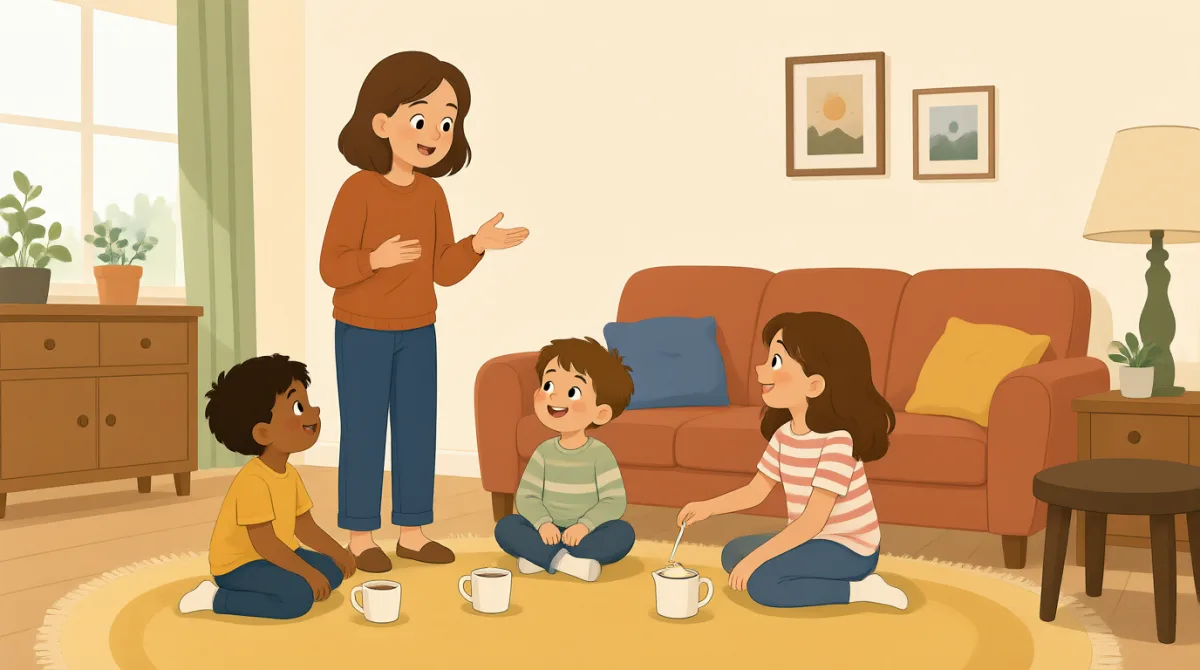

The kids usually eat dinner at six, and then they play for a little while.
Los niños suelen cenar a las seis y después juegan un rato.

What do they like to eat? Do they have any food allergies?
¿Qué les gusta comer? ¿Tienen alguna alergia alimentaria?
They like pasta and fruit. No allergies, but please cut the grapes in half.
Les gusta la pasta y la fruta. No tienen alergias, pero, por favor, corta las uvas por la mitad.
Of course. What time do they start getting ready for bed?
Claro. ¿A qué hora empiezan a prepararse para irse a dormir?
At seven thirty, they brush their teeth and put on their pajamas.
A las siete y media se cepillan los dientes y se ponen el pijama.
Do you read them a story, or do they choose one?
¿Les lees un cuento o eligen uno ellos?
They each choose a book. Lights out is at eight o’clock.
Cada uno elige un libro. A las ocho se apagan las luces.
Got it. Where do they keep their books and pajamas?
Entendido. ¿Dónde guardan los libros y los pijamas?
The books are on the shelf, and their pajamas are in the top drawer.
Los libros están en la estantería y los pijamas, en el cajón de arriba.
Vocabulario6
- for a little whilefor a little while — un rato
This means for a short time. Use it to say how long an activity lasts.
Significa durante un tiempo breve. Úsalo para decir cuánto dura una actividad.
- food allergiesfood allergies — alergias alimentarias
These are health problems caused by certain foods. You can ask, “Do you have any food allergies?” to check what someone can safely eat.
Son problemas de salud causados por ciertos alimentos. Puedes preguntar “Do you have any food allergies?” (¿Tienes alguna alergia alimentaria?) para averiguar qué puede comer alguien sin peligro.
- cut the grapes in halfcut the grapes in half — cortar las uvas por la mitad
This means cut each grape into two pieces. Use “cut [something] in half” to explain how to prepare food.
Significa cortar cada uva en dos partes. Usa “cut [something] in half” para explicar cómo preparar un alimento.
- put on their pajamasput on their pajamas — ponerse el pijama
This means dress in their sleep clothes. Use “put on” to talk about wearing clothes.
Significa vestirse con la ropa para dormir. Usa “put on” para hablar de ponerse ropa.
- Lights out is at eight o’clock.Lights out is at eight o’clock. — A las ocho se apagan las luces.
This means it is time to turn off the lights and go to sleep at eight. You can use “Lights out is at [time]” to explain a bedtime.
Significa que a las ocho es hora de apagar las luces e irse a dormir. Puedes usar “Lights out is at [time]” para indicar la hora de acostarse.
- top drawertop drawer — cajón de arriba
This is the highest drawer in a piece of furniture. Use it to tell someone where something is kept.
Es el cajón que está más arriba de un mueble. Úsalo para decirle a alguien dónde se guarda algo.
Frases clave7
- 1
The kids usually eat dinner at six, and then they play for a little while.
Los niños suelen cenar a las seis y después juegan un rato.
This sentence explains a simple daily routine in order. Use “usually” and “and then” to describe what happens and when.
Esta oración explica una rutina diaria sencilla en orden. Usa “usually” y “and then” para describir qué pasa y cuándo.
- 2
What do they like to eat?
¿Qué les gusta comer?
This is a useful way to ask about someone’s food preferences. You can replace “they” with “you,” “he,” or “she.”
Es una forma útil de preguntar qué comida le gusta a alguien. Puedes cambiar “they” por “you”, “he” o “she”.
- 3
Do they have any food allergies?
¿Tienen alguna alergia alimentaria?
Use this question to check whether someone needs to avoid certain foods. You can also ask, “Do you have any food allergies?”
Usa esta pregunta para averiguar si alguien debe evitar ciertos alimentos. También puedes preguntar “Do you have any food allergies?”.
- 4
Of course.
Claro.
This is a friendly way to say yes or agree to do something. It is useful when someone makes a request.
Es una forma amable de decir que sí o aceptar hacer algo. Es útil cuando alguien te pide algo.
- 5
What time do they start getting ready for bed?
¿A qué hora empiezan a prepararse para irse a dormir?
This question asks when a bedtime routine begins. Replace “they” with another person or group to ask about their routine.
Esta pregunta sirve para averiguar cuándo empieza la rutina de irse a dormir. Cambia “they” por otra persona o grupo para preguntar por su rutina.
- 6
They each choose a book.
Cada uno elige un libro.
This explains that every child chooses one book. Use “each” to talk about people doing something individually.
Explica que cada niño elige un libro. Usa “each” para hablar de personas que hacen algo individualmente.
- 7
The books are on the shelf, and their pajamas are in the top drawer.
Los libros están en la estantería y los pijamas, en el cajón de arriba.
This sentence gives two clear locations. Use “on” for something on a surface and “in” for something inside a drawer.
Esta oración indica claramente dos lugares. Usa “on” para algo que está sobre una superficie y “in” para algo que está dentro de un cajón.