Explaining the Children's Routine
介绍孩子们的日常安排
Emma explains when the children eat, play, and go to bed. Grace asks a few questions to make sure she understands the routine.
Emma介绍孩子们吃饭、玩耍和睡觉的时间。Grace问了几个问题,确认自己了解日常安排。
对话9
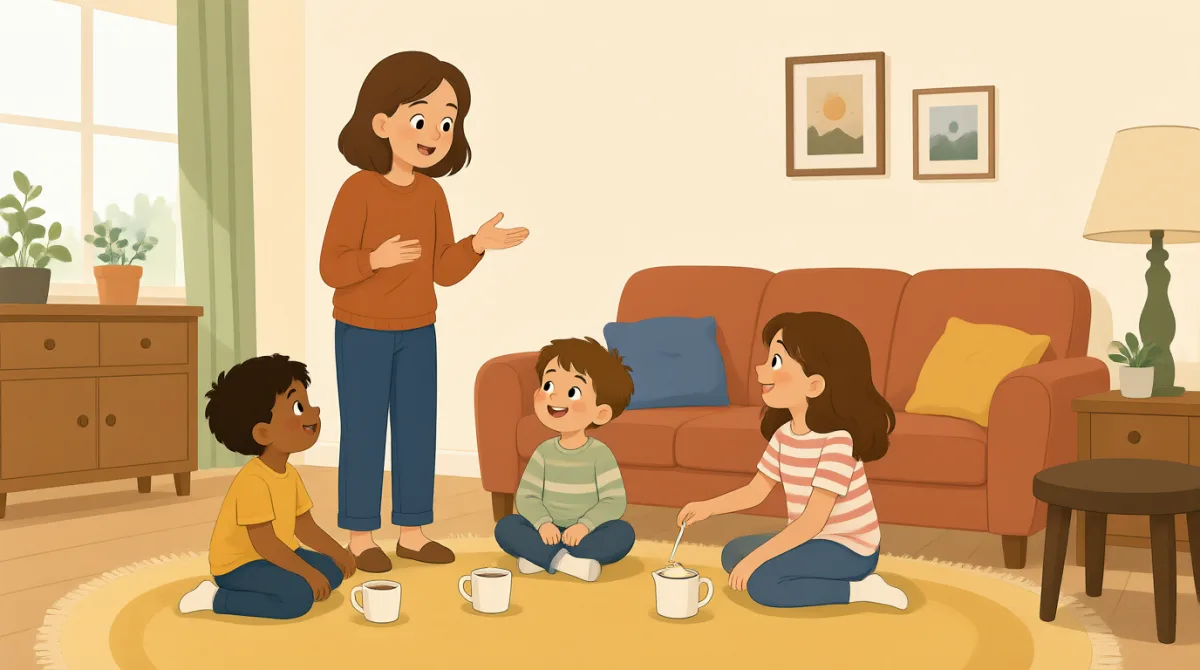

The kids usually eat dinner at six, and then they play for a little while.
孩子们通常六点吃晚饭,然后会玩一会儿。

What do they like to eat? Do they have any food allergies?
他们喜欢吃什么?他们有食物过敏吗?
They like pasta and fruit. No allergies, but please cut the grapes in half.
他们喜欢吃意大利面和水果。他们没有过敏,不过请把葡萄切成两半。
Of course. What time do they start getting ready for bed?
当然可以。他们几点开始准备睡觉?
At seven thirty, they brush their teeth and put on their pajamas.
七点半,他们刷牙、换上睡衣。
Do you read them a story, or do they choose one?
你会给他们读故事,还是让他们自己选?
They each choose a book. Lights out is at eight o’clock.
他们每人选一本书。八点熄灯。
Got it. Where do they keep their books and pajamas?
明白了。他们的书和睡衣放在哪里?
The books are on the shelf, and their pajamas are in the top drawer.
书在书架上,睡衣在最上面的抽屉里。
词汇6
- for a little while一会儿
This means for a short time. Use it to say how long an activity lasts.
意思是时间很短。可以用它来说明一项活动会持续多久。
- food allergies食物过敏
These are health problems caused by certain foods. You can ask, “Do you have any food allergies?” to check what someone can safely eat.
指由某些食物引起的健康问题。你可以问:“Do you have any food allergies?”(你对什么食物过敏吗?)来确认对方可以安全食用哪些食物。
- cut the grapes in half把葡萄切成两半
This means cut each grape into two pieces. Use “cut [something] in half” to explain how to prepare food.
意思是把每颗葡萄切成两块。可以用“cut [something] in half”来说明如何准备食物。
- put on their pajamas穿上他们的睡衣
This means dress in their sleep clothes. Use “put on” to talk about wearing clothes.
意思是换上睡觉时穿的衣服。可以用“put on”来表达穿上衣服。
- Lights out is at eight o’clock.八点熄灯。
This means it is time to turn off the lights and go to sleep at eight. You can use “Lights out is at [time]” to explain a bedtime.
意思是八点关灯睡觉。可以用“Lights out is at [time]”来说明几点熄灯睡觉。
- top drawer最上面的抽屉
This is the highest drawer in a piece of furniture. Use it to tell someone where something is kept.
指家具中位置最高的抽屉。可以用这个说法告诉别人东西放在哪里。
重点句子7
- 1
The kids usually eat dinner at six, and then they play for a little while.
孩子们通常六点吃晚饭,然后会玩一会儿。
This sentence explains a simple daily routine in order. Use “usually” and “and then” to describe what happens and when.
这句话按顺序说明了简单的日常安排。用“usually”和“and then”可以描述事情通常在什么时候发生,以及接下来会发生什么。
- 2
What do they like to eat?
他们喜欢吃什么?
This is a useful way to ask about someone’s food preferences. You can replace “they” with “you,” “he,” or “she.”
这是询问别人饮食喜好的实用说法。你可以把“they”换成“you”、“he”或“she”。
- 3
Do they have any food allergies?
他们有食物过敏吗?
Use this question to check whether someone needs to avoid certain foods. You can also ask, “Do you have any food allergies?”
用这个问题确认对方是否需要避开某些食物。你也可以问:“Do you have any food allergies?”
- 4
Of course.
当然可以。
This is a friendly way to say yes or agree to do something. It is useful when someone makes a request.
这是友好地表示同意或答应做某事的说法。别人提出请求时很适合这样回答。
- 5
What time do they start getting ready for bed?
他们几点开始准备睡觉?
This question asks when a bedtime routine begins. Replace “they” with another person or group to ask about their routine.
这个问题是问睡前流程从什么时候开始。你可以把“they”换成其他人或群体,询问他们的日常安排。
- 6
They each choose a book.
他们每人选一本书。
This explains that every child chooses one book. Use “each” to talk about people doing something individually.
这句话说明每个孩子各选一本书。用“each”可以表示每个人分别做某件事。
- 7
The books are on the shelf, and their pajamas are in the top drawer.
书在书架上,睡衣在最上面的抽屉里。
This sentence gives two clear locations. Use “on” for something on a surface and “in” for something inside a drawer.
这句话清楚地说明了两个物品的位置。物品放在表面上时用“on”,在抽屉内部时用“in”。