Explaining the Children's Routine
बच्चों की दिनचर्या समझाना
Emma explains when the children eat, play, and go to bed. Grace asks a few questions to make sure she understands the routine.
एमा बताती है कि बच्चे कब खाना खाते हैं, खेलते हैं और सोने जाते हैं। ग्रेस दिनचर्या को ठीक से समझने के लिए कुछ सवाल पूछती है।
संवाद9
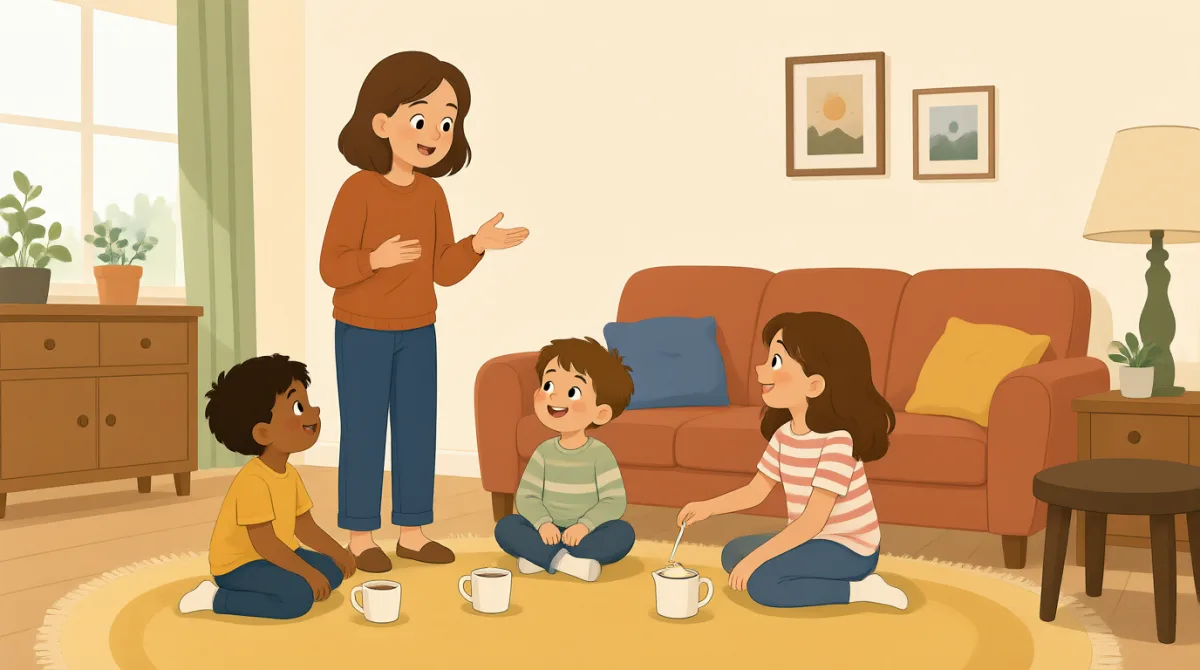

The kids usually eat dinner at six, and then they play for a little while.
बच्चे आम तौर पर छह बजे रात का खाना खाते हैं, फिर थोड़ी देर खेलते हैं।

What do they like to eat? Do they have any food allergies?
उन्हें क्या खाना पसंद है? क्या उन्हें किसी खाने से एलर्जी है?
They like pasta and fruit. No allergies, but please cut the grapes in half.
उन्हें पास्ता और फल पसंद हैं। कोई एलर्जी नहीं है, लेकिन अंगूरों को आधा काट देना।
Of course. What time do they start getting ready for bed?
ज़रूर। वे सोने की तैयारी कितने बजे शुरू करते हैं?
At seven thirty, they brush their teeth and put on their pajamas.
साढ़े सात बजे वे अपने दाँत साफ़ करते हैं और पायजामा पहनते हैं।
Do you read them a story, or do they choose one?
क्या तुम उन्हें कहानी पढ़कर सुनाती हो, या वे खुद कोई कहानी चुनते हैं?
They each choose a book. Lights out is at eight o’clock.
वे हर कोई अपनी एक किताब चुनते हैं। आठ बजे बत्तियाँ बंद कर दी जाती हैं।
Got it. Where do they keep their books and pajamas?
समझ गई। उनकी किताबें और पायजामे कहाँ रखे हैं?
The books are on the shelf, and their pajamas are in the top drawer.
किताबें शेल्फ़ पर हैं और उनके पायजामे ऊपर वाली दराज़ में हैं।
शब्दावली6
- for a little whileथोड़ी देर
This means for a short time. Use it to say how long an activity lasts.
इसका मतलब है कम समय के लिए। इसका इस्तेमाल यह बताने के लिए करें कि कोई गतिविधि कितनी देर चलती है।
- food allergiesखाने से एलर्जी
These are health problems caused by certain foods. You can ask, “Do you have any food allergies?” to check what someone can safely eat.
कुछ खाने की चीज़ों से होने वाली स्वास्थ्य संबंधी समस्याओं को food allergies (खाने से एलर्जी) कहते हैं। यह जानने के लिए कि कोई व्यक्ति सुरक्षित रूप से क्या खा सकता है, आप पूछ सकते हैं, “Do you have any food allergies?” (क्या तुम्हें किसी खाने से एलर्जी है?)
- cut the grapes in halfअंगूरों को आधा काटना
This means cut each grape into two pieces. Use “cut [something] in half” to explain how to prepare food.
इसका मतलब है हर अंगूर को दो टुकड़ों में काटना। खाना तैयार करने का तरीका बताने के लिए “cut [something] in half” का इस्तेमाल करें।
- put on their pajamasअपना पायजामा पहनना
This means dress in their sleep clothes. Use “put on” to talk about wearing clothes.
इसका मतलब है सोने के कपड़े पहनना। कपड़े पहनने की बात करने के लिए “put on” का इस्तेमाल करें।
- Lights out is at eight o’clock.आठ बजे बत्तियाँ बंद करने का समय है।
This means it is time to turn off the lights and go to sleep at eight. You can use “Lights out is at [time]” to explain a bedtime.
इसका मतलब है कि आठ बजे बत्तियाँ बंद करके सोने का समय हो जाता है। सोने का समय बताने के लिए “Lights out is at [time]” का इस्तेमाल कर सकते हैं।
- top drawerऊपर वाली दराज़
This is the highest drawer in a piece of furniture. Use it to tell someone where something is kept.
यह किसी फर्नीचर की सबसे ऊपर वाली दराज़ होती है। किसी को यह बताने के लिए इसका इस्तेमाल करें कि कोई चीज़ कहाँ रखी है।
मुख्य वाक्य7
- 1
The kids usually eat dinner at six, and then they play for a little while.
बच्चे आम तौर पर छह बजे रात का खाना खाते हैं, फिर थोड़ी देर खेलते हैं।
This sentence explains a simple daily routine in order. Use “usually” and “and then” to describe what happens and when.
यह वाक्य रोज़ की एक साधारण दिनचर्या का क्रम बताता है। क्या होता है और कब होता है, यह बताने के लिए “usually” और “and then” का इस्तेमाल करें।
- 2
What do they like to eat?
उन्हें क्या खाना पसंद है?
This is a useful way to ask about someone’s food preferences. You can replace “they” with “you,” “he,” or “she.”
किसी की खाने की पसंद पूछने का यह एक उपयोगी तरीका है। “they” की जगह “you,” “he,” या “she” रख सकते हैं।
- 3
Do they have any food allergies?
क्या उन्हें किसी खाने से एलर्जी है?
Use this question to check whether someone needs to avoid certain foods. You can also ask, “Do you have any food allergies?”
यह सवाल पूछकर पता करें कि किसी को कुछ खास खाने की चीज़ों से परहेज़ करना है या नहीं। आप यह भी पूछ सकते हैं, “Do you have any food allergies?”
- 4
Of course.
ज़रूर।
This is a friendly way to say yes or agree to do something. It is useful when someone makes a request.
किसी अनुरोध पर हाँ कहने या कुछ करने के लिए सहमति जताने का यह एक दोस्ताना तरीका है। जब कोई आपसे कुछ करने को कहे, तब यह वाक्य काम आता है।
- 5
What time do they start getting ready for bed?
वे सोने की तैयारी कितने बजे शुरू करते हैं?
This question asks when a bedtime routine begins. Replace “they” with another person or group to ask about their routine.
इस सवाल में पूछा जाता है कि सोने की तैयारी कब शुरू होती है। किसी दूसरे व्यक्ति या समूह की दिनचर्या पूछने के लिए “they” की जगह उनका ज़िक्र करें।
- 6
They each choose a book.
वे हर कोई अपनी एक किताब चुनते हैं।
This explains that every child chooses one book. Use “each” to talk about people doing something individually.
इसका मतलब है कि हर बच्चा एक किताब चुनता है। जब लोग कोई काम अलग-अलग करते हैं, तो “each” का इस्तेमाल करें।
- 7
The books are on the shelf, and their pajamas are in the top drawer.
किताबें शेल्फ़ पर हैं और उनके पायजामे ऊपर वाली दराज़ में हैं।
This sentence gives two clear locations. Use “on” for something on a surface and “in” for something inside a drawer.
इस वाक्य में दो चीज़ों की जगह साफ़-साफ़ बताई गई है। किसी सतह पर रखी चीज़ के लिए “on” और दराज़ के अंदर रखी चीज़ के लिए “in” का इस्तेमाल करें।