Explaining the Children's Routine
Explicando a rotina das crianças
Emma explains when the children eat, play, and go to bed. Grace asks a few questions to make sure she understands the routine.
Emma explica a que horas as crianças comem, brincam e vão para a cama. Grace faz algumas perguntas para ter certeza de que entendeu a rotina.
Diálogo9
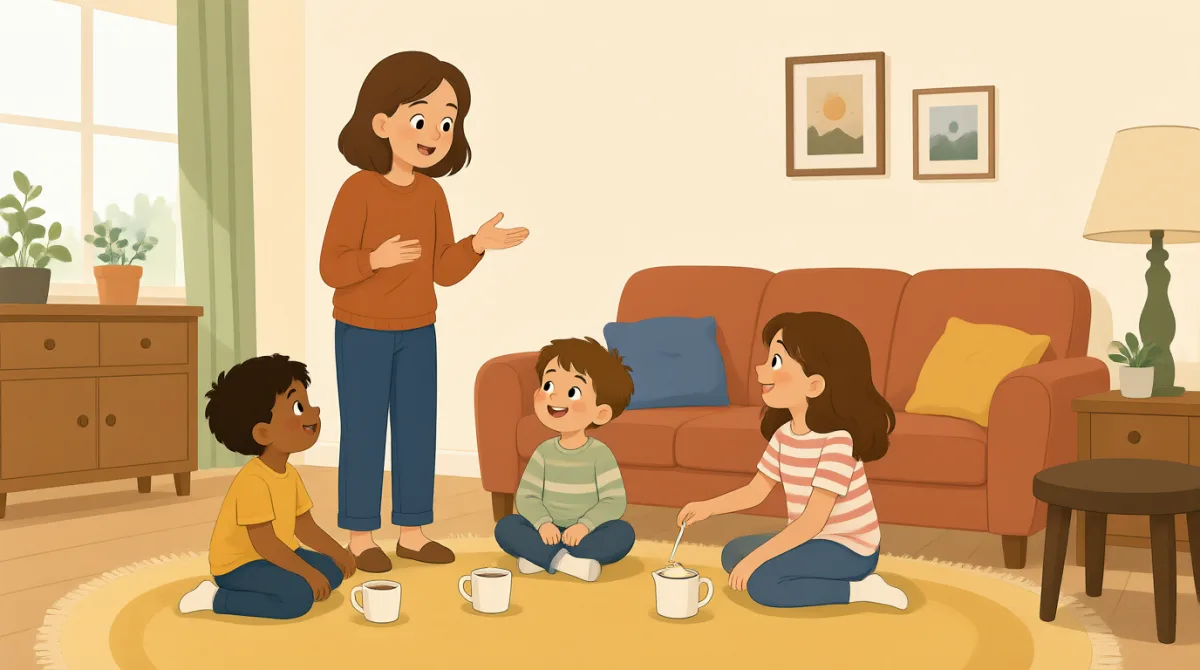

The kids usually eat dinner at six, and then they play for a little while.
As crianças costumam jantar às seis e depois brincam por um tempinho.

What do they like to eat? Do they have any food allergies?
Do que elas gostam de comer? Têm alguma alergia alimentar?
They like pasta and fruit. No allergies, but please cut the grapes in half.
Elas gostam de macarrão e frutas. Não têm alergias, mas, por favor, corte as uvas ao meio.
Of course. What time do they start getting ready for bed?
Claro. A que horas elas começam a se preparar para dormir?
At seven thirty, they brush their teeth and put on their pajamas.
Às sete e meia, elas escovam os dentes e vestem o pijama.
Do you read them a story, or do they choose one?
Você lê uma história para elas ou elas escolhem uma?
They each choose a book. Lights out is at eight o’clock.
Cada uma escolhe um livro. Às oito horas, é hora de apagar as luzes.
Got it. Where do they keep their books and pajamas?
Entendi. Onde elas guardam os livros e os pijamas?
The books are on the shelf, and their pajamas are in the top drawer.
Os livros ficam na estante, e os pijamas ficam na gaveta de cima.
Vocabulário6
- for a little whilepor um tempinho
This means for a short time. Use it to say how long an activity lasts.
Significa por pouco tempo. Use essa expressão para dizer quanto tempo uma atividade dura.
- food allergiesalergias alimentares
These are health problems caused by certain foods. You can ask, “Do you have any food allergies?” to check what someone can safely eat.
São problemas de saúde causados por certos alimentos. Você pode perguntar “Do you have any food allergies?” (Você tem alguma alergia alimentar?) para saber o que alguém pode comer com segurança.
- cut the grapes in halfcortar as uvas ao meio
This means cut each grape into two pieces. Use “cut [something] in half” to explain how to prepare food.
Significa cortar cada uva em dois pedaços. Use “cut [something] in half” para explicar como preparar um alimento.
- put on their pajamasvestir o pijama
This means dress in their sleep clothes. Use “put on” to talk about wearing clothes.
Significa vestir a roupa de dormir. Use “put on” para falar sobre vestir roupas.
- Lights out is at eight o’clock.Às oito horas, é hora de apagar as luzes.
This means it is time to turn off the lights and go to sleep at eight. You can use “Lights out is at [time]” to explain a bedtime.
Significa que às oito é hora de apagar as luzes e ir dormir. Você pode usar “Lights out is at [time]” para explicar a que horas alguém deve ir para a cama.
- top drawergaveta de cima
This is the highest drawer in a piece of furniture. Use it to tell someone where something is kept.
É a gaveta mais alta de um móvel. Use essa expressão para dizer onde algo é guardado.
Frases-chave7
- 1
The kids usually eat dinner at six, and then they play for a little while.
As crianças costumam jantar às seis e depois brincam por um tempinho.
This sentence explains a simple daily routine in order. Use “usually” and “and then” to describe what happens and when.
Essa frase explica uma rotina diária simples em ordem. Use “usually” e “and then” para descrever o que acontece e quando.
- 2
What do they like to eat?
Do que elas gostam de comer?
This is a useful way to ask about someone’s food preferences. You can replace “they” with “you,” “he,” or “she.”
Essa é uma forma útil de perguntar sobre as preferências alimentares de alguém. Você pode substituir “they” por “you”, “he” ou “she”.
- 3
Do they have any food allergies?
Elas têm alguma alergia alimentar?
Use this question to check whether someone needs to avoid certain foods. You can also ask, “Do you have any food allergies?”
Use essa pergunta para saber se alguém precisa evitar certos alimentos. Você também pode perguntar “Do you have any food allergies?” (Você tem alguma alergia alimentar?).
- 4
Of course.
Claro.
This is a friendly way to say yes or agree to do something. It is useful when someone makes a request.
Essa é uma forma simpática de dizer que sim ou de concordar em fazer algo. É útil quando alguém faz um pedido.
- 5
What time do they start getting ready for bed?
A que horas elas começam a se preparar para dormir?
This question asks when a bedtime routine begins. Replace “they” with another person or group to ask about their routine.
Essa pergunta é sobre quando começa a rotina de ir para a cama. Substitua “they” por outra pessoa ou grupo para perguntar sobre a rotina deles.
- 6
They each choose a book.
Cada uma escolhe um livro.
This explains that every child chooses one book. Use “each” to talk about people doing something individually.
Essa frase explica que cada criança escolhe um livro. Use “each” para falar de pessoas fazendo algo individualmente.
- 7
The books are on the shelf, and their pajamas are in the top drawer.
Os livros ficam na estante, e os pijamas ficam na gaveta de cima.
This sentence gives two clear locations. Use “on” for something on a surface and “in” for something inside a drawer.
Essa frase indica dois lugares com clareza. Use “on” para algo que está sobre uma superfície e “in” para algo que está dentro de uma gaveta.