Explaining the Children's Routine
子どもたちのいつものスケジュールを説明する
Emma explains when the children eat, play, and go to bed. Grace asks a few questions to make sure she understands the routine.
エマが子どもたちの食事や遊び、就寝の時間を説明します。グレースはスケジュールをきちんと理解するため、いくつか質問します。
会話9
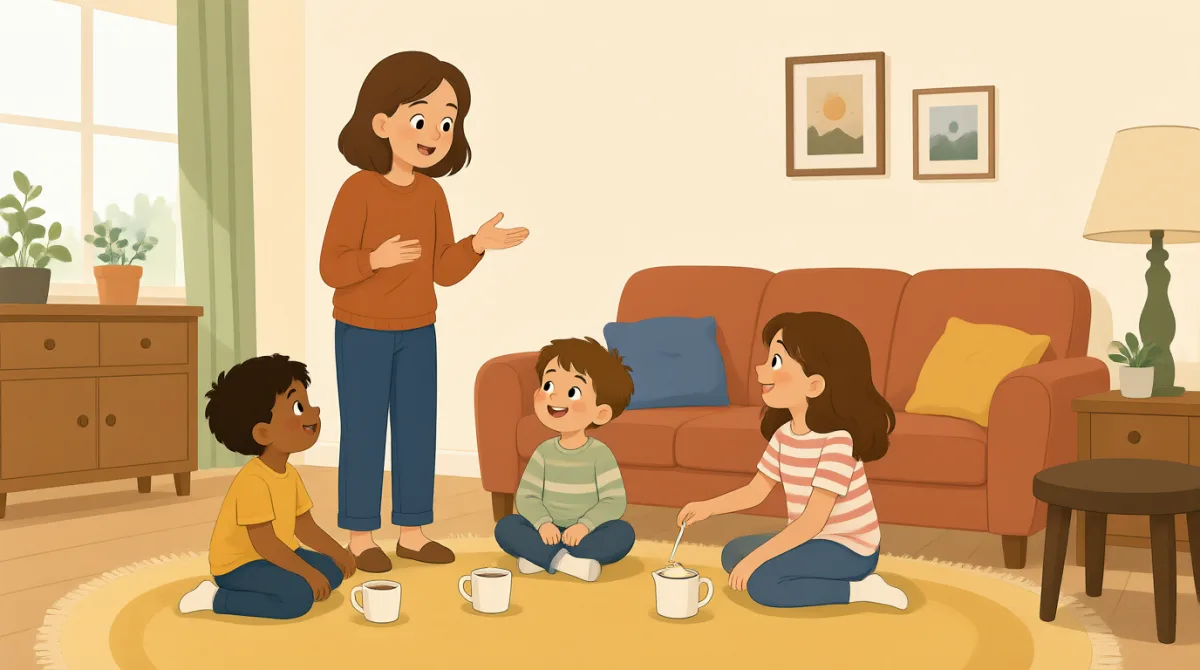

The kids usually eat dinner at six, and then they play for a little while.
子どもたちはたいてい6時に夕食を食べて、それからしばらく遊ぶよ。

What do they like to eat? Do they have any food allergies?
何を食べるのが好き?食物アレルギーはある?
They like pasta and fruit. No allergies, but please cut the grapes in half.
パスタと果物が好きだよ。アレルギーはないけど、ぶどうは半分に切ってね。
Of course. What time do they start getting ready for bed?
もちろん。何時から寝る準備を始めるの?
At seven thirty, they brush their teeth and put on their pajamas.
7時半に歯を磨いて、パジャマに着替えるよ。
Do you read them a story, or do they choose one?
絵本はあなたが読んであげるの?それとも子どもたちが選ぶの?
They each choose a book. Lights out is at eight o’clock.
それぞれ自分で本を選ぶよ。8時に消灯だよ。
Got it. Where do they keep their books and pajamas?
わかった。本とパジャマはどこに置いてあるの?
The books are on the shelf, and their pajamas are in the top drawer.
本は棚にあって、パジャマは一番上の引き出しに入ってるよ。
語彙6
- for a little whileしばらくの間
This means for a short time. Use it to say how long an activity lasts.
「for a little while」は「短い時間」という意味です。何かをする時間の長さを伝えるときに使います。
- food allergies食物アレルギー
These are health problems caused by certain foods. You can ask, “Do you have any food allergies?” to check what someone can safely eat.
特定の食べ物が原因で起こる健康上の問題のことです。相手が安全に食べられるものを確認するには、“Do you have any food allergies?”(食物アレルギーはありますか?)と聞けます。
- cut the grapes in halfぶどうを半分に切る
This means cut each grape into two pieces. Use “cut [something] in half” to explain how to prepare food.
ぶどうを一粒ずつ二つに切るという意味です。“cut [something] in half”は、食べ物をどのように準備するか説明するときに使えます。
- put on their pajamasパジャマを着る
This means dress in their sleep clothes. Use “put on” to talk about wearing clothes.
寝るときに着る服に着替えるという意味です。“put on”は服を着ることを表します。
- Lights out is at eight o’clock.8時に消灯です。
This means it is time to turn off the lights and go to sleep at eight. You can use “Lights out is at [time]” to explain a bedtime.
8時になったら明かりを消して寝る時間だという意味です。“Lights out is at [time]”を使うと、就寝時間を伝えられます。
- top drawer一番上の引き出し
This is the highest drawer in a piece of furniture. Use it to tell someone where something is kept.
家具にある引き出しのうち、一番高い位置にあるものです。物をどこにしまってあるか伝えるときに使います。
重要な文7
- 1
The kids usually eat dinner at six, and then they play for a little while.
子どもたちはたいてい6時に夕食を食べて、それからしばらく遊ぶよ。
This sentence explains a simple daily routine in order. Use “usually” and “and then” to describe what happens and when.
日課を順番に説明する文です。“usually”と“and then”を使うと、何がいつ起こるのかを伝えられます。
- 2
What do they like to eat?
何を食べるのが好き?
This is a useful way to ask about someone’s food preferences. You can replace “they” with “you,” “he,” or “she.”
相手の食べ物の好みを尋ねる便利な表現です。“they”を“you”や“he”、“she”に置き換えて使えます。
- 3
Do they have any food allergies?
食物アレルギーはある?
Use this question to check whether someone needs to avoid certain foods. You can also ask, “Do you have any food allergies?”
特定の食べ物を避ける必要があるか確認するときに使う質問です。“Do you have any food allergies?”と聞くこともできます。
- 4
Of course.
もちろん。
This is a friendly way to say yes or agree to do something. It is useful when someone makes a request.
何かを頼まれたときに、快く引き受ける気持ちを伝える表現です。
- 5
What time do they start getting ready for bed?
何時から寝る準備を始めるの?
This question asks when a bedtime routine begins. Replace “they” with another person or group to ask about their routine.
就寝前の習慣を始める時間を尋ねる質問です。“they”を別の人やグループに置き換えて、その人たちの習慣について聞けます。
- 6
They each choose a book.
それぞれ自分で本を選ぶよ。
This explains that every child chooses one book. Use “each” to talk about people doing something individually.
子ども一人ひとりが本を一冊選ぶことを伝える文です。“each”は、それぞれが個別に何かをすることを表します。
- 7
The books are on the shelf, and their pajamas are in the top drawer.
本は棚にあって、パジャマは一番上の引き出しに入ってるよ。
This sentence gives two clear locations. Use “on” for something on a surface and “in” for something inside a drawer.
二つの物の場所をわかりやすく伝える文です。物が表面にあるときは“on”、引き出しの中にあるときは“in”を使います。