Explaining the Children's Routine
বাচ্চাদের দৈনন্দিন রুটিন বুঝিয়ে বলা
Emma explains when the children eat, play, and go to bed. Grace asks a few questions to make sure she understands the routine.
এমা বাচ্চারা কখন খায়, খেলে এবং ঘুমাতে যায় তা বুঝিয়ে বলে। রুটিনটা ঠিকমতো বুঝেছে কি না নিশ্চিত হতে গ্রেস কয়েকটি প্রশ্ন করে।
সংলাপ9
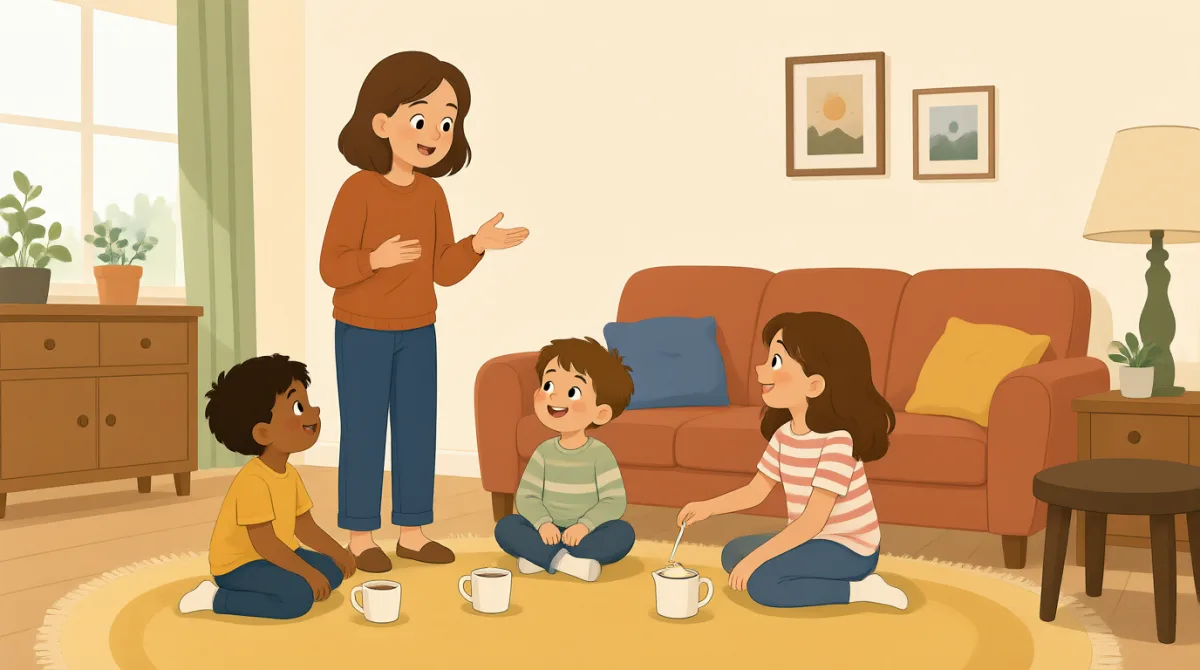

The kids usually eat dinner at six, and then they play for a little while.
বাচ্চারা সাধারণত ছয়টায় রাতের খাবার খায়, তারপর কিছুক্ষণ খেলাধুলা করে।

What do they like to eat? Do they have any food allergies?
ওরা কী খেতে পছন্দ করে? ওদের কোনো খাবারে অ্যালার্জি আছে?
They like pasta and fruit. No allergies, but please cut the grapes in half.
ওরা পাস্তা আর ফল পছন্দ করে। কোনো অ্যালার্জি নেই, তবে আঙুরগুলো দয়া করে অর্ধেক করে কেটে দিও।
Of course. What time do they start getting ready for bed?
অবশ্যই। ওরা কখন ঘুমাতে যাওয়ার প্রস্তুতি নিতে শুরু করে?
At seven thirty, they brush their teeth and put on their pajamas.
সাড়ে সাতটায় ওরা দাঁত ব্রাশ করে আর পায়জামা পরে।
Do you read them a story, or do they choose one?
তুমি কি ওদের গল্প পড়ে শোনাও, নাকি ওরা নিজেরাই একটা বেছে নেয়?
They each choose a book. Lights out is at eight o’clock.
ওরা প্রত্যেকে একটা করে বই বেছে নেয়। আটটায় বাতি নিভিয়ে দেওয়া হয়।
Got it. Where do they keep their books and pajamas?
বুঝেছি। ওদের বই আর পায়জামা কোথায় রাখা আছে?
The books are on the shelf, and their pajamas are in the top drawer.
বইগুলো তাকের ওপর, আর ওদের পায়জামাগুলো ওপরের ড্রয়ারে।
শব্দভান্ডার6
- for a little whileকিছুক্ষণ
This means for a short time. Use it to say how long an activity lasts.
এর মানে অল্প সময়ের জন্য। কোনো কাজ কতক্ষণ চলে, তা বোঝাতে এই কথাটি ব্যবহার করো।
- food allergiesখাবারে অ্যালার্জি
These are health problems caused by certain foods. You can ask, “Do you have any food allergies?” to check what someone can safely eat.
কিছু খাবারের কারণে যে স্বাস্থ্যগত সমস্যা হয়, তাকে খাবারে অ্যালার্জি বলে। কেউ নিরাপদে কী খেতে পারে তা জানতে “Do you have any food allergies?” (তোমার কোনো খাবারে অ্যালার্জি আছে?) জিজ্ঞেস করতে পারো।
- cut the grapes in halfআঙুরগুলো অর্ধেক করে কেটে দাও
This means cut each grape into two pieces. Use “cut [something] in half” to explain how to prepare food.
এর মানে প্রতিটি আঙুরকে দুই টুকরো করে কাটা। খাবার কীভাবে তৈরি করতে হবে তা বোঝাতে “cut [something] in half” ব্যবহার করো।
- put on their pajamasপায়জামা পরা
This means dress in their sleep clothes. Use “put on” to talk about wearing clothes.
এর মানে ঘুমানোর পোশাক পরা। পোশাক পরার কথা বলতে “put on” ব্যবহার করো।
- Lights out is at eight o’clock.আটটায় বাতি নিভিয়ে দেওয়া হয়।
This means it is time to turn off the lights and go to sleep at eight. You can use “Lights out is at [time]” to explain a bedtime.
এর মানে আটটায় বাতি নিভিয়ে ঘুমাতে যাওয়ার সময় হয়। ঘুমানোর সময় বোঝাতে “Lights out is at [time]” ব্যবহার করতে পারো।
- top drawerওপরের ড্রয়ার
This is the highest drawer in a piece of furniture. Use it to tell someone where something is kept.
আসবাবের সবচেয়ে ওপরের ড্রয়ারটিকে এভাবে বলা হয়। কোনো জিনিস কোথায় রাখা আছে, তা জানাতে এই শব্দটি ব্যবহার করো।
গুরুত্বপূর্ণ বাক্য7
- 1
The kids usually eat dinner at six, and then they play for a little while.
বাচ্চারা সাধারণত ছয়টায় রাতের খাবার খায়, তারপর কিছুক্ষণ খেলাধুলা করে।
This sentence explains a simple daily routine in order. Use “usually” and “and then” to describe what happens and when.
এই বাক্যে প্রতিদিনের একটি সাধারণ রুটিনের কাজগুলো ধারাবাহিকভাবে বলা হয়েছে। কী ঘটে এবং কখন ঘটে তা বোঝাতে “usually” ও “and then” ব্যবহার করো।
- 2
What do they like to eat?
ওরা কী খেতে পছন্দ করে?
This is a useful way to ask about someone’s food preferences. You can replace “they” with “you,” “he,” or “she.”
কারও খাবারের পছন্দ জানতে এটি একটি কাজে লাগার মতো প্রশ্ন। “they”-এর বদলে “you,” “he,” বা “she” বসাতে পারো।
- 3
Do they have any food allergies?
ওদের কোনো খাবারে অ্যালার্জি আছে?
Use this question to check whether someone needs to avoid certain foods. You can also ask, “Do you have any food allergies?”
কাউকে কোনো খাবার এড়িয়ে চলতে হয় কি না জানতে এই প্রশ্নটি করো। “Do you have any food allergies?” বলেও জিজ্ঞেস করতে পারো।
- 4
Of course.
অবশ্যই।
This is a friendly way to say yes or agree to do something. It is useful when someone makes a request.
কোনো অনুরোধে সম্মতি জানাতে বা কিছু করতে রাজি হতে বন্ধুত্বপূর্ণভাবে এই কথাটি বলা হয়।
- 5
What time do they start getting ready for bed?
ওরা কখন ঘুমাতে যাওয়ার প্রস্তুতি নিতে শুরু করে?
This question asks when a bedtime routine begins. Replace “they” with another person or group to ask about their routine.
এই প্রশ্নে জানতে চাওয়া হয় ঘুমানোর প্রস্তুতির রুটিন কখন শুরু হয়। অন্য কোনো ব্যক্তি বা দলের রুটিন জানতে “they”-এর বদলে তাদের উল্লেখ করে এমন শব্দ বসাও।
- 6
They each choose a book.
ওরা প্রত্যেকে একটা করে বই বেছে নেয়।
This explains that every child chooses one book. Use “each” to talk about people doing something individually.
এতে বোঝায়, প্রতিটি শিশু একটি করে বই বেছে নেয়। প্রত্যেকে আলাদাভাবে কোনো কাজ করে—এমন কথা বলতে “each” ব্যবহার করো।
- 7
The books are on the shelf, and their pajamas are in the top drawer.
বইগুলো তাকের ওপর, আর ওদের পায়জামাগুলো ওপরের ড্রয়ারে।
This sentence gives two clear locations. Use “on” for something on a surface and “in” for something inside a drawer.
এই বাক্যে দুটি জিনিসের অবস্থান স্পষ্ট করে বলা হয়েছে। কোনো কিছুর ওপরের অবস্থান বোঝাতে “on” এবং ড্রয়ারের ভেতরের অবস্থান বোঝাতে “in” ব্যবহার করো।