Talking About the Rules
Hablar sobre las reglas
Emma explains important house rules, including screen time and what to do in an emergency. Grace agrees to follow them.
Emma explica reglas importantes de la casa, como el tiempo frente a las pantallas y qué hacer en caso de emergencia. Grace acepta cumplirlas.
Diálogo8
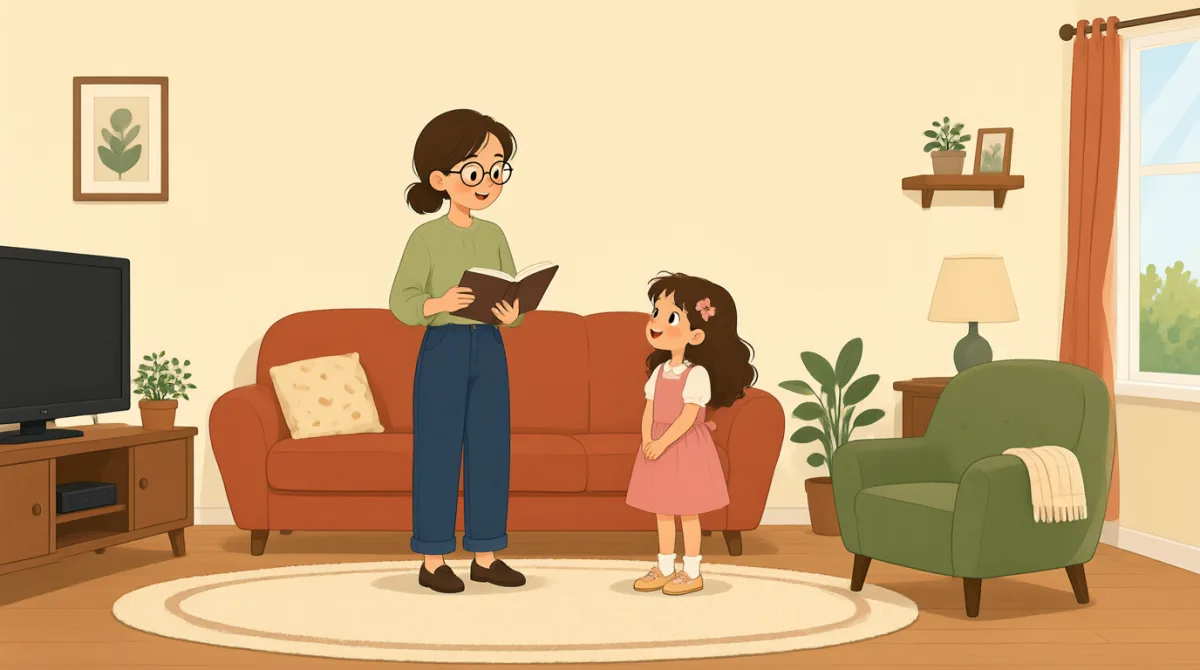

Grace, the children can watch TV for thirty minutes after dinner.
Grace, los niños pueden ver la tele durante treinta minutos después de cenar.

Okay. Can they use the tablet, too?
De acuerdo. ¿También pueden usar la tableta?
No, please. No tablets or phones while you watch them.
No, por favor. No uses tabletas ni teléfonos mientras cuidas de ellos.
Understood. What should I do if one of them gets hurt?
Entendido. ¿Qué debo hacer si uno de ellos se lastima?
Call me right away. If it is serious, call 911 first.
Llámame enseguida. Si es grave, llama primero al 911.
I will. Where can I find your phone number and the first-aid kit?
Lo haré. ¿Dónde puedo encontrar tu número de teléfono y el botiquín?
My number is on the fridge. The first-aid kit is in the kitchen cupboard.
Mi número está en el refrigerador. El botiquín está en el armario de la cocina.
Thanks. I’ll follow the rules and keep your number with me.
Gracias. Seguiré las reglas y llevaré tu número conmigo.
Vocabulario7
- after dinnerdespués de cenar
This means after the evening meal. Use it to say when an activity happens.
Significa después de la comida de la noche. Úsalo para decir cuándo ocurre una actividad.
- while you watch themmientras cuidas de ellos
This means during the time you care for the children. Use “while” to talk about two things happening at the same time.
Significa durante el tiempo que cuidas de los niños. Usa “while” para hablar de dos cosas que ocurren al mismo tiempo.
- gets hurtse lastima
This means is injured or feels pain. Use it to ask or talk about what to do if someone has an accident.
Significa que alguien se ha hecho daño o siente dolor. Úsalo para preguntar o hablar sobre qué hacer si alguien tiene un accidente.
- right awayenseguida
This means immediately, without waiting. Use it when something needs to happen quickly.
Significa inmediatamente, sin esperar. Úsalo cuando algo debe hacerse rápidamente.
- first-aid kitbotiquín
This is a box or bag with supplies for treating small injuries. You can ask where to find it in a home.
Es una caja o bolsa con materiales para tratar heridas leves. Puedes preguntar dónde encontrarlo en una casa.
- on the fridgeen el refrigerador
This means attached to or placed on the refrigerator. Use it to explain where someone can find a note or phone number.
Significa pegado o colocado en el refrigerador. Úsalo para explicar dónde puede encontrar alguien una nota o un número de teléfono.
- follow the rulesseguir las reglas
This means do what the rules say. Use it to show that you understand and agree to instructions.
Significa hacer lo que dicen las reglas. Úsalo para mostrar que entiendes y aceptas las instrucciones.
Frases clave7
- 1
The children can watch TV for thirty minutes after dinner.
Los niños pueden ver la tele durante treinta minutos después de cenar.
This is a clear way to give a limit and say when an activity is allowed. You can change the activity, time, or part of the day.
Esta es una forma clara de establecer un límite y decir cuándo se permite una actividad. Puedes cambiar la actividad, el tiempo o el momento del día.
- 2
No tablets or phones while you watch them.
No uses tabletas ni teléfonos mientras cuidas de ellos.
This gives a simple rule about what is not allowed. Use “No” followed by items to make a direct instruction.
Esta frase establece una regla sencilla sobre lo que no está permitido. Usa “No” seguido de los objetos para dar una instrucción directa.
- 3
What should I do if one of them gets hurt?
¿Qué debo hacer si uno de ellos se lastima?
This is a useful way to ask what action to take in a possible situation. Use “What should I do if…?” when you need instructions.
Esta es una forma útil de preguntar qué hacer en una situación posible. Usa “What should I do if…?” cuando necesites instrucciones.
- 4
Call me right away.
Llámame enseguida.
This is a short, clear instruction for an urgent situation. You can replace “me” with another person or say “Call [person] right away.”
Esta es una instrucción breve y clara para una situación urgente. Puedes sustituir “me” por otra persona o decir “Call [person] right away.”
- 5
If it is serious, call 911 first.
Si es grave, llama primero al 911.
This explains what to do when an emergency is severe. Use “If it is…, …” to give instructions for a particular situation.
Esta frase explica qué hacer cuando una emergencia es grave. Usa “If it is…, …” para dar instrucciones para una situación concreta.
- 6
Where can I find your phone number and the first-aid kit?
¿Dónde puedo encontrar tu número de teléfono y el botiquín?
This is a polite way to ask where important items are. You can replace the items with anything you need to locate.
Esta es una forma amable de preguntar dónde están las cosas importantes. Puedes sustituir los objetos por cualquier cosa que necesites encontrar.
- 7
I’ll follow the rules and keep your number with me.
Seguiré las reglas y llevaré tu número conmigo.
This shows that you agree to follow instructions and keep important information nearby. Use “I’ll…” to say what you will do.
Esta frase muestra que aceptas seguir las instrucciones y tener a mano información importante. Usa “I’ll…” para decir lo que harás.