Explaining the Children's Routine
Wyjaśnianie codziennej rutyny dzieci
Emma explains when the children eat, play, and go to bed. Grace asks a few questions to make sure she understands the routine.
Emma wyjaśnia, kiedy dzieci jedzą, bawią się i idą spać. Grace zadaje kilka pytań, żeby upewnić się, że dobrze rozumie ich codzienną rutynę.
Dialog9
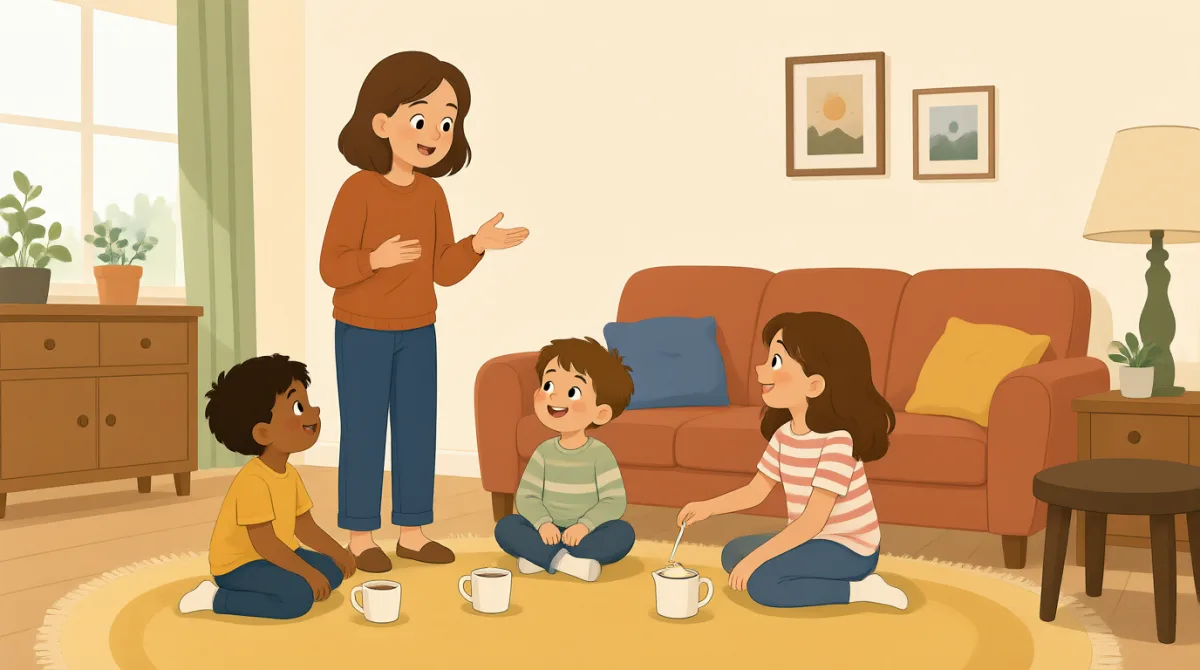

The kids usually eat dinner at six, and then they play for a little while.
Dzieci zwykle jedzą kolację o szóstej, a potem bawią się przez chwilę.

What do they like to eat? Do they have any food allergies?
Co lubią jeść? Czy mają jakieś alergie pokarmowe?
They like pasta and fruit. No allergies, but please cut the grapes in half.
Lubią makaron i owoce. Nie mają alergii, ale proszę przekroić winogrona na pół.
Of course. What time do they start getting ready for bed?
Oczywiście. O której zaczynają przygotowywać się do snu?
At seven thirty, they brush their teeth and put on their pajamas.
O wpół do ósmej myją zęby i zakładają piżamy.
Do you read them a story, or do they choose one?
Czy czytasz im bajkę, czy same wybierają książkę?
They each choose a book. Lights out is at eight o’clock.
Każde wybiera sobie książkę. O ósmej gasimy światło.
Got it. Where do they keep their books and pajamas?
Rozumiem. Gdzie trzymają książki i piżamy?
The books are on the shelf, and their pajamas are in the top drawer.
Książki są na półce, a piżamy w górnej szufladzie.
Słownictwo6
- for a little whileprzez chwilę
This means for a short time. Use it to say how long an activity lasts.
To znaczy, że coś trwa krótko. Użyj tego wyrażenia, żeby powiedzieć, jak długo trwa dana czynność.
- food allergiesalergie pokarmowe
These are health problems caused by certain foods. You can ask, “Do you have any food allergies?” to check what someone can safely eat.
To problemy zdrowotne wywoływane przez niektóre produkty spożywcze. Możesz zapytać: “Do you have any food allergies?” (Czy masz jakieś alergie pokarmowe?), żeby sprawdzić, co dana osoba może bezpiecznie jeść.
- cut the grapes in halfprzekroić winogrona na pół
This means cut each grape into two pieces. Use “cut [something] in half” to explain how to prepare food.
To znaczy pokroić każde winogrono na dwie części. Użyj “cut [something] in half”, żeby wyjaśnić, jak przygotować jedzenie.
- put on their pajamaszałożyć piżamy
This means dress in their sleep clothes. Use “put on” to talk about wearing clothes.
To znaczy ubrać się w ubrania do spania. Użyj “put on”, mówiąc o zakładaniu ubrań.
- Lights out is at eight o’clock.Lights out is at eight o’clock.
This means it is time to turn off the lights and go to sleep at eight. You can use “Lights out is at [time]” to explain a bedtime.
To znaczy, że o ósmej pora zgasić światło i iść spać. Możesz użyć “Lights out is at [time]”, żeby powiedzieć, o której jest pora spania.
- top drawergórna szuflada
This is the highest drawer in a piece of furniture. Use it to tell someone where something is kept.
To najwyżej położona szuflada w meblu. Użyj tego wyrażenia, żeby powiedzieć komuś, gdzie coś jest przechowywane.
Kluczowe zdania7
- 1
The kids usually eat dinner at six, and then they play for a little while.
Dzieci zwykle jedzą kolację o szóstej, a potem bawią się przez chwilę.
This sentence explains a simple daily routine in order. Use “usually” and “and then” to describe what happens and when.
To zdanie opisuje po kolei prostą codzienną rutynę. Użyj “usually” i “and then”, żeby opisać, co się dzieje i kiedy.
- 2
What do they like to eat?
Co lubią jeść?
This is a useful way to ask about someone’s food preferences. You can replace “they” with “you,” “he,” or “she.”
To przydatny sposób, żeby zapytać o czyjeś upodobania kulinarne. Możesz zastąpić “they” słowami “you”, “he” albo “she”.
- 3
Do they have any food allergies?
Czy mają jakieś alergie pokarmowe?
Use this question to check whether someone needs to avoid certain foods. You can also ask, “Do you have any food allergies?”
Użyj tego pytania, żeby sprawdzić, czy ktoś musi unikać określonych produktów. Możesz też zapytać: “Do you have any food allergies?”
- 4
Of course.
Oczywiście.
This is a friendly way to say yes or agree to do something. It is useful when someone makes a request.
To przyjazny sposób, żeby powiedzieć „tak” albo zgodzić się coś zrobić. Przydaje się, gdy ktoś o coś prosi.
- 5
What time do they start getting ready for bed?
O której zaczynają przygotowywać się do snu?
This question asks when a bedtime routine begins. Replace “they” with another person or group to ask about their routine.
To pytanie dotyczy tego, kiedy zaczyna się wieczorna rutyna przed snem. Zastąp “they” inną osobą lub grupą, żeby zapytać o jej rutynę.
- 6
They each choose a book.
Każde wybiera sobie książkę.
This explains that every child chooses one book. Use “each” to talk about people doing something individually.
To zdanie wyjaśnia, że każde dziecko wybiera jedną książkę. Użyj “each”, mówiąc o osobach, które robią coś indywidualnie.
- 7
The books are on the shelf, and their pajamas are in the top drawer.
Książki są na półce, a piżamy w górnej szufladzie.
This sentence gives two clear locations. Use “on” for something on a surface and “in” for something inside a drawer.
To zdanie wskazuje dwa konkretne miejsca. Użyj “on”, mówiąc o czymś znajdującym się na powierzchni, a “in” — o czymś wewnątrz szuflady.